


As revitalization sweeps through Little Havana, the Hispanic neighborhood's character is undergoing rapid changes.
BY DANIEL SHOER-ROTH
El Nuevo Herald
There are few South Florida aficionados of Cuban food who haven't enjoyed the offerings at El Rey de las Fritas, a Little Havana landmark for more than four decades.
But at year's end, the Calle Ocho cafeteria, which prides itself on selling ''The Original Cuban Fritas'' -- spicy Cuban-style beef patties with shoestring fries on the side -- will close its doors to make way for a new mixed-use development that will sprawl an entire block.
It's emblematic of the changes coming to Little Havana as revitalization ripples through a neighborhood first reinvigorated by Cuban exiles in the 1960s and then settled by subsequent waves of Latin American immigrants.
''This is a historical place for all Cubans. Leaving it stirs all kinds of feelings,'' said El Rey de las Fritas owner Angelina González, who plans to move the restaurant now located at 1177 SW Eighth St. farther to the east. ``It's the price of change in Little Havana.''
The construction boom is bringing luxury condominiums, commercial centers and towering office buildings that threaten to dim the neighborhood's original character and have already sent some of Little Havana's long-time residents packing.
`THE NEW HAVANA'
''It's as if they were moving the downtown area over here,'' said Sonia Valdez who works at Casino Records, near the corner of Calle Ocho and Southwest 12th Avenue. ``Prosperity will come. But one gets the impression that this will cease to be Little Havana and become The New Havana.''
The neighborhood's proximity to Miami's financial center has made it a natural target of the galloping real estate expansion now transforming Miami. Currently 4,172 residential units, 95,145 square feet of office space and 188,864 square feet of space for businesses are either completed, under construction or in the planning stage, said José Casanova, an urban planner at the City of Miami Department of Planning.
The rebirth has attracted $330 million in private investment, according to the planning department, but it has forced families to leave the area because rental prices have skyrocketed and dozens of buildings have been demolished.
PRICES RISE
The empty lots that now dot the neighborhood will be occupied by residential complexes that few current residents will be able to afford.
''The feeling of a neighborhood that welcomed immigrants looking for a better future is vanishing,'' said Fernando González of the community organization Vecinos en Acción (Neighbors in Action). ``Everybody wants a beautiful and clean neighborhood, but where will the people go?''
Municipal authorities maintain that the development is generally positive, since it is spurring an economic renaissance along Southwest Eighth Street or Calle Ocho, Little Havana's main street, and has lowered the crime rate.
''We are not destroying history; we're making history,'' said Commissioner Joe Sánchez, who has spearheaded the revitalization effort. ``We want to make sure that we don't lose our roots in Little Havana.''
THE CHAIN STORES
But the arrival of the big supermarket and drugstore chains has created an exodus of small local pharmacies, known as boticas, and bodegas (groceries), as well as small furniture stores and family-owned cafeterias where customers were greeted by name.
Even community leaders who applaud the transformation acknowledge that the neighborhood ''is looking more and more like the Brickell area,'' said Pablo Cantón, administrator of the Neighborhood Enhancement Team of Little Havana.
''It's going to be a natural change,'' he predicted.
But Elizabeth Plater-Zyberk, dean of the University of Miami's School of Architecture, said the construction boom ``is changing not only Little Havana's architectural character but also its urban character.''
The phenomenon is similar to what has happened in other South Florida neighborhoods where urban development is destroying community idiosyncrasies, warned Nancy Liebman, president of the Urban Environment League of Greater Miami.
In Little Havana, many of the buildings -- though marred by time and the construction of illegal additions -- date back to the 1920s and '30s and have historical value, Plater-Zyberk said.
''The original configuration says this is Little Havana in Miami and developers should be required to build more compatible with the existing buildings,'' Liebman said. `But historic preservation of the city has been poor. Little Havana should have been designated a historic preservation zone.'
As mixed-use buildings rise, attracting chain stores and residents with deep pockets, the neighborhood will lose much of its flavor, residents say.
''The Tower Theater and Domino Park will remain,'' said Eloy Aparicio, a Calle Ocho activist who owns Ultral Jewelry Store at 1171 SW Eighth St.
He will move his three-decades old business to another site, several blocks away.
''With modernization,'' he predicts, ``Little Havana just won't be the same.''

Markets
Latest Hurricane Info: [Link Me to NOAA]
[See The Latest Computer Models]
[DHL WORLD CLOCK]
Miami, FL
Monday, October 10, 2005


Elian, '60 Minutes,' and the party line
Oct 10, 2005
by Jeff Jacoby
Like Winston Smith, Elián Gonzalez has learned to love Big Brother. CBS News loves him, too. Elián's excuse is that he is 11 years old and has been brainwashed by a totalitarian police state. What excuse is there for CBS?
Last week, "60 Minutes" aired an interview with Elián, the Cuban boat child who survived a desperate escape from Fidel Castro's island dictatorship in November 1999 only to be forcibly turned over to the Cubans by the Clinton administration the following April. The story was a shameless piece of agitprop. From correspondent Bob Simon's opening description of the Elian affair as a conflict on the order of the Bay of Pigs invasion and the 1962 missile crisis to his fawning speculation at the end that Elián "may have a future in Cuban politics," virtually the entire segment had the oily feel of Cuban government propaganda. Which it may literally have been: Simon disclosed that "Castro's personal cameraman" had "helped" put the story together.
Anyone who watched "60 Minutes" knows that Elián now has "carefully gelled hair." That he is the president of his seventh-grade class. That he likes math and wants to be a computer scientist. That he thought the best part about being interviewed was getting "a bottle of really cold water and a gizmo in his ear for simultaneous translation." And don't forget that hair.
"What's also changed about you is your hair," Simon cooed. "Your hair looked very different then. You didn't have hair like that."
Ever since his forced return to Cuba in April 2000, Elián has been exploited endlessly by the communist government's disinformation apparatus. "60 Minutes" showed him being welcomed as a "conquering hero" and delivering a "patriotic speech in front of the cameras and Castro." (An excerpt of that speech, complete with servile "Viva Fidel," is posted on the CBS website.) "Che Guevara was yesterday," Simon intoned, "Elián Gonzalez is today, and that's precisely how the regime is playing him."
But Elián was not the only one being played by the regime. "60 Minutes" made much of the fact that Castro came to Elián's elementary school graduation and pronounced himself Elián's friend. "That's quite something, isn't it," Simon gushed, "for the president of a country to say he's honored to have a kid as a friend?"
Elián: Yes, and it's also very moving to me. And I also believe I am his friend.
Simon: Do you think of him as a friend?
Elián: Not only as a friend, but also as a father.
Simon: If you had a problem, would you call him up and tell him about it?
Elián: I could.
Well, it is good to know that Elián thinks so highly of Castro. And one must admire the restraint shown by "60 Minutes," which somehow managed to avoid mentioning that Elián's friend and surrogate "father" is also the world's longest-ruling tyrant, a sadist who has killed or imprisoned tens of thousands of dissidents, and, not incidentally, the Stalinist thug who drove Elizabet Brotons -- Elián's mother -- to her death in the Florida Straits.
Come to think of it, why did Brotons want so desperately to leave Cuba? Why was she willing to risk her and her son's life on such a dangerous -- in her case, fatal -- attempt to cross the 90 miles that separate Cuba from freedom? Was it was the grinding poverty, the ubiquitous rationing, the constant shortages? Was it the lack of the free speech? The suppression of religion? The inability to criticize the government without risking years behind bars? Was it the informers on every block? The political dossier maintained on every student's "political attitude and social conduct?" Was it the knowledge that once Elián turned 11, he would be subject to mandatory labor for six to eight weeks every year? Was it the sheer, soul-crushing misery of living in a country routinely ranked as one of the most unfree places in the world?
"60 Minutes" had nothing to say about any of that.
On the other hand, it did show Elián saying -- when prodded by Simon -- that he had no good memories of his stay in Miami, that the relatives who cared for him "tormented" him by speaking of his mother, and that when he was seized at gunpoint by a federal SWAT team, he "felt joy that I could get out of that house."
It bears repeating: Elián is only 11, and was just 5 when these events took place. He cannot be blamed for spouting the Communist Party line. But CBS has no such excuse. "Helped" by "Castro's personal cameraman," indeed. Edward R. Murrow must be spinning in his grave.
by Jeff Jacoby
Like Winston Smith, Elián Gonzalez has learned to love Big Brother. CBS News loves him, too. Elián's excuse is that he is 11 years old and has been brainwashed by a totalitarian police state. What excuse is there for CBS?
Last week, "60 Minutes" aired an interview with Elián, the Cuban boat child who survived a desperate escape from Fidel Castro's island dictatorship in November 1999 only to be forcibly turned over to the Cubans by the Clinton administration the following April. The story was a shameless piece of agitprop. From correspondent Bob Simon's opening description of the Elian affair as a conflict on the order of the Bay of Pigs invasion and the 1962 missile crisis to his fawning speculation at the end that Elián "may have a future in Cuban politics," virtually the entire segment had the oily feel of Cuban government propaganda. Which it may literally have been: Simon disclosed that "Castro's personal cameraman" had "helped" put the story together.
Anyone who watched "60 Minutes" knows that Elián now has "carefully gelled hair." That he is the president of his seventh-grade class. That he likes math and wants to be a computer scientist. That he thought the best part about being interviewed was getting "a bottle of really cold water and a gizmo in his ear for simultaneous translation." And don't forget that hair.
"What's also changed about you is your hair," Simon cooed. "Your hair looked very different then. You didn't have hair like that."
Ever since his forced return to Cuba in April 2000, Elián has been exploited endlessly by the communist government's disinformation apparatus. "60 Minutes" showed him being welcomed as a "conquering hero" and delivering a "patriotic speech in front of the cameras and Castro." (An excerpt of that speech, complete with servile "Viva Fidel," is posted on the CBS website.) "Che Guevara was yesterday," Simon intoned, "Elián Gonzalez is today, and that's precisely how the regime is playing him."
But Elián was not the only one being played by the regime. "60 Minutes" made much of the fact that Castro came to Elián's elementary school graduation and pronounced himself Elián's friend. "That's quite something, isn't it," Simon gushed, "for the president of a country to say he's honored to have a kid as a friend?"
Elián: Yes, and it's also very moving to me. And I also believe I am his friend.
Simon: Do you think of him as a friend?
Elián: Not only as a friend, but also as a father.
Simon: If you had a problem, would you call him up and tell him about it?
Elián: I could.
Well, it is good to know that Elián thinks so highly of Castro. And one must admire the restraint shown by "60 Minutes," which somehow managed to avoid mentioning that Elián's friend and surrogate "father" is also the world's longest-ruling tyrant, a sadist who has killed or imprisoned tens of thousands of dissidents, and, not incidentally, the Stalinist thug who drove Elizabet Brotons -- Elián's mother -- to her death in the Florida Straits.
Come to think of it, why did Brotons want so desperately to leave Cuba? Why was she willing to risk her and her son's life on such a dangerous -- in her case, fatal -- attempt to cross the 90 miles that separate Cuba from freedom? Was it was the grinding poverty, the ubiquitous rationing, the constant shortages? Was it the lack of the free speech? The suppression of religion? The inability to criticize the government without risking years behind bars? Was it the informers on every block? The political dossier maintained on every student's "political attitude and social conduct?" Was it the knowledge that once Elián turned 11, he would be subject to mandatory labor for six to eight weeks every year? Was it the sheer, soul-crushing misery of living in a country routinely ranked as one of the most unfree places in the world?
"60 Minutes" had nothing to say about any of that.
On the other hand, it did show Elián saying -- when prodded by Simon -- that he had no good memories of his stay in Miami, that the relatives who cared for him "tormented" him by speaking of his mother, and that when he was seized at gunpoint by a federal SWAT team, he "felt joy that I could get out of that house."
It bears repeating: Elián is only 11, and was just 5 when these events took place. He cannot be blamed for spouting the Communist Party line. But CBS has no such excuse. "Helped" by "Castro's personal cameraman," indeed. Edward R. Murrow must be spinning in his grave.
The Other Gitmo: Where's the Outrage?
By MARY ANASTASIA O'GRADY
October 7, 2005
Conditions at the prison at Guantánamo are inhumane. Inmates are deprived their right to religious worship, receive scant nutrition and suffer constant verbal and physical abuse from guards. It's a humanitarian outrage.
I refer, of course, to Castro's Guantánamo Provincial Prison in Cuba proper, the prison across the fence from the U.S. naval base compound holding the terrorists. Fidel's lock-up makes the U.S. prison look like a five-star tropical resort.
Torture, deprivation and isolation of political prisoners at the "other" Guantánamo -- or at any of Fidel's gulags across the island -- are no secret. They've been loudly denounced by prisoners' families and reported by Cuba's independent journalists. But foreign journalists have paid little attention. It seems they're too busy shredding their hankies over whether enemy combatants at the naval base have enough honey glaze on their chicken.
International apathy toward the plight of the political prisoners is just what Fidel Castro counts on. As the dissident movement has expanded in the past decade, El Maximo Lider has found it necessary to strike at it with excessive force from time to time. But when his repression becomes too public, he has to back off.
A hunger strike at the Guantánamo prison, which ended earlier this week, makes the point. Political prisoners Victor Arroyo and Felix Navarro stopped eating on Sept. 10 and 13 respectively, to protest the extreme cruelty administered by Guantánamo prison director Lt. Col. Jorge Chediak Pérez and "rehabilitation" expert Juan Armesto.
As the strike headed toward a fourth week, dozens of Cuban human rights advocates from all over the island were on their way to the prison in a show of solidarity. On Sept. 29, the EU called on the government to "improve the conditions of detention of these individuals and other political prisoners who are being held in circumstances that fall below the U.N. Minimum Standards for the Treatment of Prisoners."
On Monday, as the strikers showed no sign of relenting, Fidel blinked. The two men were removed from Guantánamo. Mr. Arroyo was taken away in an ambulance because he was so feeble, while Mr. Navarro traveled by car. Sources on the island say that Mr. Arroyo is now at the prison hospital in Holguin and Mr. Navarro is at the prison hospital in Bayamo.
In an honest world, the cases of Mr. Arroyo and Mr. Navarro would have raised an international outcry a long time ago. The men were arrested along with more than 70 others in the regime's March 2003 crackdown on journalists, opposition leaders, librarians and writers. All were taken into custody, given summary trials and handed extreme sentences.
A review of the 53-year-old Mr. Arroyo's arrest record shows the regime's pathetic paranoia. One example: In 2000 he was jailed for possessing some toys that he planned to distribute to poor children. The charge? "Hoarding public goods." His real crimes are for things like being director of the Union of Independent Cuban Journalists and Writers and managing one of the most important independent libraries in the country. In March 2003, Mr. Arroyo was working as a journalist in Pinar del Río, when he was detained. On April 7, 2003, he was sentenced to 26 years in prison for "acts against state security."
Mr. Navarro, who is 52-years-old, has an equally "dangerous" profile. An educator for some 20 years, in 1999 he founded the Pedro Luis Boitel Democracy Movement, which led to numerous arrests. His April 2003 conviction for "acts against state security" won him a 25 year sentence.
Mr. Navarro's identification with the heroic Boitel explains a lot about the prisoners and about Fidel's decision to yield to their strike. Boitel was a close prison friend of Armando Valladares, who spent 22 years in Cuban gulags. In his memoir, "Against All Hope," Mr. Valladares wrote of Boitel that he was "the most rebellious of Cuban political prisoners." In 1972, he had gone on a hunger strike to protest prison conditions. After 47 days of no food Boitel was gravely ill. But it was Castro's decision to deny him water that sealed his fate. He died on day 53.
Later, according to Mr. Valladares, the prisoners learned that Castro had given the order to "get rid of Boitel so he wouldn't make anymore [expletive] trouble." In a telephone conversation from Miami this week, Mr. Valladares reminded me that through it all "the international community kept silent."
Like Mr. Valladares and Boitel before them, Messrs. Arroyo and Navarro protested Guantánamo's filth, beatings, bad food, lack of water and use of common criminals to terrorize political prisoners. And like their predecessors, their complaints were met with violence.
In December 2003, Mr. Arroyo's opinions earned him a savage beating by three jailers, who also slammed a door on his leg to cripple him. In September 2004, when he was told his cell would be searched, he asked to be present to ensure that nothing would be planted. For that request, the food that had been brought by his family was confiscated and his few belongings trashed. He was then placed in a "punishment cell," which is a solitary confinement cell too small to lie down in, with no windows and a steel door. He was kept there for 15 days. Mr. Navarro was also thrown in the punishment cells for objecting to inhumane conditions.
The men wrote letters to the government to draw attention to ruthlessness of Armesto and jailer Chediak Perez, but to no avail. That's when they took up the mantle of Boitel.
Castro didn't respond until it looked like the strikers might embarrass him by dying. On Tuesday, Mr. Arroyo's sister reported that Cuban officials in Holguin promised him "a just treatment." But the fact that it had to go so far before Castro would agree to basic humanitarian principles reveals much about the dictator that so many Americans admire.
October 7, 2005
Conditions at the prison at Guantánamo are inhumane. Inmates are deprived their right to religious worship, receive scant nutrition and suffer constant verbal and physical abuse from guards. It's a humanitarian outrage.
I refer, of course, to Castro's Guantánamo Provincial Prison in Cuba proper, the prison across the fence from the U.S. naval base compound holding the terrorists. Fidel's lock-up makes the U.S. prison look like a five-star tropical resort.
Torture, deprivation and isolation of political prisoners at the "other" Guantánamo -- or at any of Fidel's gulags across the island -- are no secret. They've been loudly denounced by prisoners' families and reported by Cuba's independent journalists. But foreign journalists have paid little attention. It seems they're too busy shredding their hankies over whether enemy combatants at the naval base have enough honey glaze on their chicken.
International apathy toward the plight of the political prisoners is just what Fidel Castro counts on. As the dissident movement has expanded in the past decade, El Maximo Lider has found it necessary to strike at it with excessive force from time to time. But when his repression becomes too public, he has to back off.
A hunger strike at the Guantánamo prison, which ended earlier this week, makes the point. Political prisoners Victor Arroyo and Felix Navarro stopped eating on Sept. 10 and 13 respectively, to protest the extreme cruelty administered by Guantánamo prison director Lt. Col. Jorge Chediak Pérez and "rehabilitation" expert Juan Armesto.
As the strike headed toward a fourth week, dozens of Cuban human rights advocates from all over the island were on their way to the prison in a show of solidarity. On Sept. 29, the EU called on the government to "improve the conditions of detention of these individuals and other political prisoners who are being held in circumstances that fall below the U.N. Minimum Standards for the Treatment of Prisoners."
On Monday, as the strikers showed no sign of relenting, Fidel blinked. The two men were removed from Guantánamo. Mr. Arroyo was taken away in an ambulance because he was so feeble, while Mr. Navarro traveled by car. Sources on the island say that Mr. Arroyo is now at the prison hospital in Holguin and Mr. Navarro is at the prison hospital in Bayamo.
In an honest world, the cases of Mr. Arroyo and Mr. Navarro would have raised an international outcry a long time ago. The men were arrested along with more than 70 others in the regime's March 2003 crackdown on journalists, opposition leaders, librarians and writers. All were taken into custody, given summary trials and handed extreme sentences.
A review of the 53-year-old Mr. Arroyo's arrest record shows the regime's pathetic paranoia. One example: In 2000 he was jailed for possessing some toys that he planned to distribute to poor children. The charge? "Hoarding public goods." His real crimes are for things like being director of the Union of Independent Cuban Journalists and Writers and managing one of the most important independent libraries in the country. In March 2003, Mr. Arroyo was working as a journalist in Pinar del Río, when he was detained. On April 7, 2003, he was sentenced to 26 years in prison for "acts against state security."
Mr. Navarro, who is 52-years-old, has an equally "dangerous" profile. An educator for some 20 years, in 1999 he founded the Pedro Luis Boitel Democracy Movement, which led to numerous arrests. His April 2003 conviction for "acts against state security" won him a 25 year sentence.
Mr. Navarro's identification with the heroic Boitel explains a lot about the prisoners and about Fidel's decision to yield to their strike. Boitel was a close prison friend of Armando Valladares, who spent 22 years in Cuban gulags. In his memoir, "Against All Hope," Mr. Valladares wrote of Boitel that he was "the most rebellious of Cuban political prisoners." In 1972, he had gone on a hunger strike to protest prison conditions. After 47 days of no food Boitel was gravely ill. But it was Castro's decision to deny him water that sealed his fate. He died on day 53.
Later, according to Mr. Valladares, the prisoners learned that Castro had given the order to "get rid of Boitel so he wouldn't make anymore [expletive] trouble." In a telephone conversation from Miami this week, Mr. Valladares reminded me that through it all "the international community kept silent."
Like Mr. Valladares and Boitel before them, Messrs. Arroyo and Navarro protested Guantánamo's filth, beatings, bad food, lack of water and use of common criminals to terrorize political prisoners. And like their predecessors, their complaints were met with violence.
In December 2003, Mr. Arroyo's opinions earned him a savage beating by three jailers, who also slammed a door on his leg to cripple him. In September 2004, when he was told his cell would be searched, he asked to be present to ensure that nothing would be planted. For that request, the food that had been brought by his family was confiscated and his few belongings trashed. He was then placed in a "punishment cell," which is a solitary confinement cell too small to lie down in, with no windows and a steel door. He was kept there for 15 days. Mr. Navarro was also thrown in the punishment cells for objecting to inhumane conditions.
The men wrote letters to the government to draw attention to ruthlessness of Armesto and jailer Chediak Perez, but to no avail. That's when they took up the mantle of Boitel.
Castro didn't respond until it looked like the strikers might embarrass him by dying. On Tuesday, Mr. Arroyo's sister reported that Cuban officials in Holguin promised him "a just treatment." But the fact that it had to go so far before Castro would agree to basic humanitarian principles reveals much about the dictator that so many Americans admire.
Quote
A government that robs Peter to pay Paul can always depend on the support of Paul. George Bernard Shaw
Sunday, October 09, 2005
The Quiet Consensus on Iraq
Great article about the war in Iraq. Victor Davis Hanson really nails it here.
[LINK ME] to the article.
[LINK ME] to the article.
Ten Shots At Che Guevara
October 8, 2005
Ten Shots At Che Guevara
By Alvaro Vargas Llosa
Che Guevara fans are preparing to commemorate one more anniversary of the revolutionary’s death, which took place thirty-eight years ago at the Yuro ravine in Bolivia. It’s an appropriate time to address ten myths that keep Guevara’s cult alive.
The last time I visited the Museum of Modern Art in New York, an American student wearing a Che Guevara T-Shirt and a beret caught my eye (the fact that Nicole Kidman happened to walk in at that very moment may have had something to do with my noticing him). I asked him politely what exactly he admired so much about that man. Here are the ten reasons he mentioned— and my response.
1. HE WAS AGAINST CAPITALISM. In fact, Guevara was for state capitalism. He opposed the wage labor system of “appropriating surplus value” (in Marxist jargon) only when it came to private corporations. But he turned the “appropriation of the workers’ surplus value” into a state system. One example of this is the forced labor camps he supported, starting with Guanahacabibes in 1961.
2. HE MADE CUBA INDEPENDENT. In fact, he engineered the colonization of Cuba by a foreign power. He was instrumental in turning Cuba into a temporary beachhead of Soviet nuclear power (he sealed the deal in Yalta). As the person responsible for the “industrialization” of Cuba he failed to end the country’s dependency on sugar.
3. HE STOOD FOR SOCIAL JUSTICE. In fact, he helped ruin the economy by diverting resources to industries that ended up in failure and reduced the sugar harvest, Cuba’s mainstay, by half in two years. Rationing started under his stewardship of the island’s economy.
4. HE STOOD UP TO MOSCOW. In fact, he obeyed Moscow until Moscow decided to ask for something in return for its massive transfers of money to Havana. In 1965 he criticized the Kremlin because it had adopted what he termed the “law of value”. He then turned to China on the eve of the Cultural Revolution, one of the horror stories of the twentieth century. He simply switched allegiances within the totalitarian camp.
5. HE CONNECTED WITH THE PEASANTS. In fact, he died precisely because he never connected with them. “The peasant masses don’t help us at all,” he wrote in his Bolivian diary before he was captured—an apt way to describe his journey through the Bolivian countryside trying to stir up a revolution that could not even enlist the help of Bolivian Communists (who were realistic enough to note that peasants did not want revolution in 1967; they had already had one in 1952).
6. HE WAS A GUERRILLA GENIUS. With the exception of Cuba, every guerrilla effort he helped set up failed pitifully. After the triumph of the Cuban revolution, Guevara set up revolutionary armies in Nicaragua, the Dominican Republic, Panama, and Haiti, all of which were crushed. He later persuaded Jorge Ricardo Masetti to lead a fatal incursion into that country from Bolivia. Guevara’s role in the Congo in 1965 was both tragic and comical. He allied himself with Pierre Mulele and Laurent Kabila, two butchers, but got entangled in so many disagreements with the latter—and relations between Cuban and Congolese fighters were so strained—that he had to flee. Finally, his incursion in Bolivia ended up in his death, which his followers are commemorating this Sunday.
7. HE RESPECTED HUMAN DIGNITY. In fact, he had a habit of taking other people’s property. He told his followers to rob banks (“the struggling masses agree to rob banks because none of them has a penny in them”) and as soon as the Batista regime collapsed he occupied a mansion and made it his own—a case of expeditious revolutionary eminent domain.
8. HIS ADVENTURES WERE A CELEBRATION OF LIFE. Instead, they were an orgy of death. He executed many innocent people in Santa Clara, in central Cuba, where his column was based in the last stage of the armed struggle. After the triumph of the revolution, he was in charge of “La Cabaña” prison for half a year. He ordered the execution of hundreds of prisoners—former Batista men, journalists, businessmen, and others. A few witnesses, including Javier Arzuaga, who was the chaplain of “La Cabaña”, and José Vilasuso, who was a member of the body in charge of the summary judicial process, recently gave me their painful testimonies.
9. HE WAS A VISIONARY. His vision of Latin America was actually quite blurred. Take, for instance, his view that the guerrillas had to take to the countryside because that is where the struggling masses lived. In fact, since the 1960s, most peasants have peacefully deserted the countryside in part because of the failure of land reform, which has hindered the development of a property-based agriculture and economies of scale with absurd regulations forbidding all sorts of private arrangements.
10. HE WAS RIGHT ABOUT THE UNITED STATES. He predicted Cuba would surpass the GDP per capita of the U.S. by 1980. Today, Cuba’s economy can barely survive thanks to Venezuela’s oil subsidy (about 100,000 barrels a day), a form of international alms that does not speak too well of the regime’s dignity.
Alvaro Vargas Llosa is a Senior Fellow and director of The Center on Global Prosperity at the Independent Institute. He is the author of Liberty for Latin America.
Sent by: Sr.Cohiba
Ten Shots At Che Guevara
By Alvaro Vargas Llosa
Che Guevara fans are preparing to commemorate one more anniversary of the revolutionary’s death, which took place thirty-eight years ago at the Yuro ravine in Bolivia. It’s an appropriate time to address ten myths that keep Guevara’s cult alive.
The last time I visited the Museum of Modern Art in New York, an American student wearing a Che Guevara T-Shirt and a beret caught my eye (the fact that Nicole Kidman happened to walk in at that very moment may have had something to do with my noticing him). I asked him politely what exactly he admired so much about that man. Here are the ten reasons he mentioned— and my response.
1. HE WAS AGAINST CAPITALISM. In fact, Guevara was for state capitalism. He opposed the wage labor system of “appropriating surplus value” (in Marxist jargon) only when it came to private corporations. But he turned the “appropriation of the workers’ surplus value” into a state system. One example of this is the forced labor camps he supported, starting with Guanahacabibes in 1961.
2. HE MADE CUBA INDEPENDENT. In fact, he engineered the colonization of Cuba by a foreign power. He was instrumental in turning Cuba into a temporary beachhead of Soviet nuclear power (he sealed the deal in Yalta). As the person responsible for the “industrialization” of Cuba he failed to end the country’s dependency on sugar.
3. HE STOOD FOR SOCIAL JUSTICE. In fact, he helped ruin the economy by diverting resources to industries that ended up in failure and reduced the sugar harvest, Cuba’s mainstay, by half in two years. Rationing started under his stewardship of the island’s economy.
4. HE STOOD UP TO MOSCOW. In fact, he obeyed Moscow until Moscow decided to ask for something in return for its massive transfers of money to Havana. In 1965 he criticized the Kremlin because it had adopted what he termed the “law of value”. He then turned to China on the eve of the Cultural Revolution, one of the horror stories of the twentieth century. He simply switched allegiances within the totalitarian camp.
5. HE CONNECTED WITH THE PEASANTS. In fact, he died precisely because he never connected with them. “The peasant masses don’t help us at all,” he wrote in his Bolivian diary before he was captured—an apt way to describe his journey through the Bolivian countryside trying to stir up a revolution that could not even enlist the help of Bolivian Communists (who were realistic enough to note that peasants did not want revolution in 1967; they had already had one in 1952).
6. HE WAS A GUERRILLA GENIUS. With the exception of Cuba, every guerrilla effort he helped set up failed pitifully. After the triumph of the Cuban revolution, Guevara set up revolutionary armies in Nicaragua, the Dominican Republic, Panama, and Haiti, all of which were crushed. He later persuaded Jorge Ricardo Masetti to lead a fatal incursion into that country from Bolivia. Guevara’s role in the Congo in 1965 was both tragic and comical. He allied himself with Pierre Mulele and Laurent Kabila, two butchers, but got entangled in so many disagreements with the latter—and relations between Cuban and Congolese fighters were so strained—that he had to flee. Finally, his incursion in Bolivia ended up in his death, which his followers are commemorating this Sunday.
7. HE RESPECTED HUMAN DIGNITY. In fact, he had a habit of taking other people’s property. He told his followers to rob banks (“the struggling masses agree to rob banks because none of them has a penny in them”) and as soon as the Batista regime collapsed he occupied a mansion and made it his own—a case of expeditious revolutionary eminent domain.
8. HIS ADVENTURES WERE A CELEBRATION OF LIFE. Instead, they were an orgy of death. He executed many innocent people in Santa Clara, in central Cuba, where his column was based in the last stage of the armed struggle. After the triumph of the revolution, he was in charge of “La Cabaña” prison for half a year. He ordered the execution of hundreds of prisoners—former Batista men, journalists, businessmen, and others. A few witnesses, including Javier Arzuaga, who was the chaplain of “La Cabaña”, and José Vilasuso, who was a member of the body in charge of the summary judicial process, recently gave me their painful testimonies.
9. HE WAS A VISIONARY. His vision of Latin America was actually quite blurred. Take, for instance, his view that the guerrillas had to take to the countryside because that is where the struggling masses lived. In fact, since the 1960s, most peasants have peacefully deserted the countryside in part because of the failure of land reform, which has hindered the development of a property-based agriculture and economies of scale with absurd regulations forbidding all sorts of private arrangements.
10. HE WAS RIGHT ABOUT THE UNITED STATES. He predicted Cuba would surpass the GDP per capita of the U.S. by 1980. Today, Cuba’s economy can barely survive thanks to Venezuela’s oil subsidy (about 100,000 barrels a day), a form of international alms that does not speak too well of the regime’s dignity.
Alvaro Vargas Llosa is a Senior Fellow and director of The Center on Global Prosperity at the Independent Institute. He is the author of Liberty for Latin America.
Sent by: Sr.Cohiba
Wednesday, October 05, 2005
The Clinton Legacy
THE PROGRESSIVE REVIEW
The Clinton Legacy
The Progressive Review
This list was compiled at the end of the Clinton administration.
Our Clinton Scandal Index
RECORDS SET
- The only president ever impeached on grounds of personal malfeasance
- Most number of convictions and guilty pleas by friends and associates*
- Most number of cabinet officials to come under criminal investigation
- Most number of witnesses to flee country or refuse to testify
- Most number of witnesses to die suddenly
- First president sued for sexual harassment.
- First president accused of rape.
- First first lady to come under criminal investigation
- Largest criminal plea agreement in an illegal campaign contribution case
- First president to establish a legal defense fund.
- First president to be held in contempt of court
- Greatest amount of illegal campaign contributions
- Greatest amount of illegal campaign contributions from abroad
- First president disbarred from the US Supreme Court and a state court
* According to our best information, 40 government officials were indicted or convicted in the wake of Watergate. A reader computes that there was a total of 31 Reagan era convictions, including 14 because of Iran-Contra and 16 in the Department of Housing & Urban Development scandal. 47 individuals and businesses associated with the Clinton machine were convicted of or pleaded guilty to crimes with 33 of these occurring during the Clinton administration itself. There were in addition 61 indictments or misdemeanor charges. 14 persons were imprisoned. A key difference between the Clinton story and earlier ones was the number of criminals with whom he was associated before entering the White House.
Using a far looser standard that included resignations, David R. Simon and D. Stanley Eitzen in Elite Deviance, say that 138 appointees of the Reagan administration either resigned under an ethical cloud or were criminally indicted. Curiously Haynes Johnson uses the same figure but with a different standard in "Sleep-Walking Through History: America in the Reagan Years: "By the end of his term, 138 administration officials had been convicted, had been indicted, or had been the subject of official investigations for official misconduct and/or criminal violations. In terms of number of officials involved, the record of his administration was the worst ever."
STARR-RAY INVESTIGATION
- Number of Starr-Ray investigation convictions or guilty pleas to date (including one governor, one associate attorney general and two Clinton business partners): 14
- Number of Clinton Cabinet members who came under criminal investigation: 5
- Number of Reagan cabinet members who came under criminal investigation: 4
- Number of top officials jailed in the Teapot Dome Scandal: 3
CRIME STATS
- Number of individuals and businesses associated with the Clinton machine who have been convicted of or pleaded guilty to crimes: 47
- Number of these convictions during Clinton's presidency: 33
- Number of indictments/misdemeanor charges: 61
- Number of congressional witnesses who have pleaded the Fifth Amendment, fled the country to avoid testifying, or (in the case of foreign witnesses) refused to be interviewed: 122
SMALTZ INVESTIGATION
- Guilty pleas and convictions obtained by Donald Smaltz in cases involving charges of bribery and fraud against former Agriculture Secretary Mike Espy and associated individuals and businesses: 15
- Acquitted or overturned cases (including Espy): 6
- Fines and penalties assessed: $11.5 million
- Amount Tyson Food paid in fines and court costs: $6 million
CLINTON MACHINE CRIMES
FOR WHICH CONVICTIONS
HAVE BEEN OBTAINED
Drug trafficking (3), racketeering, extortion, bribery (4), tax evasion, kickbacks, embezzlement (2), fraud (12), conspiracy (5), fraudulent loans, illegal gifts (1), illegal campaign contributions (5), money laundering (6), perjury, obstruction of justice.
OTHER MATTERS INVESTIGATED BY SPECIAL PROSECUTORS
AND CONGRESS, OR REPORTED IN THE MEDIA
Bank and mail fraud, violations of campaign finance laws, illegal foreign campaign funding, improper exports of sensitive technology, physical violence and threats of violence, solicitation of perjury, intimidation of witnesses, bribery of witnesses, attempted intimidation of prosecutors, perjury before congressional committees, lying in statements to federal investigators and regulatory officials, flight of witnesses, obstruction of justice, bribery of cabinet members, real estate fraud, tax fraud, drug trafficking, failure to investigate drug trafficking, bribery of state officials, use of state police for personal purposes, exchange of promotions or benefits for sexual favors, using state police to provide false court testimony, laundering of drug money through a state agency, false reports by medical examiners and others investigating suspicious deaths, the firing of the RTC and FBI director when these agencies were investigating Clinton and his associates, failure to conduct autopsies in suspicious deaths, providing jobs in return for silence by witnesses, drug abuse, improper acquisition and use of 900 FBI files, improper futures trading, murder, sexual abuse of employees, false testimony before a federal judge, shredding of documents, withholding and concealment of subpoenaed documents, fabricated charges against (and improper firing of) White House employees, inviting drug traffickers, foreign agents and participants in organized crime to the White House.
ARKANSAS ALZHEIMER'S
Number of times that Clinton figures who testified in court or before Congress said that they didn't remember, didn't know, or something similar.
Bill Kennedy 116
Harold Ickes 148
Ricki Seidman 160
Bruce Lindsey 161
Bill Burton 191
Mark Gearan 221
Mack McLarty 233
Neil Egglseston 250
Hillary Clinton 250
John Podesta 264
Jennifer O'Connor 343
Dwight Holton 348
Patsy Thomasson 420
Jeff Eller 697
FROM THE WASHINGTON TIMES: In the portions of President Clinton's Jan. 17 deposition that have been made public in the Paula Jones case, his memory failed him 267 times. This is a list of his answers and how many times he gave each one.
I don't remember - 71
I don't know - 62
I'm not sure - 17
I have no idea - 10
I don't believe so - 9
I don't recall - 8
I don't think so - 8
I don't have any specific recollection - 6
I have no recollection - 4
Not to my knowledge - 4
I just don't remember - 4
I don't believe - 4
I have no specific recollection - 3
I might have - 3
I don't have any recollection of that - 2 I don't have a specific memory - 2
I don't have any memory of that - 2
I just can't say - 2
I have no direct knowledge of that - 2
I don't have any idea - 2
Not that I recall - 2
I don't believe I did - 2
I can't remember - 2
I can't say - 2
I do not remember doing so - 2
Not that I remember - 2
I'm not aware - 1
I honestly don't know - 1
I don't believe that I did - 1
I'm fairly sure - 1
I have no other recollection - 1
I'm not positive - 1
I certainly don't think so - 1
I don't really remember - 1
I would have no way of remembering that - 1
That's what I believe happened - 1
To my knowledge, no - 1
To the best of my knowledge - 1
To the best of my memory - 1
I honestly don't recall - 1
I honestly don't remember - 1
That's all I know - 1
I don't have an independent recollection of that - 1
I don't actually have an independent memory of that - 1
As far as I know - 1
I don't believe I ever did that - 1
That's all I know about that - 1
I'm just not sure - 1
Nothing that I remember - 1
I simply don't know - 1
I would have no idea - 1
I don't know anything about that - 1
I don't have any direct knowledge of that - 1
I just don't know - 1
I really don't know - 1
I can't deny that, I just -- I have no memory of that at all - 1
THE CLINTON LEGACY:
LONELY HONOR
Here are some of the all too rare public officials, reporters, and others who spoke truth to the dismally corrupt power of Bill and Hill Clinton's political machine -- some at risk to their careers, others at risk to their lives. A few points to note:
- Those corporatist media reporters who attempted to report the story often found themselves muzzled; some even lost their jobs. The only major dailies that consistently handled the story well were the Wall Street Journal and the Washington Times.
- Nobody on this list has gotten rich and many you may not have even heard of. Taking on the Clintons typically has not been a happy or rewarding experience. At least ten reporters have been fired, transferred off their beats, resigned, or otherwise gotten into trouble because of their work on the scandals. Whistleblowing is even less appreciated within the government. One study of whistleblowers found that 232 out of 233 them reported suffering retaliation; another study found reprisals in about 95% of cases.
- Contrary to the popular impression, the politics of those listed ranges from the left to the right, and from the ideological to the independent.
- We have not included victims of the Clinton machine, some of whom have acted with considerable danger and at considerable risk to themselves. They will be included on a later list.
PUBLIC OFFICIALS
MIGUEL RODRIGUEZ was a prosecutor on the staff of Kenneth Starr. His attempts to uncover the truth in the Vincent Foster death case were repeatedly foiled and he was the subject of planted stories undermining his credibility and implying that he was unstable. Rodriguez eventually resigned.
JEAN DUFFEY: Head of a joint federal-county drug task force in Arkansas. Her first instructions from her boss: "Jean, you are not to use the drug task force to investigate any public official." Duffey's work, however, led deep into the heart of the Dixie Mafia, including members of the Clinton machine and the investigation of the so-called "train deaths." Ambrose Evans-Pritchard reports that when she produced a star witness who could testify to Clinton's involvement with cocaine, the local prosecuting attorney, Dan Harmon issued a subpoena for all the task force records, including "the incriminating files on his own activities. If Duffey had complied it would have exposed 30 witnesses and her confidential informants to violent retributions. She refused." Harmon issued a warrant for her arrest and friendly cops told her that there was a $50,000 price on her head. She eventually fled to Texas. The once-untouchable Harmon was later convicted of racketeering, extortion and drug dealing.
BILL DUNCAN: An IRS investigator in Arkansas who drafted some 30 federal indictments of Arkansas figures on money laundering and other charges. Clinton biographer Roger Morris quotes a source who reviewed the evidence: "Those indictments were a real slam dunk if there ever was one." The cases were suppressed, many in the name of "national security." Duncan was never called to testify. Other IRS agents and state police disavowed Duncan and turned on him. Said one source, "Somebody outside ordered it shut down and the walls went up."
RUSSELL WELCH: An Arkansas state police detective working with Duncan. Welch developed a 35-volume, 3,000 page archive on drug and money laundering operations at Mena. His investigation was so compromised that a high state police official even let one of the targets of the probe look through the file. At one point, Welch was sprayed in the face with poison, later identified by the Center for Disease Control as anthrax. He would write in his diary, "I feel like I live in Russia, waiting for the secret police to pounce down. A government has gotten out of control. Men find themselves in positions of power and suddenly crimes become legal." Welch is no longer with the state police.
DAN SMALTZ: Smaltz did an outstanding job investigating and prosecuting charges involving illegal payoffs to Agriculture Secretary Mike Espy, yet was treated with disparaging and highly inaccurate reporting by the likes of the David Broder and the NY Times. Espy was acquitted under a law that made it necessary to not only prove that he accepted gratuities but that he did something specific in return. On the other hand, Tyson Foods copped a plea in the same case, paying $6 million in fines and serving four years' probation. The charge: that Tyson had illegally offered Espy $12,000 in airplane rides, football tickets and other payoffs. In the Espy investigation, Smaltz obtained 15 convictions and collected over $11 million in fines and civil penalties. Offenses for which convictions were obtained included false statements, concealing money from prohibited sources, illegal gratuities, illegal contributions, falsifying records, interstate transportation of stolen property, money laundering, and illegal receipt of USDA subsidies. Incidentally, Janet Reno blocked Smaltz from pursuing leads aimed at allegations of major drug trafficking in Arkansas and payoffs to the then governor of the state, WJ Clinton. Espy had become Ag secretary only after being flown to Arkansas to get the approval of chicken king Don Tyson.
DAVID SCHIPPERS, was House impeachment counsel and a Chicago Democrat. He did a highly creditable job but since he didn't fit the right-wing conspiracy theory, the Clintonista media downplayed his work. Thus most Americans don't know that he told NewsMax, "Let me tell you, if we had a chance to put on a case, I would have put live witnesses before the committee. But the House leadership, and I'm not talking about Henry Hyde, they just killed us as far as time was concerned. I begged them to let me take it into this year. Then I screamed for witnesses before the Senate. But there was nothing anybody could do to get those Senators to show any courage. They told us essentially, you're not going to get 67 votes so why are you wasting our time." Schippers also said that while a number of representatives looked at additional evidence kept under seal in a nearby House building, not a single senator did.
JOHN CLARKE: When Patrick Knowlton stopped to relieve himself in Ft. Marcy Park 70 minutes before the discovery of Vince Foster's body, he saw things that got him into deep trouble. His interview statements were falsified and prior to testifying he claims he was overtly harassed by more than a score of men in a classic witness intimidation technique. In some cases there were witnesses. John Clarke has been his dogged lawyer in the witness intimidation case that has been largely ignored by the media, even when the three-judge panel overseeing the Starr investigation permitted Knowlton to append a 20 page addendum to the Starr Report.
OTHER
THE ARKANSAS COMMITTEE: What would later be known as the Vast Right Wing Conspiracy actually began on the left - as a group of progressive students at the University of Arkansas formed the Arkansas Committee to look into Mena, drugs, money laundering, and Arkansas politics. This committee was the source of some of the important early Clinton stories including those published in the Progressive Review.
CLINTON ADMINISTRATION SCANDALS E-LIST: Moderated by Ray Heizer, this list has been subject to all the idiosyncrasies of Internet bulletin boards, but it has nonetheless proved invaluable to researchers and journalists.
JOURNALISTS
JERRY SEPER of the Washington Times was far and away the best beat reporter of the story, handling it week after week in the best tradition of investigative journalism. If other reporters had followed Seper's lead, the history of the Clintons machine might have been quite different.
AMBROSE EVANS-PRITCHARD of the London Telegraph did a remarkable job of digging into some of the seamiest tales from Arkansas and the Clinton past. Other early arrivals on the scene were Alexander Cockburn and Jeff Gerth.
CHRISTOPHER RUDDY, among other fine reports on the Clinton scandals, did the best job laying out the facts in the Vince Foster death case.
ROGER MORRIS AND SALLY DENTON wrote a major expose of events at Mena, but at the last moment the Washington Post's brass ordered the story killed. It was published by Penthouse and later included in Morris' "Partners in Power," the best biography of the Clintons.
OTHERS who helped get parts of the story out included reporters Philip Weiss, Carl Limbacher, Wes Phelan, David Bresnahan, William Sammon, Liza Myers, Mara Leveritt, Matt Drudge, Jim Ridgeway, Nat Hentoff, Michael Isikoff, Christopher Hitchens, and Michael Kelly. Also independent investigator Hugh Sprunt and former White House FBI agent Gary Aldrich.
Sam Smith of the Progressive Review wrote the first book (Shadows of Hope, University of Indiana Press, 1994) deconstructing the Clinton myth and the Review developed a major database on the topic.
The Clintons, to adapt a line from Dr. Johnson, were not only corrupt, they were the cause of corruption in others. Seldom in America have so many come to excuse so much mendacity and malfeasance as during the Clinton years. These rare exceptions cited above, and others unmentioned, deserve our deep thanks.
THE CLINTON LEGACY
The Hidden Election
USA Today calls it "the hidden election," in which nearly 7,000 state legislative seats are decided with only minimal media and public attention. The paper took brief notice because this is the year the state legislatures perform their most important national function: drawing revised congressional districts based on the most recent census.
But there's another important national story here: further evidence of the disaster that Bill Clinton has been for the Democratic Party. According to the National Conference of State Legislatures, Democrats held a 1,542 seat lead in the state bodies in 1990. As of last November that lead had shrunk to 288. That's a loss of over 1,200 state legislative seats, nearly all of them under Clinton. Across the US, the Democrats control only 65 more state senate seats than the Republicans.
Further, in 1992, the Democrats controlled 17 more state legislatures than the Republicans. After November, the Republicans control one more than the Democrats. Not only is this a loss of 9 legislatures under Clinton, but it is the first time since 1954 that the GOP has controlled more state legislatures than the Democrats (they tied in 1968).
Here's what happened to the Democrats under Clinton, based on our latest figures:
- GOP seats gained in House since Clinton became president: 48
- GOP seats gained in Senate since Clinton became president: 8
- GOP governorships gained since Clinton became president: 11
- GOP state legislative seats gained since Clinton became president: 1,254
as of 1998
- State legislatures taken over by GOP since Clinton became president: 9
- Democrat officeholders who have become Republicans since Clinton became
president: 439 as of 1998
- Republican officeholders who have become Democrats since Clinton became president: 3
NATIONAL CONF OF STATE LEGISLATURES
http://www.ncsl.org/programs/legman/elect/hstptyct.htm
http://www.ncsl.org/programs/legman/elect/demshare2000.htm
The Clinton Legacy
The Progressive Review
This list was compiled at the end of the Clinton administration.
Our Clinton Scandal Index
RECORDS SET
- The only president ever impeached on grounds of personal malfeasance
- Most number of convictions and guilty pleas by friends and associates*
- Most number of cabinet officials to come under criminal investigation
- Most number of witnesses to flee country or refuse to testify
- Most number of witnesses to die suddenly
- First president sued for sexual harassment.
- First president accused of rape.
- First first lady to come under criminal investigation
- Largest criminal plea agreement in an illegal campaign contribution case
- First president to establish a legal defense fund.
- First president to be held in contempt of court
- Greatest amount of illegal campaign contributions
- Greatest amount of illegal campaign contributions from abroad
- First president disbarred from the US Supreme Court and a state court
* According to our best information, 40 government officials were indicted or convicted in the wake of Watergate. A reader computes that there was a total of 31 Reagan era convictions, including 14 because of Iran-Contra and 16 in the Department of Housing & Urban Development scandal. 47 individuals and businesses associated with the Clinton machine were convicted of or pleaded guilty to crimes with 33 of these occurring during the Clinton administration itself. There were in addition 61 indictments or misdemeanor charges. 14 persons were imprisoned. A key difference between the Clinton story and earlier ones was the number of criminals with whom he was associated before entering the White House.
Using a far looser standard that included resignations, David R. Simon and D. Stanley Eitzen in Elite Deviance, say that 138 appointees of the Reagan administration either resigned under an ethical cloud or were criminally indicted. Curiously Haynes Johnson uses the same figure but with a different standard in "Sleep-Walking Through History: America in the Reagan Years: "By the end of his term, 138 administration officials had been convicted, had been indicted, or had been the subject of official investigations for official misconduct and/or criminal violations. In terms of number of officials involved, the record of his administration was the worst ever."
STARR-RAY INVESTIGATION
- Number of Starr-Ray investigation convictions or guilty pleas to date (including one governor, one associate attorney general and two Clinton business partners): 14
- Number of Clinton Cabinet members who came under criminal investigation: 5
- Number of Reagan cabinet members who came under criminal investigation: 4
- Number of top officials jailed in the Teapot Dome Scandal: 3
CRIME STATS
- Number of individuals and businesses associated with the Clinton machine who have been convicted of or pleaded guilty to crimes: 47
- Number of these convictions during Clinton's presidency: 33
- Number of indictments/misdemeanor charges: 61
- Number of congressional witnesses who have pleaded the Fifth Amendment, fled the country to avoid testifying, or (in the case of foreign witnesses) refused to be interviewed: 122
SMALTZ INVESTIGATION
- Guilty pleas and convictions obtained by Donald Smaltz in cases involving charges of bribery and fraud against former Agriculture Secretary Mike Espy and associated individuals and businesses: 15
- Acquitted or overturned cases (including Espy): 6
- Fines and penalties assessed: $11.5 million
- Amount Tyson Food paid in fines and court costs: $6 million
CLINTON MACHINE CRIMES
FOR WHICH CONVICTIONS
HAVE BEEN OBTAINED
Drug trafficking (3), racketeering, extortion, bribery (4), tax evasion, kickbacks, embezzlement (2), fraud (12), conspiracy (5), fraudulent loans, illegal gifts (1), illegal campaign contributions (5), money laundering (6), perjury, obstruction of justice.
OTHER MATTERS INVESTIGATED BY SPECIAL PROSECUTORS
AND CONGRESS, OR REPORTED IN THE MEDIA
Bank and mail fraud, violations of campaign finance laws, illegal foreign campaign funding, improper exports of sensitive technology, physical violence and threats of violence, solicitation of perjury, intimidation of witnesses, bribery of witnesses, attempted intimidation of prosecutors, perjury before congressional committees, lying in statements to federal investigators and regulatory officials, flight of witnesses, obstruction of justice, bribery of cabinet members, real estate fraud, tax fraud, drug trafficking, failure to investigate drug trafficking, bribery of state officials, use of state police for personal purposes, exchange of promotions or benefits for sexual favors, using state police to provide false court testimony, laundering of drug money through a state agency, false reports by medical examiners and others investigating suspicious deaths, the firing of the RTC and FBI director when these agencies were investigating Clinton and his associates, failure to conduct autopsies in suspicious deaths, providing jobs in return for silence by witnesses, drug abuse, improper acquisition and use of 900 FBI files, improper futures trading, murder, sexual abuse of employees, false testimony before a federal judge, shredding of documents, withholding and concealment of subpoenaed documents, fabricated charges against (and improper firing of) White House employees, inviting drug traffickers, foreign agents and participants in organized crime to the White House.
ARKANSAS ALZHEIMER'S
Number of times that Clinton figures who testified in court or before Congress said that they didn't remember, didn't know, or something similar.
Bill Kennedy 116
Harold Ickes 148
Ricki Seidman 160
Bruce Lindsey 161
Bill Burton 191
Mark Gearan 221
Mack McLarty 233
Neil Egglseston 250
Hillary Clinton 250
John Podesta 264
Jennifer O'Connor 343
Dwight Holton 348
Patsy Thomasson 420
Jeff Eller 697
FROM THE WASHINGTON TIMES: In the portions of President Clinton's Jan. 17 deposition that have been made public in the Paula Jones case, his memory failed him 267 times. This is a list of his answers and how many times he gave each one.
I don't remember - 71
I don't know - 62
I'm not sure - 17
I have no idea - 10
I don't believe so - 9
I don't recall - 8
I don't think so - 8
I don't have any specific recollection - 6
I have no recollection - 4
Not to my knowledge - 4
I just don't remember - 4
I don't believe - 4
I have no specific recollection - 3
I might have - 3
I don't have any recollection of that - 2 I don't have a specific memory - 2
I don't have any memory of that - 2
I just can't say - 2
I have no direct knowledge of that - 2
I don't have any idea - 2
Not that I recall - 2
I don't believe I did - 2
I can't remember - 2
I can't say - 2
I do not remember doing so - 2
Not that I remember - 2
I'm not aware - 1
I honestly don't know - 1
I don't believe that I did - 1
I'm fairly sure - 1
I have no other recollection - 1
I'm not positive - 1
I certainly don't think so - 1
I don't really remember - 1
I would have no way of remembering that - 1
That's what I believe happened - 1
To my knowledge, no - 1
To the best of my knowledge - 1
To the best of my memory - 1
I honestly don't recall - 1
I honestly don't remember - 1
That's all I know - 1
I don't have an independent recollection of that - 1
I don't actually have an independent memory of that - 1
As far as I know - 1
I don't believe I ever did that - 1
That's all I know about that - 1
I'm just not sure - 1
Nothing that I remember - 1
I simply don't know - 1
I would have no idea - 1
I don't know anything about that - 1
I don't have any direct knowledge of that - 1
I just don't know - 1
I really don't know - 1
I can't deny that, I just -- I have no memory of that at all - 1
THE CLINTON LEGACY:
LONELY HONOR
Here are some of the all too rare public officials, reporters, and others who spoke truth to the dismally corrupt power of Bill and Hill Clinton's political machine -- some at risk to their careers, others at risk to their lives. A few points to note:
- Those corporatist media reporters who attempted to report the story often found themselves muzzled; some even lost their jobs. The only major dailies that consistently handled the story well were the Wall Street Journal and the Washington Times.
- Nobody on this list has gotten rich and many you may not have even heard of. Taking on the Clintons typically has not been a happy or rewarding experience. At least ten reporters have been fired, transferred off their beats, resigned, or otherwise gotten into trouble because of their work on the scandals. Whistleblowing is even less appreciated within the government. One study of whistleblowers found that 232 out of 233 them reported suffering retaliation; another study found reprisals in about 95% of cases.
- Contrary to the popular impression, the politics of those listed ranges from the left to the right, and from the ideological to the independent.
- We have not included victims of the Clinton machine, some of whom have acted with considerable danger and at considerable risk to themselves. They will be included on a later list.
PUBLIC OFFICIALS
MIGUEL RODRIGUEZ was a prosecutor on the staff of Kenneth Starr. His attempts to uncover the truth in the Vincent Foster death case were repeatedly foiled and he was the subject of planted stories undermining his credibility and implying that he was unstable. Rodriguez eventually resigned.
JEAN DUFFEY: Head of a joint federal-county drug task force in Arkansas. Her first instructions from her boss: "Jean, you are not to use the drug task force to investigate any public official." Duffey's work, however, led deep into the heart of the Dixie Mafia, including members of the Clinton machine and the investigation of the so-called "train deaths." Ambrose Evans-Pritchard reports that when she produced a star witness who could testify to Clinton's involvement with cocaine, the local prosecuting attorney, Dan Harmon issued a subpoena for all the task force records, including "the incriminating files on his own activities. If Duffey had complied it would have exposed 30 witnesses and her confidential informants to violent retributions. She refused." Harmon issued a warrant for her arrest and friendly cops told her that there was a $50,000 price on her head. She eventually fled to Texas. The once-untouchable Harmon was later convicted of racketeering, extortion and drug dealing.
BILL DUNCAN: An IRS investigator in Arkansas who drafted some 30 federal indictments of Arkansas figures on money laundering and other charges. Clinton biographer Roger Morris quotes a source who reviewed the evidence: "Those indictments were a real slam dunk if there ever was one." The cases were suppressed, many in the name of "national security." Duncan was never called to testify. Other IRS agents and state police disavowed Duncan and turned on him. Said one source, "Somebody outside ordered it shut down and the walls went up."
RUSSELL WELCH: An Arkansas state police detective working with Duncan. Welch developed a 35-volume, 3,000 page archive on drug and money laundering operations at Mena. His investigation was so compromised that a high state police official even let one of the targets of the probe look through the file. At one point, Welch was sprayed in the face with poison, later identified by the Center for Disease Control as anthrax. He would write in his diary, "I feel like I live in Russia, waiting for the secret police to pounce down. A government has gotten out of control. Men find themselves in positions of power and suddenly crimes become legal." Welch is no longer with the state police.
DAN SMALTZ: Smaltz did an outstanding job investigating and prosecuting charges involving illegal payoffs to Agriculture Secretary Mike Espy, yet was treated with disparaging and highly inaccurate reporting by the likes of the David Broder and the NY Times. Espy was acquitted under a law that made it necessary to not only prove that he accepted gratuities but that he did something specific in return. On the other hand, Tyson Foods copped a plea in the same case, paying $6 million in fines and serving four years' probation. The charge: that Tyson had illegally offered Espy $12,000 in airplane rides, football tickets and other payoffs. In the Espy investigation, Smaltz obtained 15 convictions and collected over $11 million in fines and civil penalties. Offenses for which convictions were obtained included false statements, concealing money from prohibited sources, illegal gratuities, illegal contributions, falsifying records, interstate transportation of stolen property, money laundering, and illegal receipt of USDA subsidies. Incidentally, Janet Reno blocked Smaltz from pursuing leads aimed at allegations of major drug trafficking in Arkansas and payoffs to the then governor of the state, WJ Clinton. Espy had become Ag secretary only after being flown to Arkansas to get the approval of chicken king Don Tyson.
DAVID SCHIPPERS, was House impeachment counsel and a Chicago Democrat. He did a highly creditable job but since he didn't fit the right-wing conspiracy theory, the Clintonista media downplayed his work. Thus most Americans don't know that he told NewsMax, "Let me tell you, if we had a chance to put on a case, I would have put live witnesses before the committee. But the House leadership, and I'm not talking about Henry Hyde, they just killed us as far as time was concerned. I begged them to let me take it into this year. Then I screamed for witnesses before the Senate. But there was nothing anybody could do to get those Senators to show any courage. They told us essentially, you're not going to get 67 votes so why are you wasting our time." Schippers also said that while a number of representatives looked at additional evidence kept under seal in a nearby House building, not a single senator did.
JOHN CLARKE: When Patrick Knowlton stopped to relieve himself in Ft. Marcy Park 70 minutes before the discovery of Vince Foster's body, he saw things that got him into deep trouble. His interview statements were falsified and prior to testifying he claims he was overtly harassed by more than a score of men in a classic witness intimidation technique. In some cases there were witnesses. John Clarke has been his dogged lawyer in the witness intimidation case that has been largely ignored by the media, even when the three-judge panel overseeing the Starr investigation permitted Knowlton to append a 20 page addendum to the Starr Report.
OTHER
THE ARKANSAS COMMITTEE: What would later be known as the Vast Right Wing Conspiracy actually began on the left - as a group of progressive students at the University of Arkansas formed the Arkansas Committee to look into Mena, drugs, money laundering, and Arkansas politics. This committee was the source of some of the important early Clinton stories including those published in the Progressive Review.
CLINTON ADMINISTRATION SCANDALS E-LIST: Moderated by Ray Heizer, this list has been subject to all the idiosyncrasies of Internet bulletin boards, but it has nonetheless proved invaluable to researchers and journalists.
JOURNALISTS
JERRY SEPER of the Washington Times was far and away the best beat reporter of the story, handling it week after week in the best tradition of investigative journalism. If other reporters had followed Seper's lead, the history of the Clintons machine might have been quite different.
AMBROSE EVANS-PRITCHARD of the London Telegraph did a remarkable job of digging into some of the seamiest tales from Arkansas and the Clinton past. Other early arrivals on the scene were Alexander Cockburn and Jeff Gerth.
CHRISTOPHER RUDDY, among other fine reports on the Clinton scandals, did the best job laying out the facts in the Vince Foster death case.
ROGER MORRIS AND SALLY DENTON wrote a major expose of events at Mena, but at the last moment the Washington Post's brass ordered the story killed. It was published by Penthouse and later included in Morris' "Partners in Power," the best biography of the Clintons.
OTHERS who helped get parts of the story out included reporters Philip Weiss, Carl Limbacher, Wes Phelan, David Bresnahan, William Sammon, Liza Myers, Mara Leveritt, Matt Drudge, Jim Ridgeway, Nat Hentoff, Michael Isikoff, Christopher Hitchens, and Michael Kelly. Also independent investigator Hugh Sprunt and former White House FBI agent Gary Aldrich.
Sam Smith of the Progressive Review wrote the first book (Shadows of Hope, University of Indiana Press, 1994) deconstructing the Clinton myth and the Review developed a major database on the topic.
The Clintons, to adapt a line from Dr. Johnson, were not only corrupt, they were the cause of corruption in others. Seldom in America have so many come to excuse so much mendacity and malfeasance as during the Clinton years. These rare exceptions cited above, and others unmentioned, deserve our deep thanks.
THE CLINTON LEGACY
The Hidden Election
USA Today calls it "the hidden election," in which nearly 7,000 state legislative seats are decided with only minimal media and public attention. The paper took brief notice because this is the year the state legislatures perform their most important national function: drawing revised congressional districts based on the most recent census.
But there's another important national story here: further evidence of the disaster that Bill Clinton has been for the Democratic Party. According to the National Conference of State Legislatures, Democrats held a 1,542 seat lead in the state bodies in 1990. As of last November that lead had shrunk to 288. That's a loss of over 1,200 state legislative seats, nearly all of them under Clinton. Across the US, the Democrats control only 65 more state senate seats than the Republicans.
Further, in 1992, the Democrats controlled 17 more state legislatures than the Republicans. After November, the Republicans control one more than the Democrats. Not only is this a loss of 9 legislatures under Clinton, but it is the first time since 1954 that the GOP has controlled more state legislatures than the Democrats (they tied in 1968).
Here's what happened to the Democrats under Clinton, based on our latest figures:
- GOP seats gained in House since Clinton became president: 48
- GOP seats gained in Senate since Clinton became president: 8
- GOP governorships gained since Clinton became president: 11
- GOP state legislative seats gained since Clinton became president: 1,254
as of 1998
- State legislatures taken over by GOP since Clinton became president: 9
- Democrat officeholders who have become Republicans since Clinton became
president: 439 as of 1998
- Republican officeholders who have become Democrats since Clinton became president: 3
NATIONAL CONF OF STATE LEGISLATURES
http://www.ncsl.org/programs/legman/elect/hstptyct.htm
http://www.ncsl.org/programs/legman/elect/demshare2000.htm
No Free Speech at the University of Florida unless you are a PC Liberal Leftist
African-American, please!
By Kathleen Parker
Oct 5, 2005
Syndicated columnist
The First Amendment has been getting a workout in recent weeks on two college campuses - the University of Florida and the University of North Carolina at Chapel Hill - where students are learning that free speech is a messy business.
The two cases, one involving a columnist at UNC and the other a political cartoonist at UF, have inflamed minority groups - Muslims and blacks, respectively - provoking protests and debate. That's the good news insofar as protest and debate are the currency of free speech.
What's not such good news is that the columnist was fired, while the Florida cartoonist has been condemned and threatened. Both students have been virtually abandoned by university officials, some of whom apparently are more concerned about burnishing their multiculti self-images than in demonstrating the importance of a founding principle that finds itself on increasingly shaky ground these days.
Exhibit A is Jillian Bandes, a former columnist for UNC's The Daily Tar Heel. Her column, which was intended to make a case for racial profiling in the wake of the 9/11 terrorist attacks, began hyperbolically: "I want all Arabs to be stripped naked and cavity-searched if they get within 100 yards of an airport."
Then she proceeded to quote several Arab students and a professor who said they wouldn't mind being searched. Some of them subsequently claimed their remarks had been taken out of context, an unprecedented development in journalism history. Bandes was fired.
One could make a strong argument that Bandes' column was silly, amateurish, lacking in taste, strident and ineffective. Being outrageous for the sake of outrage requires no special talent. Witness Howard Stern. But people have a clear and protected right to be both silly and amateurish.
Bandes' editor claimed that he fired her for "journalistic malpractice," for taking quotes out of context, not in response to pressure. Without contradicting him, I can only say that in 25 years with newspapers, I've never known anyone to be fired when a story's subjects didn't like the way quotes were used.
In Gainesville, Fla., where the First Amendment argument is more clear-cut, cartoonist Andy Marlette drew an image that has angered some black groups. Yes, a new generation has produced another Marlette. This one is the nephew of Pulitzer Prize-winning cartoonist and author, Doug Marlette, whose talent as an equal-opportunity offender apparently seeped into the family gene pool.
Marlette the Younger's cartoon in the Independent Florida Alligator was a commentary on rapper Kanye West's remarks following Hurricane Katrina that: "George Bush doesn't care about black people." Marlette drew a cartoon of West holding an oversized playing card labeled "The Race Card," with Secretary of State Condoleezza Rice saying, "Nigga Please!"
The N-word makes me cringe . . . especially every time I hear Kanye West say it. His spicy songs, including his current hit, "Gold Digger," are liberally seasoned with the word "nigga," often couched in violence and obscenity. But when I imagine the immaculate and proper Condi Rice saying it, especially to a "brotha"' who has made a fortune playing the bad boy, it makes me laugh.
Which is to say Marlette's cartoon hit the mark. It was sophisticated, irreverent and funny. His use of West's own language to parody the rapper's political statement was, in fact, the Art of the cartoon.
Yet, certain campus groups and administrators were outraged. This, despite the fact that the same student government that pulled ads from the Alligator is paying West to drop the N-Bomb in concert at the university in a few days. Thus, UF's reputation as a party school unburdened by intellectual heavy-lifting remains intact. It's hardly surprising that students don't understand that the First Amendment which protects Marlette's and Brandes' right to voice unpopular opinions also protects West's "music," as well as their right to protest. A recent nationwide study by the Foundation for Individual Rights in Education found that one of four college students couldn't name any of the freedoms protected by the First Amendment.
It's downright disturbing, however, when faculty and administrators' understanding is little better. While some journalism professors have embraced the cartoon debate as a teaching opportunity, others - including UF President Bernie Machen - have behaved like Church Ladies, pursing lips and wagging fingers instead of brandishing swords in defense of liberty.
The painful irony is that those minorities whose sensibilities have been offended are historically the first to suffer when free speech goes. Not so long ago, blacks were lynched in this country for trying to voice their opinions at the polls.
Which is why African-Americans especially - and now Arab-Americans troubled by the specter of discrimination - should be the loudest voices in supporting the freedoms that permit even speech they find offensive. It's a messy job, but everybody's got to do it.
here's the image....
or course after the bru ha ha he then published the following image....
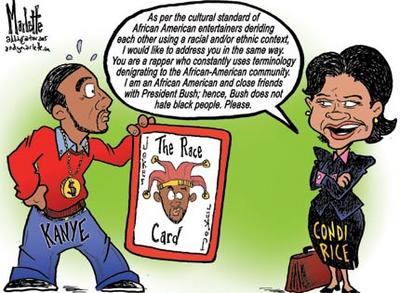
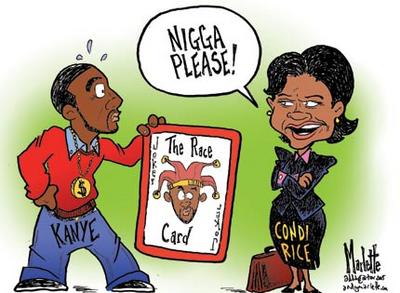
By Kathleen Parker
Oct 5, 2005
Syndicated columnist
The First Amendment has been getting a workout in recent weeks on two college campuses - the University of Florida and the University of North Carolina at Chapel Hill - where students are learning that free speech is a messy business.
The two cases, one involving a columnist at UNC and the other a political cartoonist at UF, have inflamed minority groups - Muslims and blacks, respectively - provoking protests and debate. That's the good news insofar as protest and debate are the currency of free speech.
What's not such good news is that the columnist was fired, while the Florida cartoonist has been condemned and threatened. Both students have been virtually abandoned by university officials, some of whom apparently are more concerned about burnishing their multiculti self-images than in demonstrating the importance of a founding principle that finds itself on increasingly shaky ground these days.
Exhibit A is Jillian Bandes, a former columnist for UNC's The Daily Tar Heel. Her column, which was intended to make a case for racial profiling in the wake of the 9/11 terrorist attacks, began hyperbolically: "I want all Arabs to be stripped naked and cavity-searched if they get within 100 yards of an airport."
Then she proceeded to quote several Arab students and a professor who said they wouldn't mind being searched. Some of them subsequently claimed their remarks had been taken out of context, an unprecedented development in journalism history. Bandes was fired.
One could make a strong argument that Bandes' column was silly, amateurish, lacking in taste, strident and ineffective. Being outrageous for the sake of outrage requires no special talent. Witness Howard Stern. But people have a clear and protected right to be both silly and amateurish.
Bandes' editor claimed that he fired her for "journalistic malpractice," for taking quotes out of context, not in response to pressure. Without contradicting him, I can only say that in 25 years with newspapers, I've never known anyone to be fired when a story's subjects didn't like the way quotes were used.
In Gainesville, Fla., where the First Amendment argument is more clear-cut, cartoonist Andy Marlette drew an image that has angered some black groups. Yes, a new generation has produced another Marlette. This one is the nephew of Pulitzer Prize-winning cartoonist and author, Doug Marlette, whose talent as an equal-opportunity offender apparently seeped into the family gene pool.
Marlette the Younger's cartoon in the Independent Florida Alligator was a commentary on rapper Kanye West's remarks following Hurricane Katrina that: "George Bush doesn't care about black people." Marlette drew a cartoon of West holding an oversized playing card labeled "The Race Card," with Secretary of State Condoleezza Rice saying, "Nigga Please!"
The N-word makes me cringe . . . especially every time I hear Kanye West say it. His spicy songs, including his current hit, "Gold Digger," are liberally seasoned with the word "nigga," often couched in violence and obscenity. But when I imagine the immaculate and proper Condi Rice saying it, especially to a "brotha"' who has made a fortune playing the bad boy, it makes me laugh.
Which is to say Marlette's cartoon hit the mark. It was sophisticated, irreverent and funny. His use of West's own language to parody the rapper's political statement was, in fact, the Art of the cartoon.
Yet, certain campus groups and administrators were outraged. This, despite the fact that the same student government that pulled ads from the Alligator is paying West to drop the N-Bomb in concert at the university in a few days. Thus, UF's reputation as a party school unburdened by intellectual heavy-lifting remains intact. It's hardly surprising that students don't understand that the First Amendment which protects Marlette's and Brandes' right to voice unpopular opinions also protects West's "music," as well as their right to protest. A recent nationwide study by the Foundation for Individual Rights in Education found that one of four college students couldn't name any of the freedoms protected by the First Amendment.
It's downright disturbing, however, when faculty and administrators' understanding is little better. While some journalism professors have embraced the cartoon debate as a teaching opportunity, others - including UF President Bernie Machen - have behaved like Church Ladies, pursing lips and wagging fingers instead of brandishing swords in defense of liberty.
The painful irony is that those minorities whose sensibilities have been offended are historically the first to suffer when free speech goes. Not so long ago, blacks were lynched in this country for trying to voice their opinions at the polls.
Which is why African-Americans especially - and now Arab-Americans troubled by the specter of discrimination - should be the loudest voices in supporting the freedoms that permit even speech they find offensive. It's a messy job, but everybody's got to do it.
here's the image....
or course after the bru ha ha he then published the following image....


State Dept. Visit Highlights Nicaraguan Crisis
NewsMax.com Wires
Wednesday, Oct. 5, 2005
MANAGUA, Nicaragua (AP) - The U.S. government bluntly threatened Nicaraguan leaders to abandon a pact between two opposition chieftains or cost their country international aid and trade while losing their own ability to travel freely around the world.
The declaration at a news conference here by Deputy Secretary of State Robert Zoellick was the strongest support yet for President Enrique Bolanos, whose anti-corruption campaign drove his own party's lawmakers to oppose him.
Bolanos' cleanup crusade led to a 20-year sentence for his predecessor, Arnoldo Aleman, and outraged the majority of legislators from his own Constitutionalist Liberal Party, which is dominated by Aleman.
The Liberals, pressing for Aleman's release, have aligned themselves with their historic enemies, the Sandinista Front, to pass laws stripping Bolanos of power while splitting control of appointments to the courts, electoral agencies and comptroller's offices.
U.S. officials have long denounced Sandinista Front leader Daniel Ortega, the target of a U.S.-backed guerrilla war in the 1980s. But Zoellick's words were clearly aimed at backers of Aleman, a former U.S. ally.
Nicaragua "is threatened by a creeping coup," Zoellick said. "It is threatened by corruption. It is threatened by a clique of caudillos," using the Spanish word for political bosses in a reference to Aleman and Ortega.
"There's going to be no deal here with Aleman on the part of the United States," Zoellick said, branding the former president as "a convicted criminal."
Zoellick said a US$175 million (euro147 million) American grant and other funds would be blocked if Nicaraguan leaders continued to support Aleman and Ortega and said the United States would work to halt aid from other sources.
"If you have a corrupt process where you remove a democratically elected president from power," he said, "well, then you're not going to get the US$175 million."
Zoellick noted that the United States already has removed the visas of Aleman and several of his relatives and allies and threatened that others, too, could face international travel bans.
"The United States will not welcome corrupt people to our country," Zoellick said. "We will take actions to block them. You can expect more such actions.
"And we will not stop with the United States," he added, promising to use "no-safe-haven" agreements with other leading industrial and Latin American nations to keep such people from traveling.
Zoellick singled out Aleman personally, saying "his family is not welcome in the United States. He is not welcome in the United States," and adding "we're going to everything we can to make sure he's not welcome anywhere else either."
He said leaders of the governing party need to decide "if they want to go down that path" of following Aleman "and frankly cut off their relations with the United States."
Many of the Liberal Party leaders had been exiled to the United States during the Sandinista era of the 1980s and others have close business and family ties there.
Zoellick said Aleman was "a criminal" who had been convicted because "he stole tens of millions if not more from his country." Ortega, he said, "has never accepted democracy."
Under a pact reached in the late 1990s, Aleman and Ortega agreed to have their parties split control over the courts, electoral organs and other agencies - effectively freezing out small parties.
While many polls show that Aleman and Ortega are deeply unpopular with the general public, they have managed to maintain hold of their parties and laws they encouraged have kept most rivals off the ballots.
On Monday, the U.S. Embassy confirmed that chief prosecutor Julio Centeno, a close friend of Aleman, and two of Aleman's daughters had been stripped of their visas.
Wednesday, Oct. 5, 2005
MANAGUA, Nicaragua (AP) - The U.S. government bluntly threatened Nicaraguan leaders to abandon a pact between two opposition chieftains or cost their country international aid and trade while losing their own ability to travel freely around the world.
The declaration at a news conference here by Deputy Secretary of State Robert Zoellick was the strongest support yet for President Enrique Bolanos, whose anti-corruption campaign drove his own party's lawmakers to oppose him.
Bolanos' cleanup crusade led to a 20-year sentence for his predecessor, Arnoldo Aleman, and outraged the majority of legislators from his own Constitutionalist Liberal Party, which is dominated by Aleman.
The Liberals, pressing for Aleman's release, have aligned themselves with their historic enemies, the Sandinista Front, to pass laws stripping Bolanos of power while splitting control of appointments to the courts, electoral agencies and comptroller's offices.
U.S. officials have long denounced Sandinista Front leader Daniel Ortega, the target of a U.S.-backed guerrilla war in the 1980s. But Zoellick's words were clearly aimed at backers of Aleman, a former U.S. ally.
Nicaragua "is threatened by a creeping coup," Zoellick said. "It is threatened by corruption. It is threatened by a clique of caudillos," using the Spanish word for political bosses in a reference to Aleman and Ortega.
"There's going to be no deal here with Aleman on the part of the United States," Zoellick said, branding the former president as "a convicted criminal."
Zoellick said a US$175 million (euro147 million) American grant and other funds would be blocked if Nicaraguan leaders continued to support Aleman and Ortega and said the United States would work to halt aid from other sources.
"If you have a corrupt process where you remove a democratically elected president from power," he said, "well, then you're not going to get the US$175 million."
Zoellick noted that the United States already has removed the visas of Aleman and several of his relatives and allies and threatened that others, too, could face international travel bans.
"The United States will not welcome corrupt people to our country," Zoellick said. "We will take actions to block them. You can expect more such actions.
"And we will not stop with the United States," he added, promising to use "no-safe-haven" agreements with other leading industrial and Latin American nations to keep such people from traveling.
Zoellick singled out Aleman personally, saying "his family is not welcome in the United States. He is not welcome in the United States," and adding "we're going to everything we can to make sure he's not welcome anywhere else either."
He said leaders of the governing party need to decide "if they want to go down that path" of following Aleman "and frankly cut off their relations with the United States."
Many of the Liberal Party leaders had been exiled to the United States during the Sandinista era of the 1980s and others have close business and family ties there.
Zoellick said Aleman was "a criminal" who had been convicted because "he stole tens of millions if not more from his country." Ortega, he said, "has never accepted democracy."
Under a pact reached in the late 1990s, Aleman and Ortega agreed to have their parties split control over the courts, electoral organs and other agencies - effectively freezing out small parties.
While many polls show that Aleman and Ortega are deeply unpopular with the general public, they have managed to maintain hold of their parties and laws they encouraged have kept most rivals off the ballots.
On Monday, the U.S. Embassy confirmed that chief prosecutor Julio Centeno, a close friend of Aleman, and two of Aleman's daughters had been stripped of their visas.
Tuesday, October 04, 2005
Chavez's New Gig
October 3, 2005
New York Times
Venezuelan Strongman's New Gig: National Disc Jockey
By JUAN FORERO
BARINAS, Venezuela - Deep in Venezuela's new, cumbersome Social Responsibility Law is an item that requires radio stations to play more - much more - Venezuelan music. The idea, the fiercely nationalist government says, is to promote Venezuelan culture over foreign culture, particularly American rock, which has dominated radio airplay for years.
If the measure seems obscure, its effects have not been. From the techno-pop wizards of cosmopolitan Caracas to the folksy crooners of this cattle town, Venezuelan musicians say they are reaping benefits from President Hugo Chávez's efforts to regulate culture.
For Huáscar Barradas, 40, a flute-playing magician who mixes the traditional with pop, the law has ensured that he is now booked solid at concert halls across the country. Simon Diaz, 77, a playful troubadour who enjoys international fame, is pleased that the songs he popularized decades ago are now on the airwaves once more. And halfway across the country from Caracas's eclectic music scene, Anselmo López, 71, with his traditional white liqui-liqui suit and four-string bandola, says he is comforted to know that some of his old forgotten songs are now being heard again.
"All of a sudden, I get calls from people at radio stations who never played my music before," Mr. Barradas said backstage in Caracas on a recent night as he prepared for another show. "They now put four or five of my songs on a rotation. I'm on all the radio programs, the most important ones."
While the law has been a blessing for musicians, it is often a mixed one, because many are unsure exactly how they can take advantage. That is particularly the case here in Barinas, a town of pastures and grain silos that is famous for being the hometown of Mr. Chávez, who in his seven years in office has promised a social and cultural revolution.
From here, on the oven-hot plains of Venezuela, comes some of the country's great traditional music, mournful songs of love lost or rat-a-tat ballads, often bawdy and humorous, about big, wide trees, fast horses and romantic sunsets. The instruments are simple, bandolas and cuatros, small guitars played with fast precision, as well as maracas and harps.
Yet, some of the best-known musicians, like Mr. López, a household name among older Venezuelans, are so down on their luck that making it back may prove impossible.
"The problem is it's hard to find my records," he said, noting that some of them are so old that no one has them anymore. Mr. López, though, still sees benefits in the law, with those records of his that still circulate selling more than before. "Sales go up, I guess, when your music is heard more," he said with a shrug.
Carlos Tapia, another Barinas resident and one of Venezuela's best-known harpists, said he welcomed the law because his brand of music had in recent years received little notice, as radio stations turned to rock, rap and pop. "The music situation was very poor," he said. "It was just hard to get heard."
But now, big-name musicians who do traditional music, from Scarlett Linares to Reynaldo Armas, have contracted him for concerts and recordings. "There is much more work than before," he said, explaining how he constantly travels Venezuela's winding roads to get to concerts.
In addition to requiring that at least 50 percent of all radio music programming be homegrown, the cultural law, approved last December, requires that half of all that music be folkloric. It is vague enough that it covers older balladeers like Mario Suárez and the hot urban hipster Rafael "the Chicken" Brito, whose stew of jazz with harps and cuatro guitars of Venezuela's outback is all the rage.
Franklin Cacique, a keyboardist with Saladillo de Aguierre, a famed 16-man group that performs the folkloric gaitas of the northwest, said the law had spawned fresh, new music as bands scramble to take advantage. "It's leading to the creation of more imaginative music, as musicians try to interpret Venezuelan music in different ways," he said. "People have awakened and they want to hear this music."
Still, not everyone is pleased. For radio stations, it has been a headache, handled grudgingly but expeditiously by some and with an air of rebellion by others, like Caracas's 92.9 FM, which responded by playing vulgar folkloric music, much to the government's distaste. At KISS-FM 101.5, the format of soft rock ballads by the likes of Huey Lewis has given way to the tangy guitar of "My Old Horse," Simon Diaz's 1980 classic.
But it was not easy. The station had Venezuelan music in stock, but none of the "traditional" recordings required by the law: llaneras, from the country's grasslands; the gaitas, with their raucous lyrics; or the wind music of the high Andes. We asked everyone who worked here to find traditional music at home and bring it in," said Carmen Romero, a manager at the station. "We almost shot ourselves. There just was not enough of that music."
Others grouse that the law amounts to another half-baked idea from Mr. Chávez's populist government. All countries worry about not playing enough of their music but the fact is that folkloric music is not the majority's music," said Carlos Espinoza of Record Report, a company that monitors airplay in Caracas. "I like to hear folkloric music when I'm in a steakhouse out in the country. But in Caracas, standing in line, I don't want to hear the harp, the cuatro and maracas. I have a right to decide what I want to hear."
Those who are making the most of the law are the few musicians who, in recent years, had already found success. Those musicians, mostly based in Caracas, have producers and press agents, and they have momentum and enterprise, having recorded in recent years.
Mr. Brito is considered one of the most successful. At 33, he mixes the cuatro, which he plays with fluid grace, with Afro-Venezuelan drums, with a jazzy flute, with all kinds of pop sounds. The foundation is as folkloric as it gets, but laced with modern sounds that radio stations love.
Already successful before the law, Mr. Brito is reaping bigger dividends now, with his songs at the top of the charts and a new record sure to do well when it hits record stores.
"Half my life, I've been doing Venezuelan music," he said. "I've played it since I was a kid, I've traveled the world but never has my music been heard so much as now."
New York Times
Venezuelan Strongman's New Gig: National Disc Jockey
By JUAN FORERO
BARINAS, Venezuela - Deep in Venezuela's new, cumbersome Social Responsibility Law is an item that requires radio stations to play more - much more - Venezuelan music. The idea, the fiercely nationalist government says, is to promote Venezuelan culture over foreign culture, particularly American rock, which has dominated radio airplay for years.
If the measure seems obscure, its effects have not been. From the techno-pop wizards of cosmopolitan Caracas to the folksy crooners of this cattle town, Venezuelan musicians say they are reaping benefits from President Hugo Chávez's efforts to regulate culture.
For Huáscar Barradas, 40, a flute-playing magician who mixes the traditional with pop, the law has ensured that he is now booked solid at concert halls across the country. Simon Diaz, 77, a playful troubadour who enjoys international fame, is pleased that the songs he popularized decades ago are now on the airwaves once more. And halfway across the country from Caracas's eclectic music scene, Anselmo López, 71, with his traditional white liqui-liqui suit and four-string bandola, says he is comforted to know that some of his old forgotten songs are now being heard again.
"All of a sudden, I get calls from people at radio stations who never played my music before," Mr. Barradas said backstage in Caracas on a recent night as he prepared for another show. "They now put four or five of my songs on a rotation. I'm on all the radio programs, the most important ones."
While the law has been a blessing for musicians, it is often a mixed one, because many are unsure exactly how they can take advantage. That is particularly the case here in Barinas, a town of pastures and grain silos that is famous for being the hometown of Mr. Chávez, who in his seven years in office has promised a social and cultural revolution.
From here, on the oven-hot plains of Venezuela, comes some of the country's great traditional music, mournful songs of love lost or rat-a-tat ballads, often bawdy and humorous, about big, wide trees, fast horses and romantic sunsets. The instruments are simple, bandolas and cuatros, small guitars played with fast precision, as well as maracas and harps.
Yet, some of the best-known musicians, like Mr. López, a household name among older Venezuelans, are so down on their luck that making it back may prove impossible.
"The problem is it's hard to find my records," he said, noting that some of them are so old that no one has them anymore. Mr. López, though, still sees benefits in the law, with those records of his that still circulate selling more than before. "Sales go up, I guess, when your music is heard more," he said with a shrug.
Carlos Tapia, another Barinas resident and one of Venezuela's best-known harpists, said he welcomed the law because his brand of music had in recent years received little notice, as radio stations turned to rock, rap and pop. "The music situation was very poor," he said. "It was just hard to get heard."
But now, big-name musicians who do traditional music, from Scarlett Linares to Reynaldo Armas, have contracted him for concerts and recordings. "There is much more work than before," he said, explaining how he constantly travels Venezuela's winding roads to get to concerts.
In addition to requiring that at least 50 percent of all radio music programming be homegrown, the cultural law, approved last December, requires that half of all that music be folkloric. It is vague enough that it covers older balladeers like Mario Suárez and the hot urban hipster Rafael "the Chicken" Brito, whose stew of jazz with harps and cuatro guitars of Venezuela's outback is all the rage.
Franklin Cacique, a keyboardist with Saladillo de Aguierre, a famed 16-man group that performs the folkloric gaitas of the northwest, said the law had spawned fresh, new music as bands scramble to take advantage. "It's leading to the creation of more imaginative music, as musicians try to interpret Venezuelan music in different ways," he said. "People have awakened and they want to hear this music."
Still, not everyone is pleased. For radio stations, it has been a headache, handled grudgingly but expeditiously by some and with an air of rebellion by others, like Caracas's 92.9 FM, which responded by playing vulgar folkloric music, much to the government's distaste. At KISS-FM 101.5, the format of soft rock ballads by the likes of Huey Lewis has given way to the tangy guitar of "My Old Horse," Simon Diaz's 1980 classic.
But it was not easy. The station had Venezuelan music in stock, but none of the "traditional" recordings required by the law: llaneras, from the country's grasslands; the gaitas, with their raucous lyrics; or the wind music of the high Andes. We asked everyone who worked here to find traditional music at home and bring it in," said Carmen Romero, a manager at the station. "We almost shot ourselves. There just was not enough of that music."
Others grouse that the law amounts to another half-baked idea from Mr. Chávez's populist government. All countries worry about not playing enough of their music but the fact is that folkloric music is not the majority's music," said Carlos Espinoza of Record Report, a company that monitors airplay in Caracas. "I like to hear folkloric music when I'm in a steakhouse out in the country. But in Caracas, standing in line, I don't want to hear the harp, the cuatro and maracas. I have a right to decide what I want to hear."
Those who are making the most of the law are the few musicians who, in recent years, had already found success. Those musicians, mostly based in Caracas, have producers and press agents, and they have momentum and enterprise, having recorded in recent years.
Mr. Brito is considered one of the most successful. At 33, he mixes the cuatro, which he plays with fluid grace, with Afro-Venezuelan drums, with a jazzy flute, with all kinds of pop sounds. The foundation is as folkloric as it gets, but laced with modern sounds that radio stations love.
Already successful before the law, Mr. Brito is reaping bigger dividends now, with his songs at the top of the charts and a new record sure to do well when it hits record stores.
"Half my life, I've been doing Venezuelan music," he said. "I've played it since I was a kid, I've traveled the world but never has my music been heard so much as now."
Sunday, October 02, 2005
Liberty
Man loves liberty, even if he does not know that he loves it. He is driven by it and flees from where it does not exist.
Jose Marti

In the Wake of the Storm, Rage and Redemption
September 25, 2005
The New York Times
By CARLOS EIRE
THE worst may not be over for most of the evacuees from New Orleans. And the best may lie ahead, too. Being uprooted suddenly and violently, and not knowing when you will be able to return - or even if there will be anything left to reclaim - is as awful a shock as life can dole out.
It can also be a great defining moment. A profound loss may scar you for life, but it can also free you from illusion and make you stronger. This is especially true in the case of children.
I speak from experience, for I am also an evacuee of sorts. When I was 11 years old, a great disaster blew me away from home and family, leaving me with an uncertain future, and a white-hot smoldering rage at the unfairness of it all, a rage that even to this day is mixed with a weird kind of glee.
I was one of 14,000 children airlifted out of Cuba between 1961 and 1962 as part of Operation Peter Pan. Our parents sent us to the United States to save us from a monstrously disastrous revolution, not knowing if they would ever see us again, and not knowing where we would end up. Most of us had no relatives or contacts in this country, so we were all scattered to the four winds, shuffled off to any foster home or institution that could take us in. Some of us never saw our parents again. All of us had to adjust, and most of us learned how to thrive on adversity.
Children know how to adapt much better than adults. Everyone knows that. Move a child to a foreign land, and the child will learn the new language almost instantly, without an accent. Place a child in new surroundings, and within weeks the child may call the new place home and play with new neighbors as with the oldest of friends.
Children tend to embrace pain and the paradoxical nature of existence with grace to spare. Loss is gain and gain is loss. No problem. I lost my house and all my friends, and miss it all in my very marrow, but I love all these strange new things. I hate them, too. And I deserve to be happy, no matter what. Children are blessed with an inner compass that always points toward that true north the ancient Greeks called eudaemonia and we call happiness. They are also quite adept at burying their pain.
But no one stays a child for long. All children who adapt to wrenching losses have to confront the pain they buried sooner or later, along with the anger spawned by it.
If asked how I would counsel the children evacuated from New Orleans, many of whom have ended up here as our neighbors, I would say that they need no advice. That inner compass will guide most of them through this dark night. But I might slip each of them a message in an envelope, sealed with a bright red stamp that reads "Open When the Rage Begins to Surface."
And what would the message say? Embrace your rage. It is utterly justified. Nature dealt you a low blow, and your government made it worse. Your city deserved to have better levees, and in the richest nation on earth, you could have easily had them. Your leaders failed you at every turn, both before and after the storm, especially if you were among the poor. But embrace your survival, too, along with all of those surprising acts of kindness and all of the unexpected opportunities that came your way because of this disaster. Never forget that gain and loss are twins conjoined at the heart. You knew that as a child, and you know it still.
My predicament, though similar, is not quite the same. Forty-six years after it came ashore, the storm that sent me packing is still churning over the same spot, wrecking everything over and over, spewing out refugees constantly, with no end in sight.
There are now over 2 million of us Cubans scattered around the globe, waiting for the skies to clear, burying our dead in improbably odd resting places. Most of us consider ourselves very lucky and are profoundly thankful for the new lives we have found, even if we run into clueless dolts who wear Che T-shirts or dare to vacation amid the ruins we were forced to abandon.
Perhaps I should aim my advice at everyone who has watched Katrina from afar rather than at those who have suffered through it.
When you think of Katrina and its victims, keep in mind that exile is always a mixed blessing, and that those children blown away by this disaster will be sorting angrily through the ruins - and finding rough gems in the debris - for the rest of their lives.
Carlos Eire is the T. Lawrason Riggs Professor of History and Religious Studies at Yale University and the author of "Waiting for Snow in Havana: Confessions of a Cuban Boy," winner of the 2003 National Book Award for nonfiction. He lives in Guilford.
The New York Times
By CARLOS EIRE
THE worst may not be over for most of the evacuees from New Orleans. And the best may lie ahead, too. Being uprooted suddenly and violently, and not knowing when you will be able to return - or even if there will be anything left to reclaim - is as awful a shock as life can dole out.
It can also be a great defining moment. A profound loss may scar you for life, but it can also free you from illusion and make you stronger. This is especially true in the case of children.
I speak from experience, for I am also an evacuee of sorts. When I was 11 years old, a great disaster blew me away from home and family, leaving me with an uncertain future, and a white-hot smoldering rage at the unfairness of it all, a rage that even to this day is mixed with a weird kind of glee.
I was one of 14,000 children airlifted out of Cuba between 1961 and 1962 as part of Operation Peter Pan. Our parents sent us to the United States to save us from a monstrously disastrous revolution, not knowing if they would ever see us again, and not knowing where we would end up. Most of us had no relatives or contacts in this country, so we were all scattered to the four winds, shuffled off to any foster home or institution that could take us in. Some of us never saw our parents again. All of us had to adjust, and most of us learned how to thrive on adversity.
Children know how to adapt much better than adults. Everyone knows that. Move a child to a foreign land, and the child will learn the new language almost instantly, without an accent. Place a child in new surroundings, and within weeks the child may call the new place home and play with new neighbors as with the oldest of friends.
Children tend to embrace pain and the paradoxical nature of existence with grace to spare. Loss is gain and gain is loss. No problem. I lost my house and all my friends, and miss it all in my very marrow, but I love all these strange new things. I hate them, too. And I deserve to be happy, no matter what. Children are blessed with an inner compass that always points toward that true north the ancient Greeks called eudaemonia and we call happiness. They are also quite adept at burying their pain.
But no one stays a child for long. All children who adapt to wrenching losses have to confront the pain they buried sooner or later, along with the anger spawned by it.
If asked how I would counsel the children evacuated from New Orleans, many of whom have ended up here as our neighbors, I would say that they need no advice. That inner compass will guide most of them through this dark night. But I might slip each of them a message in an envelope, sealed with a bright red stamp that reads "Open When the Rage Begins to Surface."
And what would the message say? Embrace your rage. It is utterly justified. Nature dealt you a low blow, and your government made it worse. Your city deserved to have better levees, and in the richest nation on earth, you could have easily had them. Your leaders failed you at every turn, both before and after the storm, especially if you were among the poor. But embrace your survival, too, along with all of those surprising acts of kindness and all of the unexpected opportunities that came your way because of this disaster. Never forget that gain and loss are twins conjoined at the heart. You knew that as a child, and you know it still.
My predicament, though similar, is not quite the same. Forty-six years after it came ashore, the storm that sent me packing is still churning over the same spot, wrecking everything over and over, spewing out refugees constantly, with no end in sight.
There are now over 2 million of us Cubans scattered around the globe, waiting for the skies to clear, burying our dead in improbably odd resting places. Most of us consider ourselves very lucky and are profoundly thankful for the new lives we have found, even if we run into clueless dolts who wear Che T-shirts or dare to vacation amid the ruins we were forced to abandon.
Perhaps I should aim my advice at everyone who has watched Katrina from afar rather than at those who have suffered through it.
When you think of Katrina and its victims, keep in mind that exile is always a mixed blessing, and that those children blown away by this disaster will be sorting angrily through the ruins - and finding rough gems in the debris - for the rest of their lives.
Carlos Eire is the T. Lawrason Riggs Professor of History and Religious Studies at Yale University and the author of "Waiting for Snow in Havana: Confessions of a Cuban Boy," winner of the 2003 National Book Award for nonfiction. He lives in Guilford.
ELIAN GONZALEZ TALKS TO 60 MINUTES

ELIAN GONZALEZ TALKS TO 60 MINUTES: CASTRO A FRIEND AND 'FATHER'; WANTS TO SEE MIAMI RELATIVES, THOUGH CALLS THEIR ACTIONS 'WRONG' THU Sep 29 2005
12:01:11 ET
Elian Gonzalez, now a seventh grader in Cuba who calls President Fidel Castro a friend and "father," would see his Miami relatives again, despite saying their treatment of him five years ago was wrong. Gonzalez is interviewed by Bob Simon for a 60 MINUTES report to be broadcast ÊSunday, Oct. 2 (7:00-8:00 PM, ET/PT) on the CBS Television Network.
Gonzalez, 11, is a hero in Cuba after what happened to him when he was just 6 years old: His mother died at sea and he was rescued two miles off Florida, after which he was repatriated following a months-long tug of war between Gonzalez Miami relatives and his father and the Cuban government. In what Miami Cuban exiles would say is propaganda, Castro attended the boy's elementary school graduation and declared he was proud to have Gonzalez as his friend. The feeling is mutual. "It's also very moving to me and I also believe I am his friend," Gonzalez tells Simon. "Not only [do I think of Castro] as a friend, but also as a father," says Gonzalez. The boy believes that he could call the Cuban president on the phone if he wanted to. Gonzalez gave a patriotic speech in front of Castro and cameras on the fifth anniversary of the day U.S. law enforcement officers raided his Miami relatives' house and removed him at gunpoint to be repatriated.
It's all part of Castro's propagandist plans, says Ramon Sanchez, a Cuban-American who led demonstrations in Miami in support of keeping the boy in America five years ago. "[Gonzalez] is being brainwashed by the Cuban regime. When you see a child talking in the same exact way that the dictator has talked for 46 years, you know he has been indoctrinated," says Sanchez. The boy says his Miami relatives, with whom he spent five months, tried to persuade him to stay in America. "They were telling me bad things about [my father]... They were also telling me to tell [my father] that I did not want to go back to Cuba and I always told them that I wanted to," he tells Simon. Gonzalez says he missed his father, school and his friends back in Cuba. The worst parts of his Miami experience were the nights he found difficult to sleep through. "I would have nightmares and my uncles would talk to me about my mother it was better not to remind me of that because that tormented me... I was very little," he recalls.One of those great uncles who cared for him during that time, Delfin Gonzalez, denies that Elian was unhappy and says he doesn't believe anything he says in Cuba because the boy is a prisoner there.
Does Elian ever want to see those relatives again? "Yes," he tells Simon. "Despite everything they did, the way they did it, it was wrong, they are [still] my family...my uncles."60 MINUTES is close-captioned in Spanish; the signal is on the "CC3" menu item.
From The Drudge Report
Elian Gonzalez calls Castro a 'friend'
Associated Press
September 29, 2005, 3:23 PM EDT
MIAMI -- Elian Gonzalez, the Cuban boy at the center of an international custody battle five years ago, said in a new television interview that Cuban President Fidel Castro is his friend, but also that he hopes someday to see his family in Miami again.``Despite everything they did, it was wrong, they are (still) my family ... my uncles,'' Gonzalez said in the interview with CBS's
``60 Minutes,'' which released excerpts Thursday for the program that airs Sunday night.
Gonzalez, now 11, set off a seven-month custody battle after he rescued off the Florida coast in November 1999 during a failed attempt to reach the United States. Gonzalez was one of only three survivors _ his mother died at sea _ and his Miami relatives and Cuban exile groups fought to prevent his return to Cuba.The boy was reunited with his father in Cuba after an armed federal raid April 22, 2000, on his relatives' home.
In the years since, Elian Gonzalez has been treated as a hero in Cuba, with Castro attending his elementary school graduation and having him give a highly publicized speech this year on the fifth anniversary of the Miami raid.``It's also very moving to me and I also believe I am his friend,'' Gonzalez said of Castro in the interview. He said he considers Castro ``not only as a friend, but also as a father.''The boy's aunt, Angela Gonzalez, told The Associated Press on Thursday that she isn't sure whether what Elian said in the interview represented his true beliefs because of Cuba's controls on information. She said family members in the United States have been prevented from having any contact with the boy since he returned to Cuba.``We love him. He is always on our minds,'' said Angela Gonzalez, who had U.S. custody of Elian and whose former home was the site of the federal raid in 2000.
In the interview, Elian Gonzalez faulted some of his U.S. relatives' actions during his time in Miami.``They were telling me bad things about (my father) ... They were also telling me to tell (my father) that I did not want to go back to Cuba and I always told them I wanted to,'' he said.He also said that he had a hard time sleeping while in Miami. ``I would have nightmares and my uncles would talk to me about my mother. It was better not to remind me of that because that tormented me. I was very little,'' he said.Ramon Sanchez, founder of the Cuban exile group Democracy Movement, said he and other Cuban-Americans believe that Elian ``is under the control of the government'' in Cuba.``Obviously what we have seen after he was sent to Cuba is exactly what we feared, that he was going to be subjected to the control of the regime and that he would be brainwashed,'' Sanchez said. ``It is very hard to determine if that is his own opinion or not.''
Copyright © 2005, South Florida Sun-Sentinel
September 29, 2005, 3:23 PM EDT
MIAMI -- Elian Gonzalez, the Cuban boy at the center of an international custody battle five years ago, said in a new television interview that Cuban President Fidel Castro is his friend, but also that he hopes someday to see his family in Miami again.``Despite everything they did, it was wrong, they are (still) my family ... my uncles,'' Gonzalez said in the interview with CBS's
``60 Minutes,'' which released excerpts Thursday for the program that airs Sunday night.
Gonzalez, now 11, set off a seven-month custody battle after he rescued off the Florida coast in November 1999 during a failed attempt to reach the United States. Gonzalez was one of only three survivors _ his mother died at sea _ and his Miami relatives and Cuban exile groups fought to prevent his return to Cuba.The boy was reunited with his father in Cuba after an armed federal raid April 22, 2000, on his relatives' home.
In the years since, Elian Gonzalez has been treated as a hero in Cuba, with Castro attending his elementary school graduation and having him give a highly publicized speech this year on the fifth anniversary of the Miami raid.``It's also very moving to me and I also believe I am his friend,'' Gonzalez said of Castro in the interview. He said he considers Castro ``not only as a friend, but also as a father.''The boy's aunt, Angela Gonzalez, told The Associated Press on Thursday that she isn't sure whether what Elian said in the interview represented his true beliefs because of Cuba's controls on information. She said family members in the United States have been prevented from having any contact with the boy since he returned to Cuba.``We love him. He is always on our minds,'' said Angela Gonzalez, who had U.S. custody of Elian and whose former home was the site of the federal raid in 2000.
In the interview, Elian Gonzalez faulted some of his U.S. relatives' actions during his time in Miami.``They were telling me bad things about (my father) ... They were also telling me to tell (my father) that I did not want to go back to Cuba and I always told them I wanted to,'' he said.He also said that he had a hard time sleeping while in Miami. ``I would have nightmares and my uncles would talk to me about my mother. It was better not to remind me of that because that tormented me. I was very little,'' he said.Ramon Sanchez, founder of the Cuban exile group Democracy Movement, said he and other Cuban-Americans believe that Elian ``is under the control of the government'' in Cuba.``Obviously what we have seen after he was sent to Cuba is exactly what we feared, that he was going to be subjected to the control of the regime and that he would be brainwashed,'' Sanchez said. ``It is very hard to determine if that is his own opinion or not.''
Copyright © 2005, South Florida Sun-Sentinel
Monday, September 26, 2005
The headlines that caught my attention today
CINDY ARRESTED AT WHITE HOUSE
Cool!! She looked like she was having fun..
MOVIE: 'Devastating behind-the-scenes look' at Kerry's failed presidential campaign...
So what's new. That's why he lost.
Rumors of deaths in New Orleans greatly exaggerated...
Incompetence, incompetence
STREISAND DECLARES 'GLOBAL WARMING EMERGENCY'...
Oh my god! Is anybody paying attention to this?
CHINA TIGHTENS ITS RESTRICTIONS FOR NEWS MEDIA ON THE INTERNET...
Who are they kidding..Once a communist always a communist.
FLASHBACK: HILLARY CLINTON SAYS INTERNET NEWS NEEDS 'RETHINK'...
Of course she agrees with China..
Saturday, September 24, 2005
Tuesday, September 20, 2005
Headlines that caught my eye today
FED TAKES ANOTHER QUARTER...
Comment by Pete: A real surprise here. I really thought they would hold back due to the energy problems.
NY Times Cutting 500 Jobs, 4% Of Work Force...
Comment by Pete: Not surprising. Probably all deadwood
Senate Democratic Leader to Oppose Roberts' Nomination...
Comment by Pete: So what's new? If God was nominated by the President they would oppose him.
Sheehan Speech In New York City Cut Short By Police...
Comment by Pete: If she doesn't have one already, she's gonna need a bodyguard. She's making friends faster than Hitler. Being the sock puppet that she's become, I'm sure their handlers will think about that next. She's so annoying with her idiotic comments. I can't stand not even the way she looks. Arrgghh!!!
Monday, September 19, 2005
Sunday, September 18, 2005
Pull Our Troops from Occupied New Orleans
From The Drudge Report
CINDY SHEEHAN CALLS FOR U.S TO 'PULL OUR TROOPS OUT OF OCCUPIED NEW ORLEANS'
Mon Sep 12 2005 12:42:11 ET
Celebrity anti-war protester, fresh off inking a lucrative deal with Speaker's Bureau, has demanded at the HUFFINGTON POST and MICHAEL MOORE'S website that the United States military must immediately leave 'occupied' New Orleans.
"I don't care if a human being is black, brown, white, yellow or pink. I donÕt care if a human being is Christian, Muslim, Jew, Buddhist, or pagan. I don't care what flag a person salutes: if a human being is hungry, then it is up to another human being to feed him/her. George Bush needs to stop talking, admit the mistakes of his all around failed administration, pull our troops out of occupied New Orleans and Iraq, and excuse his self from power. The only way America will become more secure is if we have a new administration that cares about Americans even if they donÕt fall into the top two percent of the wealthiest."
Sheehan is in the middle of a bus trip across America in support of her cause.
Developing...
CINDY SHEEHAN CALLS FOR U.S TO 'PULL OUR TROOPS OUT OF OCCUPIED NEW ORLEANS'
Mon Sep 12 2005 12:42:11 ET
Celebrity anti-war protester, fresh off inking a lucrative deal with Speaker's Bureau, has demanded at the HUFFINGTON POST and MICHAEL MOORE'S website that the United States military must immediately leave 'occupied' New Orleans.
"I don't care if a human being is black, brown, white, yellow or pink. I donÕt care if a human being is Christian, Muslim, Jew, Buddhist, or pagan. I don't care what flag a person salutes: if a human being is hungry, then it is up to another human being to feed him/her. George Bush needs to stop talking, admit the mistakes of his all around failed administration, pull our troops out of occupied New Orleans and Iraq, and excuse his self from power. The only way America will become more secure is if we have a new administration that cares about Americans even if they donÕt fall into the top two percent of the wealthiest."
Sheehan is in the middle of a bus trip across America in support of her cause.
Developing...
Tuesday, September 13, 2005
Mob Brutally Repudiates Blind Cuban Activist
Jim Meyers, NewsMax.com
Monday, Sept. 12, 2005
A blind human rights activist in Cuba says he was the victim of an "act of repudiation" by a mob organized by the communist government. Juan Carlos Gonzalez Leiva was holding a meeting of the Cuban Foundation of Human Rights on September 1 at his home in the city of Ciego de Avila when the attack came, he disclosed in a telephone call after the confrontation.
"Forces of State Security and the Cuban Police used the provincial coordinator of the Committees for the Defense of the Revolution, Jose Manuel Benedico, to lead a mob of between 200 and 400 people that shouted obscenities and governmental slogans," he said. "These people banged on our doors and windows, and they made it apparent to us that they were not going to permit activities in the defense of human rights.
"They threatened us with death, saying they were going to yank us out of the house by our necks and they were going to pull out our teeth. "They tried to fumigate my house with smoke, and threatened to turn off our water and electricity. They prevented any food from coming into my house. They even cut off public phone connections so that the act of repudiation would not be reported abroad. "Activists who left my house at 4:30 in the afternoon received insults.
Others were beaten up, like Lazaro Iglesias Estrada, National Secretary of the Cuban Foundation of Human Rights, and independent journalist Osmel Sanchez Lopez. "From August 6 to the present I have suffered more than 15 acts of repression, like arrests, detainments, fines, citations, common court cases and acts of repudiation. I am constantly monitored. "The situation is very tense because their objective is to pressure me into leaving the country."
Sent by: Sr.Cohiba
Monday, Sept. 12, 2005
A blind human rights activist in Cuba says he was the victim of an "act of repudiation" by a mob organized by the communist government. Juan Carlos Gonzalez Leiva was holding a meeting of the Cuban Foundation of Human Rights on September 1 at his home in the city of Ciego de Avila when the attack came, he disclosed in a telephone call after the confrontation.
"Forces of State Security and the Cuban Police used the provincial coordinator of the Committees for the Defense of the Revolution, Jose Manuel Benedico, to lead a mob of between 200 and 400 people that shouted obscenities and governmental slogans," he said. "These people banged on our doors and windows, and they made it apparent to us that they were not going to permit activities in the defense of human rights.
"They threatened us with death, saying they were going to yank us out of the house by our necks and they were going to pull out our teeth. "They tried to fumigate my house with smoke, and threatened to turn off our water and electricity. They prevented any food from coming into my house. They even cut off public phone connections so that the act of repudiation would not be reported abroad. "Activists who left my house at 4:30 in the afternoon received insults.
Others were beaten up, like Lazaro Iglesias Estrada, National Secretary of the Cuban Foundation of Human Rights, and independent journalist Osmel Sanchez Lopez. "From August 6 to the present I have suffered more than 15 acts of repression, like arrests, detainments, fines, citations, common court cases and acts of repudiation. I am constantly monitored. "The situation is very tense because their objective is to pressure me into leaving the country."
Sent by: Sr.Cohiba
Monday, September 12, 2005
Waaaayyyyyyyyyy Off
France called it an "American Tsunami". Germany called it "Apocalypse now". First the media said 1000 dead in New Orleans, then it was 10,000, then they ordered body bags for 25,000. Official death toll so far 197. Gives you an idea that they don't know what the hell they are talking about.
Saturday, September 10, 2005
Helping the Poor
The Governor of the state of Louisiana always had the power to deploy the LA guard in the fashion that other state troops are being deployed today. It is her failure to do so that has prompted the President to get the help from other states.
The Mayor of New Orleans, who ordered all those people into the Superdome (yep, that was his big plan), had the power to bus them out of the city at the same time. The City of New Orleans moves many more children each day on school buses than were in the dome. Those buses were available and slated to be used for school the next day. He could easily have evacuated those people...but did not.
When ordering a mandatory evacuation you use what resources you have to move the people...he did not. If it was important and dangerous enough to order all citizens to leave, it was dangerous enough to help those people to leave. Yet, they did not. After they failed to do so...the busses ended up under water and useless.
Their evacuation plan was non-existent.Their evacuation plan was get out on your own.They know where every school in the state is. Most of them have gyms.They could have bussed out 100-200 people to each of those gyms 100 miles inland and left the city empty.The Mayor failed. The Governor does not appear to have put the National Guard on alert prior to the storm.Both of them sat on their butts and waited for the feds to do it all.
In the end, it was FEMA, after the local and state government's failure, that had to get the job done...but now under much, much worse and dangerous circumstances.
No, it is not Bush's fault or the fed's fault. We must place blame squarely where it lies at the feet of the local and state executives who had neither the desire nor the will to make those calls, irrespective of their political stripe.
Sent by Dr. P.Alvarez
The Mayor of New Orleans, who ordered all those people into the Superdome (yep, that was his big plan), had the power to bus them out of the city at the same time. The City of New Orleans moves many more children each day on school buses than were in the dome. Those buses were available and slated to be used for school the next day. He could easily have evacuated those people...but did not.
When ordering a mandatory evacuation you use what resources you have to move the people...he did not. If it was important and dangerous enough to order all citizens to leave, it was dangerous enough to help those people to leave. Yet, they did not. After they failed to do so...the busses ended up under water and useless.
Their evacuation plan was non-existent.Their evacuation plan was get out on your own.They know where every school in the state is. Most of them have gyms.They could have bussed out 100-200 people to each of those gyms 100 miles inland and left the city empty.The Mayor failed. The Governor does not appear to have put the National Guard on alert prior to the storm.Both of them sat on their butts and waited for the feds to do it all.
In the end, it was FEMA, after the local and state government's failure, that had to get the job done...but now under much, much worse and dangerous circumstances.
No, it is not Bush's fault or the fed's fault. We must place blame squarely where it lies at the feet of the local and state executives who had neither the desire nor the will to make those calls, irrespective of their political stripe.
Sent by Dr. P.Alvarez
Friday, September 09, 2005
Hollywood to the Rescue
Megan Basham
September 7, 2005
The downpour of Hurricane Katrina brought with it a scourge of sickness, homelessness, injury and death. But the aftermath of Katrina has wrought its own special plague—a celebrity hurricane of opportunism and bad taste.
While most of America is embracing New Orleans’ tragedy as a chance to pull together and demonstrate a still-strong Christian character of caring for the least of these, Hollywood is embracing it as an opportunity to display their foolishness, egotism and utter lack of sensitivity.
Hip-hop half-wit Kanye West currently leads the pack with his outburst during the “Concert for Hurricane Relief.” On live television the rap superstar said, “George Bush doesn't care about black people.” He further suggested that Bush granted national guardsmen permission to randomly shoot African-Americans. Not to be overlooked in the ensuing controversy, Matt Damon gave props to West for his groundless tirade, telling Access Hollywood, "I'm not a fan of [President Bush], so I let out a big cheer."
The ladies are getting in on the act as well. Singer Celine Dion expressed anger at authorities for arresting gun-toting looters, and then criticized the Bush administration for taking so long to get federal rescuers into the area. Acknowledging that there may have been legitimate reasons for the 72-hour delay, Dion then declined to inform herself further, stating, “I don’t want to hear those reasons.”
Similarly, Angelina Jolie told the press she has written letters to The White House and Congress informing them that they must improve their response time in providing Katrina aid. "It is wonderful to hear of the relief efforts that are finally coming into New Orleans…but as we all know, it is simply not enough," she said. As expected, none of the press members present asked Jolie how she could be so sure that the federal government hadn’t done everything it could as quickly as it could. No one queried her as to how she knew it was FEMA – and not local government officials – that dropped the ball in New Orleans.
This isn’t surprising considering that celebrity outbursts are so frequently reported as hard news that some newspapers must have A-listers’ publicists on speed-dial. I like Jolie as an actress and I understand that many men hold her in high regard as a, um, public figure. But who is Angelina Jolie (or any actor for that matter) to “urge” the Bush administration to adopt a policy regarding Katrina relief or anything else? Is she a historian with some special insight into how past generations responded to natural disasters? Is she a journalist who has research or sources that provide credible evidence the government withheld aid? No. She is an actress. Once, Jane Fonda’s involvement in Vietnam stood out to Americans as a shameful anomaly.
Today, there is no national event, whether tragic or triumphant, into which a horde of entertainers do not see fit to insert themselves. Colin Farrell, the foul-mouthed Irish party boy who, by the way, has only resided in the U.S. since 1999, saw fit to offer this evaluation, “"If this had been a bunch of white people on the roofs of their houses I don't have any f***ing doubt there would have been every single helicopter, plane and means that the government has trying to help." His countryman Pierce Brosnan submitted yet another unsubstantiated judgment. “This man called President Bush has a lot to answer for,” he fumed, blaming the president’s environmental policies for the natural disaster.
Just what we need in our moment of crisis – foreign actors telling us what’s wrong with our government. It would be one thing if actors and musicians would show up with a bit of humility and pass out water, food, and clothing – not to mention some funds from their ample bank accounts – to needy citizens. If they did this (and a few do) Americans would welcome them in the spirit of brotherly love and patriotic pride. Instead, most of them show up with camera crews (as Sean Penn did in his failed “rescue” trip to New Orleans) and attitudes of privilege.
Their hubris is revolting. In the past, Americans haven’t had the energy to be outraged by such celebrity exploits. So instead we laughed, knowing that the only people taking the spoiled stars seriously as they ranted and raved were themselves. But in the midst of a tragedy like Katrina, most of us will stop finding these scavenging celebrity cabals funny. And we will no longer excuse their faux outrage and indignant self-promotion. Maybe then their box office numbers will fall so far they will have no choice but to give up politics and press conferences and dedicate themselves to making quality entertainment. Now that sweet silence would be worthy of a Hollywood ending.
Megan Basham, a Townhall.com movie critic and Phillips Fellow, is a freelance writer and a reporter for NBC 9 in El Paso. She is currently at work on the book, "Behind Every Successful Man.
©2005 Megan Basham townhall.com
Bush Caused Katrina "The Truth"
From a 'usually relaible' source (SCG):
Bush Gets Bashed - But Is It Justified?
"This man called President Bush has a lot to answer for," the former James Bond actor told reporters Saturday. "I don't know if this man is really taking care of America. This government has been shameful." (PIERCE BROSNAN)
Oscar-winning Hollywood actor Sean Penn, who has been assisting rescue efforts in New Orleans, said the US government did not "seem to be inclined to help". (SEAN PENN)
I think that's criminal negligence. I don't think anybody ever anticipated the criminal negligence of the Bush administration in this situation." (SEAN PENN)
On Friday night before the storm hit Max Mayfield of the National Hurricane Center took the unprecedented action of calling Nagin and Blanco personally to plead with them to begin MANDATORY evacuation of NO and they said they'd take it under consideration. This was after the NOAA buoy 240 miles south had recorded 68 foot waves before it was destroyed.
President Bush spent that Friday afternoon and evening in meetings with his advisors and administrators drafting all of the paperwork required for a state to request federal assistance (and not be in violation of the Posse Comitatus Act or having to enact the Insurgency Act).
Just before midnight Friday evening the President called Governor Blanco and pleaded with her to sign the request papers so the federal government and the military could legally begin mobilization and call up. He was told that they didn't think it necessary for the federal government to be involved yet. After the President's final call to the governor she held meetings with her staff to discuss the political ramifications of bringing federal forces. It was decided that if they allowed federal assistance it would make it look as if they had failed so it was agreed upon that the feds would not be invited in.
Saturday before the storm hit the President again called Blanco and Nagin requesting they please sign the papers requesting federal assistance, that they declare the state an emergency area, and begin mandatory evacuation.
After a personal plea from the President the Mayor of New orleans (Nagin) agreed to order an evacuation, but it would not be a full mandatory evacuation, and the governor still refused to sign the papers requesting and authorizing federal action. In frustration the President declared the area a national disaster area before the state of Louisiana did so he could legally begin some advanced preparations.
RumInt (Rumor Intelligence) has it that the President's legal advisers were looking into the ramifications of using the insurgency act to bypass the Constitutional requirement that a state request federal aid before the federal government can move into state with troops - but that had not been done since 1906 and the Constitutionality of it was called into question to use before the disaster.
Throw in that over half the federal aid of the past decade to New Orleans for levee construction, maintenance, and repair was diverted to fund a marina and support the gambling ships and toss in the investigation that will look into why the emergency preparedness plan submitted to the federal government for funding and published on the city's website was never implemented and in fact may have been bogus for the purpose of gaining additional federal funding, as we now learn that the organizations identified in the plan were never contacted or coordinating into any planning - though the document implies that they were.
The suffering people of New Orleans need to be asking some hard questions, as do we all, but they better start with why Blanco refused to even sign the multi-state mutual aid pack activation documents until Wednesday which further delayed the legal deployment of National Guard from adjoining states. Or maybe ask why Nagin keeps harping that the President should have commandeered 500 Greyhound busses to help him when according to his own emergency plan and documents he claimed to have over 500 buses at his disposal to use between the local school buses and the city transportation busses - but he apparently never raised a finger to prepare them or activate them.
Click here to donate to the Hurricane Katrina relief effort.
Bush Gets Bashed - But Is It Justified?
"This man called President Bush has a lot to answer for," the former James Bond actor told reporters Saturday. "I don't know if this man is really taking care of America. This government has been shameful." (PIERCE BROSNAN)
Oscar-winning Hollywood actor Sean Penn, who has been assisting rescue efforts in New Orleans, said the US government did not "seem to be inclined to help". (SEAN PENN)
I think that's criminal negligence. I don't think anybody ever anticipated the criminal negligence of the Bush administration in this situation." (SEAN PENN)
On Friday night before the storm hit Max Mayfield of the National Hurricane Center took the unprecedented action of calling Nagin and Blanco personally to plead with them to begin MANDATORY evacuation of NO and they said they'd take it under consideration. This was after the NOAA buoy 240 miles south had recorded 68 foot waves before it was destroyed.
President Bush spent that Friday afternoon and evening in meetings with his advisors and administrators drafting all of the paperwork required for a state to request federal assistance (and not be in violation of the Posse Comitatus Act or having to enact the Insurgency Act).
Just before midnight Friday evening the President called Governor Blanco and pleaded with her to sign the request papers so the federal government and the military could legally begin mobilization and call up. He was told that they didn't think it necessary for the federal government to be involved yet. After the President's final call to the governor she held meetings with her staff to discuss the political ramifications of bringing federal forces. It was decided that if they allowed federal assistance it would make it look as if they had failed so it was agreed upon that the feds would not be invited in.
Saturday before the storm hit the President again called Blanco and Nagin requesting they please sign the papers requesting federal assistance, that they declare the state an emergency area, and begin mandatory evacuation.
After a personal plea from the President the Mayor of New orleans (Nagin) agreed to order an evacuation, but it would not be a full mandatory evacuation, and the governor still refused to sign the papers requesting and authorizing federal action. In frustration the President declared the area a national disaster area before the state of Louisiana did so he could legally begin some advanced preparations.
RumInt (Rumor Intelligence) has it that the President's legal advisers were looking into the ramifications of using the insurgency act to bypass the Constitutional requirement that a state request federal aid before the federal government can move into state with troops - but that had not been done since 1906 and the Constitutionality of it was called into question to use before the disaster.
Throw in that over half the federal aid of the past decade to New Orleans for levee construction, maintenance, and repair was diverted to fund a marina and support the gambling ships and toss in the investigation that will look into why the emergency preparedness plan submitted to the federal government for funding and published on the city's website was never implemented and in fact may have been bogus for the purpose of gaining additional federal funding, as we now learn that the organizations identified in the plan were never contacted or coordinating into any planning - though the document implies that they were.
The suffering people of New Orleans need to be asking some hard questions, as do we all, but they better start with why Blanco refused to even sign the multi-state mutual aid pack activation documents until Wednesday which further delayed the legal deployment of National Guard from adjoining states. Or maybe ask why Nagin keeps harping that the President should have commandeered 500 Greyhound busses to help him when according to his own emergency plan and documents he claimed to have over 500 buses at his disposal to use between the local school buses and the city transportation busses - but he apparently never raised a finger to prepare them or activate them.
Click here to donate to the Hurricane Katrina relief effort.
Thursday, September 08, 2005
Unnnnbelievable!!
While thousands of Americans pull together to help the victims of Hurricane Katrina. The Democrats and the Bush haters as usual with no ideas of their own, are trying to make political hay of the tragedy. They are calling for investigations, and commissions, and commitees, impeachments, and resignations from their cozy ivory towers. I hope Senator Reid and Congresswoman Pelosi paid attention to what happened to master critic and obstructionist Tom Daschle because nowadays Americans can see straight through their BS. These two demagogs are always right in the forefront dividing and criticizing and making everything into a political issue to gain partisan advantage. They make me sick.
Read Article [Link Me]Dems Blast Bush Over Hurricane Response
Read Article [Link Me]Dems Blast Bush Over Hurricane Response

Monday, September 05, 2005
Hugo Chavez: A New Castro With Big Money
Arnaud de BorchgraveThursday, Sept. 1, 2005
At 79, Fidel Castro has outlasted 10 U.S. presidents, outfoxed 15 directors of Central Intelligence, defeated a U.S.-organized invasion by Cuban exiles, survived multiple botched CIA assassination attempts, the Cuban missile crisis, a 45-year-long U.S. embargo, and the collapse of the Soviet Union, which abruptly ended an annual subsidy of $4 billion, and found a worthy successor. He is Fidel with money. Big money. Where Mr. Castro may be flagging, Venezuela's Hugo Chavez is a Latin American firebrand who is now in total control of the world's 5th largest oil-producing country. The U.S. gets 15 percent of its oil from Venezuela and Mr. Chavez is now threatening to bypass major oil companies and sell it directly to U.S. consumers. With oil at $60 a barrel, Venezuela's daily output of 2.6 million barrels brings in $156 million every 24 hours. Mr. Chavez's opponents all seemed to have sustained charisma bypasses. He has charisma to spare and millions to give away to the poor.
His first state visit as president was to China where he embarrassed his hosts by praising Mao. His best new friends included Libya's Moammar Gadhafi, Saddam Hussein, Iran's theocrats, North Korea's hermit Communist monarch. He has also given privileged sanctuaries to Colombia's Marxist FARC drug-dealing guerrillas. More importantly, he has a huge following among countless millions of poor Latinos. He is Robin Hood in Che Guevara clothing, robbing from the rich to give to the poor, including free hospitals staffed by 17,000 Cuban doctors and dentists. The mentoring was entirely done by Mr. Castro. They see each other frequently. This week Mr. Chavez returned from four days in Cuba with Mr. Castro who is also a frequent traveler to Caracas. This time the odd couple did a joint six-hour broadcast in which they said the real global troublemakers were, of course, U.S. imperialists.
Mr. Chavez is not a social democrat, but a Marxist believer, unencumbered by fealty to the klutzy Soviet leaders of yesteryear, and therefore more attractive to working classes that he constantly agitates against the "rancid oligarchy." He easily (58 percent to 42 percent) beat a recall vote in August 2004, certified by Jimmy Carter as fair. While the U.S. has been fighting wars in Afghanistan and Iraq, two-thirds of Latin American governments have taken a left turn.
Mr. Chavez has staged a mock trial of President Bush and refers to him as an imperialist "Mr. Danger." Defense Secretary Donald Rumsfeld is Mr. Danger 2. Mr. Rumsfeld earned his ranking as he makes quick trips to various central and South American capitals in an attempt to stiffen the linguini spines that continue to give Mr. Chavez the benefit of the doubt.
The European Union has mandated the Spanish government to deal with Mr. Chavez because of Spain's historic ties with Latin America. And Madrid's socialist government reports back to the Eurocrats in Brussels that all is well and that the Bush administration is, like in Iraq, exaggerating the danger of a 21st century Mr. Castro.
Mr. Rumsfeld has urged Brazilian President Luiz Inacio Lula da Silva and others to open their eyes and see Mr. Chavez and his brand of internationalism as a danger for all moderate governments. But Lula has got his own problems with the largest corruption scandal in the country's history and his own Workers' Party (PT) about to turn further left.
The new secretary general of the OAS, Chile's Jose Miguel Insulza, complains to his colleagues about "constant U.S. carping on Venezuela."
So far, the only serious thing the Bush administration has done vis-?-vis Mr. Chavez was to cancel the visas of ranking Venezuelan military officers involved in the cocaine smuggling business. Defending the officers and vowing retaliation against the U.S. is Venezuelan Vice President Jose Vicente Rangel, the same statesman who, on visiting France, met with an authentic terrorist, Venezuelan-born Carlos the Jackal, aka Ilich Ramirez Sanchez, called him a "caballero," and pronounced him not guilty unless he was convicted in a "Venezuelan court of law."
In Venezuela, land is being expropriated from wealthy landlords, including foreign-owned farms, with no compensation, and turned over to machete-wielding peasants who perform victory jigs for foreign television crews. Mr. Chavez has the combustible materials to fire up a revolution. Five percent of the population owns 80 percent of the land and 75 percent of the people live below the poverty line, 40 percent in "critical poverty."
Caracas, surrounded by slums that cling like barnacles to the high ground, suffered 28,000 homicides in the past five years with only 7 percent that went to trial.
A U.S. diplomat who served in Havana and was later ambassador to Paraguay seems to reflect State Department thinking when he says, "everyone knows there are Cubans and Venezuelans and Venezuelan oil-generated cash in Bolivia, Paraguay and other places. And there is also Hezbollah and Hamas fund-raising and money-laundering in these same countries to support those same organizations in the Middle East." Trouble is, Mr. Ambassador, everyone does not know all this. The U.S., after all, traditionally cannot focus on more than one, maximum two, foreign policy crises at a time.
Conservative TV evangelist and former presidential candidate Pat Robertson caused an uproar on his daily television 700 Club when he suggested President Bush order the assassination of Mr. Chavez -- which he said would be more cost efficient than fighting another $200 billion war. Neither option comes to grips with reality.
Mr. Chavez dead or alive, the U.S. still has a huge image problem in Latin America. The freshly-minted undersecretary of state for public diplomacy has the most challenging assignment in the Bush administration. She should also urge her close friend Condoleezza Rice to replace Mr. Rumsfeld on point in Latin America.
Arnaud de Borchgrave is editor at large of The Washington Times and of United Press International.
Sent by Sr.Cohiba
At 79, Fidel Castro has outlasted 10 U.S. presidents, outfoxed 15 directors of Central Intelligence, defeated a U.S.-organized invasion by Cuban exiles, survived multiple botched CIA assassination attempts, the Cuban missile crisis, a 45-year-long U.S. embargo, and the collapse of the Soviet Union, which abruptly ended an annual subsidy of $4 billion, and found a worthy successor. He is Fidel with money. Big money. Where Mr. Castro may be flagging, Venezuela's Hugo Chavez is a Latin American firebrand who is now in total control of the world's 5th largest oil-producing country. The U.S. gets 15 percent of its oil from Venezuela and Mr. Chavez is now threatening to bypass major oil companies and sell it directly to U.S. consumers. With oil at $60 a barrel, Venezuela's daily output of 2.6 million barrels brings in $156 million every 24 hours. Mr. Chavez's opponents all seemed to have sustained charisma bypasses. He has charisma to spare and millions to give away to the poor.
His first state visit as president was to China where he embarrassed his hosts by praising Mao. His best new friends included Libya's Moammar Gadhafi, Saddam Hussein, Iran's theocrats, North Korea's hermit Communist monarch. He has also given privileged sanctuaries to Colombia's Marxist FARC drug-dealing guerrillas. More importantly, he has a huge following among countless millions of poor Latinos. He is Robin Hood in Che Guevara clothing, robbing from the rich to give to the poor, including free hospitals staffed by 17,000 Cuban doctors and dentists. The mentoring was entirely done by Mr. Castro. They see each other frequently. This week Mr. Chavez returned from four days in Cuba with Mr. Castro who is also a frequent traveler to Caracas. This time the odd couple did a joint six-hour broadcast in which they said the real global troublemakers were, of course, U.S. imperialists.
Mr. Chavez is not a social democrat, but a Marxist believer, unencumbered by fealty to the klutzy Soviet leaders of yesteryear, and therefore more attractive to working classes that he constantly agitates against the "rancid oligarchy." He easily (58 percent to 42 percent) beat a recall vote in August 2004, certified by Jimmy Carter as fair. While the U.S. has been fighting wars in Afghanistan and Iraq, two-thirds of Latin American governments have taken a left turn.
Mr. Chavez has staged a mock trial of President Bush and refers to him as an imperialist "Mr. Danger." Defense Secretary Donald Rumsfeld is Mr. Danger 2. Mr. Rumsfeld earned his ranking as he makes quick trips to various central and South American capitals in an attempt to stiffen the linguini spines that continue to give Mr. Chavez the benefit of the doubt.
The European Union has mandated the Spanish government to deal with Mr. Chavez because of Spain's historic ties with Latin America. And Madrid's socialist government reports back to the Eurocrats in Brussels that all is well and that the Bush administration is, like in Iraq, exaggerating the danger of a 21st century Mr. Castro.
Mr. Rumsfeld has urged Brazilian President Luiz Inacio Lula da Silva and others to open their eyes and see Mr. Chavez and his brand of internationalism as a danger for all moderate governments. But Lula has got his own problems with the largest corruption scandal in the country's history and his own Workers' Party (PT) about to turn further left.
The new secretary general of the OAS, Chile's Jose Miguel Insulza, complains to his colleagues about "constant U.S. carping on Venezuela."
So far, the only serious thing the Bush administration has done vis-?-vis Mr. Chavez was to cancel the visas of ranking Venezuelan military officers involved in the cocaine smuggling business. Defending the officers and vowing retaliation against the U.S. is Venezuelan Vice President Jose Vicente Rangel, the same statesman who, on visiting France, met with an authentic terrorist, Venezuelan-born Carlos the Jackal, aka Ilich Ramirez Sanchez, called him a "caballero," and pronounced him not guilty unless he was convicted in a "Venezuelan court of law."
In Venezuela, land is being expropriated from wealthy landlords, including foreign-owned farms, with no compensation, and turned over to machete-wielding peasants who perform victory jigs for foreign television crews. Mr. Chavez has the combustible materials to fire up a revolution. Five percent of the population owns 80 percent of the land and 75 percent of the people live below the poverty line, 40 percent in "critical poverty."
Caracas, surrounded by slums that cling like barnacles to the high ground, suffered 28,000 homicides in the past five years with only 7 percent that went to trial.
A U.S. diplomat who served in Havana and was later ambassador to Paraguay seems to reflect State Department thinking when he says, "everyone knows there are Cubans and Venezuelans and Venezuelan oil-generated cash in Bolivia, Paraguay and other places. And there is also Hezbollah and Hamas fund-raising and money-laundering in these same countries to support those same organizations in the Middle East." Trouble is, Mr. Ambassador, everyone does not know all this. The U.S., after all, traditionally cannot focus on more than one, maximum two, foreign policy crises at a time.
Conservative TV evangelist and former presidential candidate Pat Robertson caused an uproar on his daily television 700 Club when he suggested President Bush order the assassination of Mr. Chavez -- which he said would be more cost efficient than fighting another $200 billion war. Neither option comes to grips with reality.
Mr. Chavez dead or alive, the U.S. still has a huge image problem in Latin America. The freshly-minted undersecretary of state for public diplomacy has the most challenging assignment in the Bush administration. She should also urge her close friend Condoleezza Rice to replace Mr. Rumsfeld on point in Latin America.
Arnaud de Borchgrave is editor at large of The Washington Times and of United Press International.
Sent by Sr.Cohiba
Sunday, September 04, 2005
Kanye West Rips Bush during Live NBC Hurricane Relief Fundraiser
washingtonpost.com
Kanye West's Torrent of Criticism, Live on NBC
By Lisa de Moraes
Saturday, September 3, 2005; C01
Why We Love Live Television, Reason No. 137:
NBC's levee broke and Kanye West flooded through with a tear about the federal response in New Orleans during the network's live concert fundraiser for victims of Hurricane Katrina last night.
The rapper was among the celebs and singers participating in the one-hour special, produced by NBC News and run on the NBC broadcast network, as well as MSNBC and CNBC, because, hey, the numbers couldn't be any worse than usual on a Friday night and hopefully they'd raise a chunk of change for a good cause, the American Red Cross Disaster Relief Fund.
Among the performers, Faith Hill sang "There Will Come a Time," which included the lyrics, "The darkness will be gone, the weak shall be strong. Hold on to your faith." Aaron Neville performed Randy Newman's "Louisiana 1927" with its chorus: "They're trying to wash us away, they're trying to wash us away."
West was not scheduled to perform; he was one of the blah, blah, blahers, who would read from scripts prepared by the network about the impact of Katrina on southern Louisiana and Mississippi.
West and Mike Myers had been paired up to appear about halfway through the show. Their assignment: Take turns reading a script describing the breach in the levees around New Orleans.
Myers: The landscape of the city has changed dramatically, tragically and perhaps irreversibly. There is now over 25 feet of water where there was once city streets and thriving neighborhoods.
(Myers throws to West, who looked extremely nervous in his super-preppy designer rugby shirt and white pants, which is not like the arrogant West and which, in retrospect, should have been a tip-off.)
West: I hate the way they portray us in the media. You see a black family, it says, "They're looting." You see a white family, it says, "They're looking for food." And, you know, it's been five days [waiting for federal help] because most of the people are black. And even for me to complain about it, I would be a hypocrite because I've tried to turn away from the TV because it's too hard to watch. I've even been shopping before even giving a donation, so now I'm calling my business manager right now to see what is the biggest amount I can give, and just to imagine if I was down there, and those are my people down there. So anybody out there that wants to do anything that we can help -- with the way America is set up to help the poor, the black people, the less well-off, as slow as possible. I mean, the Red Cross is doing everything they can. We already realize a lot of people that could help are at war right now, fighting another way -- and they've given them permission to go down and shoot us!
(West throws back to Myers, who is looking like a guy who stopped on the tarmac to tie his shoe and got hit in the back with the 8:30 to La Guardia.)
Myers: And subtle, but in many ways even more profoundly devastating, is the lasting damage to the survivors' will to rebuild and remain in the area. The destruction of the spirit of the people of southern Louisiana and Mississippi may end up being the most tragic loss of all.
(And, because Myers is apparently as dumb as his Alfalfa hair, he throws it back to West.)
West: George Bush doesn't care about black people!
(Back to Myers, now looking like the 8:30 to La Guardia turned around and caught him square between the eyes.)
Myers: Please call . . .
At which point someone at NBC News finally regained control of the joystick and cut over to Chris Tucker, who started right in with more scripted blah, blah, blah.
"Tonight's telecast was a live television event wrought with emotion," parent company NBC Universal said in a statement issued to the Reporters Who Cover Television after the broadcast.
"Kanye West departed from the scripted comments that were prepared for him, and his opinions in no way represent the views of the networks. It would be most unfortunate if the efforts of the artists who participated tonight and the generosity of millions of Americans who are helping those in need are overshadowed by one person's opinion."
West's comments would be cut from the West Coast feed, an NBC spokeswoman told The TV Column. (The Associated Press later reported that only his comment about the president was edited out.) The show was live on the East Coast with a several-second delay; someone with his finger on a button was keeping an ear peeled in case someone uttered an obscenity but did not realize that West had gone off-script, the spokeswoman said.
Comment by Pete: As soon as the cameras showed a majority of the New Orleans victims were black, the race issue jumped to the forefront. It's appalling how race creeps into everything in this country. And that so called artist Kenye West is an idiot for trying to divide people with his idiotic comments instead of trying to send a positive message of hope in a time of need.
Kanye West's Torrent of Criticism, Live on NBC
By Lisa de Moraes
Saturday, September 3, 2005; C01
Why We Love Live Television, Reason No. 137:
NBC's levee broke and Kanye West flooded through with a tear about the federal response in New Orleans during the network's live concert fundraiser for victims of Hurricane Katrina last night.
The rapper was among the celebs and singers participating in the one-hour special, produced by NBC News and run on the NBC broadcast network, as well as MSNBC and CNBC, because, hey, the numbers couldn't be any worse than usual on a Friday night and hopefully they'd raise a chunk of change for a good cause, the American Red Cross Disaster Relief Fund.
Among the performers, Faith Hill sang "There Will Come a Time," which included the lyrics, "The darkness will be gone, the weak shall be strong. Hold on to your faith." Aaron Neville performed Randy Newman's "Louisiana 1927" with its chorus: "They're trying to wash us away, they're trying to wash us away."
West was not scheduled to perform; he was one of the blah, blah, blahers, who would read from scripts prepared by the network about the impact of Katrina on southern Louisiana and Mississippi.
West and Mike Myers had been paired up to appear about halfway through the show. Their assignment: Take turns reading a script describing the breach in the levees around New Orleans.
Myers: The landscape of the city has changed dramatically, tragically and perhaps irreversibly. There is now over 25 feet of water where there was once city streets and thriving neighborhoods.
(Myers throws to West, who looked extremely nervous in his super-preppy designer rugby shirt and white pants, which is not like the arrogant West and which, in retrospect, should have been a tip-off.)
West: I hate the way they portray us in the media. You see a black family, it says, "They're looting." You see a white family, it says, "They're looking for food." And, you know, it's been five days [waiting for federal help] because most of the people are black. And even for me to complain about it, I would be a hypocrite because I've tried to turn away from the TV because it's too hard to watch. I've even been shopping before even giving a donation, so now I'm calling my business manager right now to see what is the biggest amount I can give, and just to imagine if I was down there, and those are my people down there. So anybody out there that wants to do anything that we can help -- with the way America is set up to help the poor, the black people, the less well-off, as slow as possible. I mean, the Red Cross is doing everything they can. We already realize a lot of people that could help are at war right now, fighting another way -- and they've given them permission to go down and shoot us!
(West throws back to Myers, who is looking like a guy who stopped on the tarmac to tie his shoe and got hit in the back with the 8:30 to La Guardia.)
Myers: And subtle, but in many ways even more profoundly devastating, is the lasting damage to the survivors' will to rebuild and remain in the area. The destruction of the spirit of the people of southern Louisiana and Mississippi may end up being the most tragic loss of all.
(And, because Myers is apparently as dumb as his Alfalfa hair, he throws it back to West.)
West: George Bush doesn't care about black people!
(Back to Myers, now looking like the 8:30 to La Guardia turned around and caught him square between the eyes.)
Myers: Please call . . .
At which point someone at NBC News finally regained control of the joystick and cut over to Chris Tucker, who started right in with more scripted blah, blah, blah.
"Tonight's telecast was a live television event wrought with emotion," parent company NBC Universal said in a statement issued to the Reporters Who Cover Television after the broadcast.
"Kanye West departed from the scripted comments that were prepared for him, and his opinions in no way represent the views of the networks. It would be most unfortunate if the efforts of the artists who participated tonight and the generosity of millions of Americans who are helping those in need are overshadowed by one person's opinion."
West's comments would be cut from the West Coast feed, an NBC spokeswoman told The TV Column. (The Associated Press later reported that only his comment about the president was edited out.) The show was live on the East Coast with a several-second delay; someone with his finger on a button was keeping an ear peeled in case someone uttered an obscenity but did not realize that West had gone off-script, the spokeswoman said.
Comment by Pete: As soon as the cameras showed a majority of the New Orleans victims were black, the race issue jumped to the forefront. It's appalling how race creeps into everything in this country. And that so called artist Kenye West is an idiot for trying to divide people with his idiotic comments instead of trying to send a positive message of hope in a time of need.
Saturday, September 03, 2005
Blame, Blame, Blame --Too Many Chiefs and No Indians
 Now that the blame game has started, and the Jesse Jackson's of the world with everybody and their mother are on TV pointing the finger at the Federal Government and Bush. (Some idiots have actually had the nerve to blame Hurricane Katrina on President Bush) I will also assign blame.
 The Mayor of New Orleans and the Governor of Louisiana have to share a big part of the blame for the way the aftermath of the storm has played out. They were complacent. They did not take the warnings seriously and didn't evacuate the people. They just filled up the Superdome with people like herd, crossed their fingers and hoped for the best. The picture above shows hundreds of school buses that could have been used to get people to safer ground. They weren't used. Lack of leadership and lack of planning. This is the lesson for history as I see it. The next time a hurricane comes around, you bet your ass people will take it seriously and get out of Dodge, for we now have seen the awesome power of nature at work. Unfortunately for the victims of the current crisis is too late.
I also find incomprehensible the fact that people are complaining about the rescuers not arriving, and yet when they arrive they are shot at by thugs. From what I have seen in TV, the rescue effort is massive and is underway. Unfortunately the scale of the disaster is just too overwhelming, and any nation, including all the ones that are playing Monday morning quarterback, criticizing the U.S. from abroad wouldn't have fared much better.
This is a wake up call for everybody. Hopefully we will be better prepared for the next one.
Gone with the Water
 A National Geographic Magazine article in October 2004 chillingly predicts exactly what is happening in New Orleans after Hurricane Katrina right now, and how it would affect the whole country.
 [Link Me]to the full National Geographic Article
Subscribe to:
Posts (Atom)