A compilation of links to inspiration, news, information, articles, editorials, commentary, entertainment, events, occurrences, resources, photographs, videos, quotes, contoversy, and conditions of interest to Pete Moss.

Search This Blog


Google


NEWS AND ANNOUNCEMENTS

*** All progress is experimental ~ John Jay Chapman ***

Top News

Real Clear Politics

Voice of Ameica - News

____________________________

Drudge Top Stories

Popular Science - New Technology, Science News, The Future Now

Entrepreneur.com - Small Business News and Articles - Latest Articles

Markets


WORLD CLOCK

Tropics Watch

hurricane satellite map

Latest Hurricane Info: [Link Me to NOAA]

[See The Latest Computer Models]
[DHL WORLD CLOCK]

[RADAR]


Latest Links & Articles Some older links may have expired

Miami, FL

Live From The International Space Station

Wednesday, October 10, 2012

Jack Welch: I was right about jobs report


Jack Welch: I was right about jobs report
By Charles Riley @CNNMoney October 9, 2012: 11:22 PM ET


Jack Welch is sticking to his story, saying the latest jobs report is suspicious.

HONG KONG (CNNMoney) -- Jack Welch elaborated Wednesday on his widely-debunked criticism of the latest government jobs report, claiming in an op-ed that the reported 7.8% unemployment rate is "downright implausible."

Writing in the Wall Street Journal, Welch said that it is an overstatement to suggest that data collected by the Bureau of Labor Statistics is "precise" or "bias-free." And he raised questions over three key statistics -- the labor-force participation rate, the growth in government workers and overall job growth -- saying big one-month gains "have to raise some eyebrows."


On Friday, Welch suggested on Twitter that the Obama administration, calling them "these Chicago guys," had manipulated the monthly jobs report for September in order to make the economy look better than it actually is just weeks before the election. A firestorm quickly erupted on Twitter, and Welch's comments became a major political talking point.

The unemployment rate fell to 7.8% in September, down from 8.1% a month earlier. The drop was due to a BLS survey of households that showed 873,000 more people had jobs than in the previous month. That was the biggest one-month gain in more than nine years.

Welch, the former CEO of General Electric, had previously contributed content to Fortune, but following critical coverage of his comments on the jobs report and tenure at GE, Welch said in an e-mail Tuesday that he was terminating his contract with Fortune.

In his WSJ op-ed, Welch suggests that the reaction to his criticism of "the ruling authorities" was something he would expect in Soviet Russia or Communist China. "Nope," he wrote, "that would be the United States right now, when a person (like me, for instance) suggests that a certain government datum (like the September unemployment rate of 7.8%) doesn't make sense."

Related: Welch can't take the heat

Welch also elaborates on why he thinks the unemployment figure is suspicious, but again fails to provide evidence of malfeasance. Instead, he suggests that the data collection methods employed by BLS are easily manipulated.

"To suggest that the input to the BLS data-collection system is precise and bias-free is—well, let's just say, overstated," Welch said.

Welch explained that some survey questions leave room for interpretation and that bias on the part of data collectors could lead to skewed results. But he provided no evidence that such manipulation took place, or that the Obama administration was involved in any way.


Labor Secretary Hilda Solis criticized the conspiracy theories Friday.

"This is a methodology that's been used for decades. And it is insulting when you hear people just cavalierly say that somehow we're manipulating numbers," Solis told CNN.

Meanwhile, BLS denied there was any manipulation of the data or anything out of the ordinary about the unemployment rate calculation.

"No political appointee is involved in the collecting, processing and analyzing of the data," said Thomas Nardone, the associate commissioner for employment and unemployment statistics.

Nardone said the Council of Economic Advisers doesn't get the numbers until Thursday afternoon, and that the Secretary of Labor herself doesn't see them until Friday morning.

Do you think the most recent Bureau of Labor Statistics unemployment rate of 7.8% is accurate?


Do you think the most recent Bureau of Labor Statistics unemployment rate of 7.8% is accurate?

Aurora photo in Norway


Weather Underground
Is this out-of-this-world Aurora photo in Norway amazing or what?

http://www.wunderground.com/wximage/Altred/68?gallery=EDITORSPICK%3Fsrc%3Dfb

Keeping office stress from hurting your health


The Wall Street Journal
Mindful breathing. Positive thinking. Green plants. Keeping office stress from hurting your health: http://on.wsj.com/RemnP3

Seventy percent of Americans feel it, but more employers are now using stress-fighting training programs to keep workers happier. There are some simple things you can do for yourself:

Illustration: Robert Neubecker


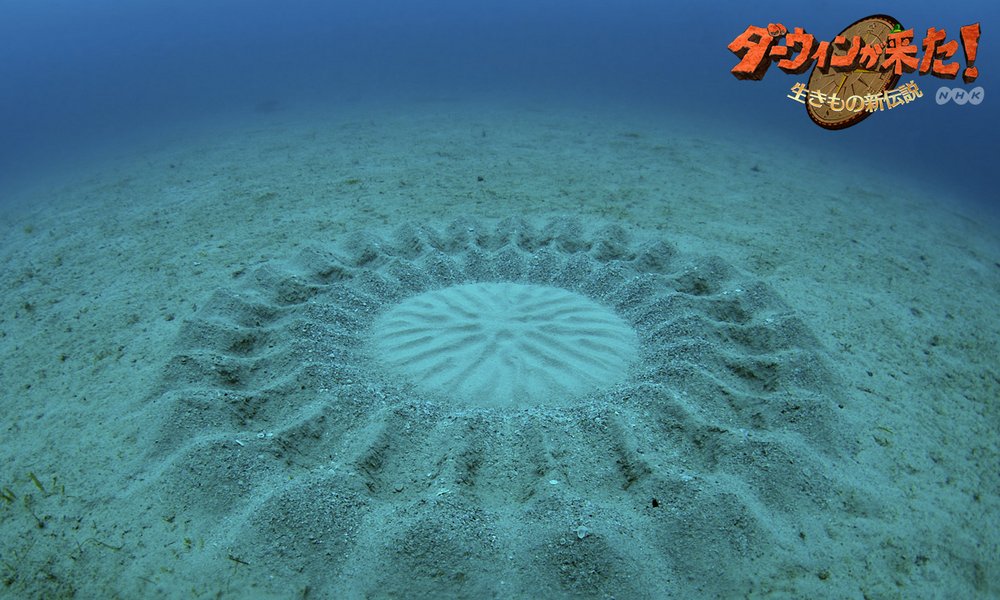
The Deep Sea Mystery Circle – a love story


The Deep Sea Mystery Circle – a love story

images courtesy Yoji Ookata and NHK

Introduced to life under the sea in high school through snorkeling, Yoji Ookata obtained his scuba license at the age of 21. At the same time, he went out and bought a brand new NIKONOS, a 35mm film camera specifically designed for underwater photography. He devoted all his spare time – aside from his day job – to perfecting his art of underwater photography. Then, at age 39, he finally made the transition. He quit his office job and became a freelance underwater photographer.


But even for a man who spent the last 50 years immersed in the underwater world of sea life, the ocean proved infinitely mysterious. While diving in the semi-tropical region of Amami Oshima, roughly 80 ft below sea level, Ookata spotted something he had never seen. And as it turned out, no one else had seen it before either.


On the seabed a geometric, circular structure measuring roughly 6.5 ft in diameter had been precisely carved from sand. It consisted of multiple ridges, symmetrically jutting out from the center, and appeared to be the work of an underwater artist, carefully working with tools. For its resemblance to crop circles, Ookata dubbed his new finding a “mystery circle,” and enlisted some colleagues at NHK to help him investigate. In a television episode that aired last week titled “The Discovery of a Century: Deep Sea Mystery Circle,” the television crew revealed their findings and the unknown artist was unmasked.


Underwater cameras showed that the artist was a small puffer fish who, using only his flapping fin, tirelessly worked day and night to carve the circular ridges. The unlikely artist – best known in Japan as a delicacy, albeit a potentially poisonous one – even takes small shells, cracks them, and lines the inner grooves of his sculpture as if decorating his piece. Further observation revealed that this “mysterious circle” was not just there to make the ocean floor look pretty. Attracted by the grooves and ridges, female puffer fish would find their way along the dark seabed to the male puffer fish where they would mate and lay eggs in the center of the circle. In fact, the scientists observed that the more ridges the circle contained, the more likely it was that the female would mate with the male. The little sea shells weren’t just in vain either. The observers believe that they serve as vital nutrients to the eggs as they hatch, and to the newborns.

the artist at work


What was fascinating was that the fish’s sculpture played another role. Through experiments back at their lab, the scientists showed that the grooves and ridges of the sculpture helped neutralize currents, protecting the eggs from being tossed around and potentially exposing them to predators.

It was a true story of love, craftsmanship and the desire to pass on descendants.

click images to enlarge

Monday, October 08, 2012

The Future of Money in a Mobi-Digital World


About THE FUTURIST
Current Issue
Reprints/Permissions
Writers' Guidelines
WFS HomeBlogsMichael Lee's blog
The Future of Money in a Mobi-Digital World
Posted on October 7, 2012
Subject(s):
Commerce


By Michael Lee, Founder of Southern African Chapter of the World Future Society; CEO of the ATM Industry Association; Author of Knowing our Future - the startling case for futurology.

What will happen to money, and especially cash, in this new electronic age? Will all money eventually be digitized? Will PayPal become the big bank of the future? Will virtual currencies like Facebook credits one day rival the British Pound and other currencies?

Computers, which are digital machines, have enabled the exponential digitization of information, which, in turn, has led to the development of new forms of money like online payments and virtual money. The digital format (bits and bytes) converts an analog original, located in one place and time, into a global replica that can be processed and sent at high-speed around the world. The amount of data used globally on internet in 2011 accounted for 1.8 zettabytes (or trillion gigabytes) of digital storage space. By 2013 it is estimated that 5 billion gigabytes of data will be created every 10 minutes.

Not only is there an explosion of digital content but, more importantly, more and more people are getting connected to internet, through PCs, mobile phones, smart phones and tablets. Between 2000-2011, internet use increased by more than 500%, including growing at the astronomical rate of 2,988.4 % in Africa. By the end of last year, there were over 2,2 billion users, at least a billion of whom live in Asia. There could easily be 3 billion internet users by 2016. And internet has already become indispensable to the world economy: if it were a stand-alone national economy it would be a top five performer.

The spread of mobile phone networks in a global net of connectivity is going to be just as influential as growth in computer power and access to internet. The International Telecommunication Union estimates there were 6 billion mobile subscriptions by the end of 2011, roughly 87 percent of the world population.

These three technological developments together have produced a 21st century information and communications revolution. It is shaping our times like the mass media of radio, television and print changed the face of society in the previous century. We will soon live in a mobi-digital world in which all essential information is digital, stored online and accessed primarily by hand-held, internet-enabled mobile devices. Mobile internet is the next big global information platform.

Considering this scenario, I am faced with a big question as CEO of the global trade body for the 2,3 million strong ATM industry. If information is being continuously digitized, and made instantly available on internet, will all money be digitized, too? ATMs are the world’s principal distribution channel for cash so the question touches the lifeblood of our industry. And it goes to the heart of what money is.

Money started becoming less tangible when President Nixon abolished the gold standard for the US dollar on August 15, 1971 , disconnecting the world’s major currencies from physical commodities of value like gold. And we have now reached a point where the technology exists to make it theoretically possible to remove money from the physical world altogether by making it electronic.

Today’s fiat money is in itself useless. It is simply an agreed-upon medium of exchange. And the value of money is determined purely by the supply and demand of market forces. By the time computers and internet came along, money had already become a kind of token, not linked to gold or other precious metals. So why not turn it altogether into the binary digits of computer language?

That is exactly what is happening with the growing number of internet-based virtual currencies such as BitCoin. BitCoin describes itself proudly as a P2P digital currency or electronic cash system which “does not need authorities to manage”. It works by creating a digital wallet, stored online, for each client. Payments can be made to other registered users on the BitCoin network. BitCoin sets up its network of users and issues encrypted credits to their online wallets which can be accessed anywhere, anytime by an internet-enabled device. Virtual money is just a digital currency for any internet-based community.

We can gain insight into what virtualized money is by looking at BitCoin’s definition of money. They see it as an entity accepted as payment for goods and services, or repayment of debts, in any socio-economic context whether real or virtual. The US virtual goods market could reach over $2 billion this year so these online economic communities are not to be sneezed at. In addition, the growth of online retail is sure to increase the popularity of virtual currencies. We can expect to see a proliferation of integrations between the virtual economy and the real economy such as loyalty credits for retail purchases earned in digital wallets. It is but a short step from fiat money, where money is a “useless” medium of exchange, to virtual currencies like BitCoin.

Facebook, which has one billion users, has been described as a virtual country on its own. It even has its own in-system currency, called Facebook credits. Launched in January 2011, (but recently discontinued) the credits could be used to buy in-app virtual goods for its games. These credits, such as Farmville Cash, could be bought from within an app using a credit card, PayPal, mobile phone and many other payment methods. 1 Facebook Credit was valued at $.10 USD. According to Facebook, in 2011 15 million users were conducting transactions with its credits. Incidentally, Facebook took a 30 percent cut for administrating the purchase and use of developer goods and services on its platform.(Note: Facebook credits were discontinued when Facebook decided the credits competed with other virtual currencies in common use on the site.)

The Google Wallet, described as “your wallet in the cloud” in that it is located on Google servers, like Gmail, is not an in-system currency like Facebook credits. Released in September last year, it is a web-based, mobile-payment system which can be used to make in-store purchases or online payments. So, unlike Facebook credits, it links the virtual world with the real economy. Each customer signs up and registers for the wallet just like opening a Gmail account. Payments can be made both online or in-store because the client’s debit card and credit credit numbers are stored in the account. Payment and password information is encrypted and stored in a chip. The activation of the service requires a PIN to provide additional security.

The problem with this Wallet is that it uses NFC (near field communication, i.e. short-range wireless) technology which is becoming a bit clunky in the mobile world since fewer than 1 percent of the phones sold today have NFC chips embedded. PayPal has effectively dumped NFC, describing it as a technology in search of a problem. It sounds great to “tap-to-pay” at point of sale devices in stores of NFC-enabled merchants, when the mobile phone sends the payment to the terminal, but, in practice, the service is only available in certain stores and for certain phones. In addition, the business model for Google Wallet relies heavily on advertising revenue through sponsored promotions to users who are already maxed out on adverts in a saturated space of non-stop promotions. Do we really want to be bombarded by Google Offers from their participating merchants?

It is not just virtual currency which is changing the face of money. There is also e-commerce, or online payments for real goods and services. In this space, PayPal is the world-leader. It has more than 100 million active users in 190 markets and operates in 24 currencies. One difference between e-commerce and virtual currencies like BitCoin and Facebook credits is that the former is an online payment mostly using financial instruments, like credit cards, provided independently by financial institutions. Also, real goods and services are exchanged in e-commerce, linking this system more directly to the world economy.

Expect a dramatic increase in ways of integrating e-commerce and mobile phones. PayPal Mobile, for example, seems to me to be more future-friendly than Google Wallet. PayPal Mobile has the virtue of simplicity whilst also leaning on the trusted online payment brand of PayPal. What they have done is just extend the PayPal account to the mobile phone. PayPal users can request or send money and pay bills via their mobile phones, with each transaction confirmed by a PIN or password. In mobile money transfers, the sender simply informs PayPal of the recipient’s phone number or email address. PayPal Mobile’s service includes text messaging for balance enquiries and money transfers. There is also an eBay shopping app for PayPal Mobile users.

PayPal has recently noted a month-on-month increase of 25% in mobile payments. Traditionally, its online transactions have been from PCs. This non-bank payments provider is piloting other innovations like mobile ticket purchase. Aite Group consultancy forecasts global mobile bill payments will rise from US$16 billion in 2010 to US$214 billion in 2015.

The marriage of internet and mobile telephony to produce the Mobile Web is a game-changing convergence with potential to, once again, transform the way we live and work. The two technologies are busy forming a self-reinforcing virtuous cycle. It is thought there will be more people accessing internet via mobile devices than PCs by about 2015. It must be remembered, though, that 91% of mobile internet use is to socialize, not to buy online.

In our payments and cash industry, there has been a surge of online payments through mobile devices, mostly using a PIN or password for authentication. In this “mobi-digital” world one would expect physical cash to be replaced by plastic money, electronic money and virtual money, right? Here is where the surprise element kicks in. The answer is: wrong, dead wrong. Just as plastic money failed to replace cash from the mid 1950s following the invention of the credit card in New York, so electronic money has not even remotely overtaken cash as the preferred payment method across the globe. Today, cash still accounts for at least 8 of every 10 payment transactions. Pause right there. Did you say 8 out of 10? This means cash is still the undisputed champion of payments fifty years after the invention of plastic money and deep into our info-communication revolution. In 2011, Euromonitor International found that $14.413 trillion in consumer payments was made with cash worldwide in 2010, compared to consumer payment card transaction value at $9.582 trillion. How is that possible? And where is the cashless society which was supposed to arrive shortly after the credit card made its appearance?


Figure 1: Still from the 1963 movie “The Man from the Diners' Club” starring Danny Kaye

Why is hard cash, in the hand or pocket, still so popular five decades after money first took the form of plastic? We have seen that neither plastic money nor electronic money have undermined the popularity of cash. No wonder a recent reputable history of money stated: “Despite the rise of plastic cards and electronic money transfers, cash is still the most important kind of money in the world.”

The secret of cash’s longevity is that it is a simple, human-friendly technology. Otherwise it would not have survived for 27 centuries. This lifespan alone places cash as one of the top social technologies of all time. While the history of a technology is not going to save its future, it seems there is something universal and alluring about cash that a futurist must take into account in looking ahead to the future of money.

At the back of cash’s popularity lies what physicist and futurist, Dr. Michio Kaku (http://mkaku.org), calls the Cave Man Principle. He reckons our wants, dreams, personalities and desires have not changed much in 100,000 years and that when modern technology clashes with this primitive human self we carry around inside us, the primitive desires win every time. There is a constant competition, he argues, between High Tech (e.g. watching a sporting event on television) and High Touch (e.g. attending the live event in person). All other factors being equal, Dr. Kaku believes we will always choose High Touch. Cash is High Touch, digital money is High Tech. And I, for one, love to have some “moolah” in my house and on my person when I go out.

The KISS principle works for me in life and business. I regularly refer to myself as stupid, so I like the rule of Keep It Simple, Stupid. Cash is simple, quick to use and offers instant gratification. And for members of the public it’s free to use. Founder of BitCoin, Satoshi Nakamoto, highlights a strength of cash when he explains that the costs and payment uncertainties of ensuring trust in electronic payments can be avoided in person by using physical currency. They key phrase here is “in person”. Cash, after all, is analog and so is human experience! Money is “a matter of belief, even faith”, it is “trust inscribed”. And cash represents instant trust because it seldom relies on any third-party to mediate the exchange. Trust is so important to payments that PayPal reckons the maintenance of trust in online systems requires a whole-of-sector approach, no less. What Nakamoto meant is that a cash transaction does not require the mediation of a system provided by some trusted third-party. The cash payment occurs directly and instantly between buyer and seller. Simple. Effective. Sure, the central bank is in the background guaranteeing the worth of the cash but that is all part of the broad social contract that already exists for life between a citizen and his/her government.

By contrast, all forms of non-cash transactions, including uses of plastic money, electronic money or virtual money, are based on the mediation of a system with all its costs and risks. With cash, a coin is a coin and a banknote is a banknote, a buyer is a buyer and a seller is a seller. But e-cash is “a chain of digital signatures”. Oh dear, what happened to the KISS principle here? Nakamoto describes the technical complexities of running the virtual BitCoin currency in his paper “Bitcoin: A Peer-to-Peer Electronic Cash System”. The man-in-the-street will not understand all the jargon used in his analysis. Nor do I.

Unless we know why cash is both popular and effective, we will never be able to predict the future of money over the next few decades. That is why anti-cash crusader, David Wolman, who admits he has a personal distaste for cash, has got it all wrong in his recent book The End of Money in which he argues, in somewhat anecdotal style, that cash’s disadvantages, such as its germs, its costs, its footprint and its abuse by criminals, far outweigh its benefits to society. When it comes to health, cash may contain some germs but we need to remember the jury is still out about whether or not radiofrequency energy (RF) emitted by mobile phones is tumourigenic. I would rather deal with a few germs on my hands than heighten my risk of developing a brain tumor. Wolman believes when it comes to money that High Tech will conquer High Touch. I really don’t think so.

With payments, as in everything, people vote with their feet. And their trust of cash is driving up demand for cash at a rate faster than general economic growth rates. For example, between 2002-2011, the value of banknotes in circulation grew in the eurozone, USA, Brazil and South Africa at the following Compound Annual Growth Rates (CAGR) respectively:10.6%, 5.5%,14% and 9.5%. These are growth rates for cash most countries would die for at a GDP level.

I have seen over the last few years that humanity seems resistant to the idea of letting all our money be digitized as if it were just so much information. In electronic and virtual forms of payment, no physical money passes from sender to recipient during transactions made up of digital signals. And here lies an important point about the meaning of money. Money is not just information. Money is a personal symbol. It possesses a value measuring the fruits of our work and productivity. The money in our wallets and bank accounts comes from what we do for a living. It is part of our social standing. It is a symbol of our labor and aspirations. It is this meaning of money which cannot be digitized. In the end Dr. Kaku is right because High Touch trumps High Tech when there is a straight either/or choice between them. You cannot digitize human experience. The analog original comes first.

The fact is, an uncomfortable sense of depersonalization would seep into society if all our money was reduced to bits and bytes. Converting all money into digital characters stored somewhere in computer files inside the vaporous vastness of cyber space would hand control of money from the public to the owners of the digital economy, the so-called digerati or digital elites. In so doing, money would lose some of its real social character. Money would be stripped of its human-friendly qualities. In my view, money should remain primarily a personal and social symbol of value, and not be turned into a cipher others can manipulate on our behalf. No wonder one popular slang word for money is bread. Like bread, cash remains a basic part of daily life. The tangibility of cash is important not just as a symbol of the reality of money but as part of its role as a household budgeting tool. The 2012 4th edition of the “Future of Cash” study shows that the Great Recession which began in 2008 has increased global cash demand and use as consumers attempted to shore up their savings and regain control over their budgets in times of economic uncertainty. With cash you can only spend what you have on you. Cash is real money you can feel, whereas the Chinese, for example, do not consider credit to be real money. And cash personalizes money. It is a physical symbol of the value we represent as producers in society. Cash is the social, public face of money.

The physicality of cash is the reason why it plays a vital contingency role in society. When disasters take place, or when there are power or network outages, cash can be the only payment system still working. Some countries are regularly hit by tropical storms or earthquakes, while during changes in the solar cycle, solar flares can disrupt electronic and communication systems. Money should never be reduced entirely to electronic numbers in some digital file owned by a private organization. Electronic, mobile and virtual money are rendered inoperable during downtime.

The High Touch nature of cash must be one of the reasons why there is no evidence as yet that electronic payments work as a form of cash substitution. Our friendly anti-cash crusader quotes M-Pesa, for example, as a great cash replacement system. M-Pesa (M is for mobile, pesa is Swahili for money) is a celebrated world leader in mobile payments. It is a Kenyan mobile-phone based money transfer service introduced in April 2007. By 2012, just under million 15 million M‐Pesa accounts had been registered in Kenya.

M-Pesa allows users to deposit, withdraw, and transfer money easily with a mobile device, move money to a bank account, pay bills, redeem deposits and purchase airtime. There is even a bulk payment service for corporate payrolls to be paid to employees without bank accounts. M-Pesa customers can deposit and withdraw money from a nation-wide network of agents that includes airtime resellers and retail outlets acting as banking agents. Users are charged a small fee for sending and withdrawing money using the service.

The success of M-Pesa is one reason why Wolman is betting on cell phone payments to replace cash. But the evidence is not with him. Cash in circulation in Kenya has continued to increase steadily despite the exponential growth of M-Pesa, as stats from the Central Bank of Kenya show. While M-Pesa has facilitated e-cash transfers it has not replaced cash. The high growth of mobile payments in Kenya from 2007-2012 was matched by a steady increase of currency in circulation during the same period. The number of M-Pesa customers increased from 6.18 million in 2009 to 14.91 in 2012 according to Safaricom's 2012 annual report. Currency in circulation in Kenya rose from 89.94 billion (KShs - Kenyan shilling) in 2007 to 147.76 billion in 2011.

Whereas Wolman sees the rise of M-Pesa as indicating the emergence of a cash-substitute, the increase in cash demand while this revolutionary technology was taking off in Kenya speaks rather to the possibility of a long-term co-existence of cash, m-cash and e-cash in the future mobi-digital world.

ATMs and mobile phones are starting to converge in a positive way. Today money can be taken from ATMs using mobile phones in cardless transactions in countries from Japan to Greece, from Turkey to Spain. This kind of contactless technology at ATMs and Point of Sale terminals will probably mean the end of plastic cards in a decade or two. I cannot see the next generation using plastic at all for banking purposes. So the biggest loser in the mobile money revolution is likely to be plastic money, not physical money.

Conclusion

Neither plastic money nor electronic money have become cash substitutes. The indications are that mobile money will likewise co-exist with cash, as the M-Pesa case study shows. The same is almost certain to apply to virtual money. Cash is analog, non-cash payments are digital. The digital world exists on top of the analog world, not vice versa. We experience the world analogically: is that fact, ultimately, why cash has remained the foundation of all payments? For how could digitized cash survive without real-world cash?

One can readily foresee a mobi-digital world in which cash, e-cash, virtual cash and mobile cash will be complementary money technologies helping to link the electronic world to the physical world and the digital economy to the real economy. I also see PayPal emerging as the dominant force in the global payments space ahead of the card giants, with Google Wallet and Facebook Credits left behind in the swirling dust kicked up by the self-reinforcing relationship between PayPal online and PayPal mobile. As the Mobile Web grows, PayPal could become the largest “bank” the world has ever seen.

I do, however, forecast the disappearance of plastic banking cards within twenty years. Progress is good, especially when it is only obsolete technologies which have overstayed their welcome that are destroyed by innovations.

As for cash, I cannot see this physical, public form of money disappearing from society in this century. Consequently, I am relaxed about predicting another hundred years of cash to add to the other twenty-seven centuries of its lifespan.

Have you seen the “Cash Connects Us” video on YouTube at http://www.youtube.com/watch?v=J-8_JoNGrvU?

About Michael Lee

Michael Lee is a futurist who founded the World Future Society’s Southern African Chapter and the Institute of Futurology. He is CEO of the ATM Industry Association (www.atmia.com), a non-profit trade association with more than 3,500 members in 60 countries. Lee is a member of the World Future Society (www.wfs.org), the International Society for the Study of Time (www.studyoftime.org), the Royal Institute of Philosophy (www.royalinstitutephilosophy.org) and the Institute of Physics (www.iop.org). He serves on the Board of Directors of the global ATM Industry Association and the US-based Benefit Corporation Standards Institute (http://www.bcorpinstitute.org/). His book Knowing our Future – the startling case for futurology will be published in November 2012 -http://www.infideas.com/pages/store/products/ec_view.asp?PID=1804. The book is also available on Amazon at http://www.amazon.com/gp/product/1906821984

References & useful websites

1. AGIS Consulting & ASI Management Consultancy. September 2012. The Future of Cash 2012.
2. BitCoin - http://bitcoin.org/about.html
3. British Museum Press. 2007. Money: A History (2nd edition).
4. Dean, D, et al. 2012. The Internet Economy in the G-20 - The $4.2 Trillion Growth Opportunity. BCG perspectives by the Boston Consulting Group.https://www.bcgperspectives.com/content/articles/media_entertainment_str...
5. Ferguson, N. 2008. The Ascent of Money. London: Penguin Books.
6. Fortune Magazine, Europe Edition, Number 14, September 24, 2012, p.69.
7. Internet World Stats http://www.internetworldstats.com/stats.htm Miniwatts Marketing Group.
8. Kaku,M. 2011. Physics of the Future. New York: Doubleday.
9. Moffat, M. About.com Guide http://economics.about.com/cs/money/a/gold_standard.htm
10. Nakamoto, S . Bitcoin: A Peer-to-Peer Electronic Cash System. - www.bitcoin.org
11. Wikipedia - http://en.wikipedia.org/wiki/Glioma
12. Wolman, D. The End of Money – counterfeiters, preachers, techies, dreamers and the coming cashless society. Da Capo Press.

Sunday, October 07, 2012

750,000 saved; should I quit my job and travel?


$750,000 saved; should I quit my job and travel?
By Walter Updegrave @Money October 5, 2012: 8:02 PM ET

NEW YORK (Money Magazine) -- I'm 41 and feeling a bit burned out after 10 years at my current job, so I'm thinking about taking a year or so off to travel. I have no dependents, no debt to speak of and I've got about $750,000 in savings. Still, I worry that if I leave my job I may not be able to find another later on. What do you think -- am I insane for wanting to quit my job in the current economic environment? -- Phil O.

Insane? Not at all.

Ultimate Guide to Retirement

Getting started
401(k)s & company plans
Investing
Annuities
IRAs
Self-employment plans
Pensions and benefit plans
Social Security
Insurance
Estate planning
Living in retirement
Getting help

I'm sure there are plenty of people out there who would jump at the chance to get away from the work-a-day grind if they had anything close to the resources you do. Indeed, many people operating on far thinner margins still manage to take time off to rejuvenate themselves or explore new career possibilities.

So if you really feel burned out -- as opposed to being in a temporary funk -- I don't see anything wrong with tapping into your financial cushion now as opposed to waiting another 25 years until you retire.

Of course, there is some risk involved. There's certainly no guarantee that you'll be able to find a new job that gives you a salary and benefits comparable to what you're currently making .

If the economy is still struggling when you're ready to reenter the workforce, finding any job could take quite a while. Between 2007 and 2011, the median length of time it took an unemployed person to find a new job nearly doubled from 5.2 weeks to 10 weeks, according to a recentBureau of Labor Statistics report. These figures don't include the unemployed who, unable to find work, gave up. Those discouraged job seekers spent a median of 21.4 weeks before throwing in the towel.

Related: Living off dividend income

As the economy improves, however, so should the ability of workers to move in and out of jobs. As long as you have skills that are valuable to an employer -- and I assume you must, if you've been able to earn enough to support yourself while socking away so much dough -- I think your worry that you may not be able to find a job is overblown.

Taking some time away might even work in your favor. By giving you the opportunity to recharge, a break may help you become a more motivated and productive worker and possibly enhance your future earning ability.

Research also shows that a hiatus may give you the chance to acquire professional and other skills you may not have had a chance to build otherwise. Such benefits are probably why nearly a quarter of the firms on Fortune's 2012 list of the Top 100 Companies To Work For offer fully paid sabbaticals.

Even if you have to settle for a job that doesn't pay as well, your chances of ending up impoverished later in life don't strike me as very high given the amount of money you've already managed to set aside.

Let's say that between living expenses, taxes and just having a good time gallivanting around, you withdraw $150,000 from your nest egg during your year off. Assuming you earn enough you don't ever have to dip into the remaining $600,000, you should be able to live pretty well in retirement just on that sum plus investment returns alone. You wouldn't even have to save another cent.

With just a modest 5% annual return, for example, $600,000 would grow to roughly $1.9 million by the time you're 65, which is enough to generate about $75,000 in inflation-adjusted, income throughout retirement.


I think it's far more likely that you'll be able to find a decent job, continue to save and build an even bigger retirement stash. But even if that's not the case, it's not as if you'll have to go into survivalist mode to get by.

There's one other reason you may want to go ahead with your wish to take a year off: It may make you happier.

I certainly don't want to discount the importance of working hard, saving diligently and making sure we meet our financial obligations. But there's more to life than just making the most money you can or racking up the largest possible 401(k) balance. You also want to enjoy yourself and feel fulfilled. If leaving the work-a-day world for a while will help you achieve a better life-work balance, I say go for it.

Before you do, though, you'll probably want to do a little planning. Estimate how much you think you'll need to spend during your year off and figure out which accounts you can best tap for cash. As much as possible, you should draw from savings accounts and the like, rather than investment accounts to avoid paying taxes on investment gains. Ideally, you should also avoid tapping 401(k)s and IRAs since withdrawals may trigger penalties in addition to taxes.

Related: Pretirement: Keep the paycheck, live the lifestyle

You'll also want to make sure you have health insurance, either by maintaining coverage from your employer via COBRA or by buying a policy from a private insurer.

Think, too, about how you actually want to spend this time off so you get the most out of it. You can find suggestions for different types of sabbaticals, as well as personal stories from people who've taken one by going to YourSabbatical.com. And rather than just walking off the job, you may want to try negotiating a paid sabbatical, or at least the option of returning to your company. If you're unsuccessful, hey, you're no worse off.

Bottom line: It seems to me that you're in a pretty unique position to be able to pull off something that many people can only dream about. But ultimately you'll have to decide whether the gains from going ahead with your plan outweigh the risks.


First Published: October 2, 2012: 10:03 PM ET

Thursday, October 04, 2012

Spidery black objects on Mars surface raise speculation


Spidery black objects on Mars surface raise speculation


By Eric Pfeiffer, Yahoo! News


Scientists are trying to identify the strange black "spidery" objects in these images (Michael Benson/NASA/JPL/University …

Someone alert Ziggy Stardust, there appear to be spiders on Mars.

Strange, black objects seen from 200 miles above the surface of Mars are generating interest and speculation that the unidentified objects could be anything from geysers to sunbathing colonies of microorganisms.

NPR compares several photos of the objects, including one taken by the Mars Reconnaissance Orbiter on Jan. 27, which appears to show, "little black flecks dotting the ridges, mostly on the sunny side, like sunbathing spiders sitting in rows."

The objects were first spotted in 1998. Interestingly, they appear when the surface of Mars begins to warm, appearing in the same location most of the time. And then, when the Martian winter approaches, they disappear with the same precise regularity. The images have been brought into greater detail by Michael Benson, in his book "Planetfall: New Solar System Visions."

Most scientists, including teams from the U.S. Geological Survey, from Hungary, from the European Space Agency all have their own theories but the leading explanation is that the objects are geysers of CO2 exploding from underneath the planet's surface.

"If you were there, you'd be standing on a slab of carbon dioxide ice," Phil Christensen of Arizona State University told NPR. "All around you, roaring jets of carbon dioxide gas are throwing sand and dust a couple hundred feet into the air. The ground below would be rumbling. You'd feel it in your spaceboots."

And while the geyser theory is the most popular explanation, it has yet to be factually verified.

In the meantime, there are some interesting alternative theories, including one from a group of Hungarian scientists, who have speculated that the objects are actually colonies of photosynthetic Martian microorganisms who emerge each year to sunbathe in the warm weather.

What the objects may look like up close (Artist rendering by Ron Miller/JPL/Arizona State University

Wednesday, October 03, 2012

Seven Secrets of Self-Made Multimillionaires

Seven Secrets of Self-Made Multimillionaires


First, understand that you no longer want to be just a millionaire. You want to become a multimillionaire.

While you may think a million dollars will give you financial security, it will not. Given the volatility in economies, governments and financial markets around the world, it's no longer safe to assume a million dollars will provide you and your family with true security. In fact, a Fidelity Investments' study of millionaires last year found that 42 percent of them don't feel wealthy and they would need $7.5 million of investable assets to start feeling rich.

This isn't a how-to on the accumulation of wealth from a lifetime of saving and pinching pennies. This is about generating multimillion-dollar wealth and enjoying it during the creation process. To get started, consider these seven secrets of multimillionaires.

No. 1: Decide to Be a Multimillionaire -- You first have to decide you want to be a self-made millionaire. I went from nothing—no money, just ideas and a lot of hard work—to create a net worth that probably cannot be destroyed in my lifetime. The first step was making a decision and setting a target. Every day for years, I wrote down this statement: "I am worth over $100,000,000!"

Related: Seven Rules for Coping with Sales Rejection

No. 2: Get Rid of Poverty Thinking - There's no shortage of money on planet Earth, only a shortage of people who think correctly about it. To become a millionaire from scratch, you must end the poverty thinking. I know because I had to. I was raised by a single mother who did everything possible to put three boys through school and make ends meets. Many of the lessons she taught me encouraged a sense of scarcity and fear: "Eat all your food; there are people starving," "Don't waste anything," "Money doesn't grow on trees." Real wealth and abundance aren't created from such thinking.

No. 3: Treat it Like a Duty - Self-made multimillionaires are motivated not just by money, but by a need for the marketplace to validate their contributions. While I have always wanted wealth, I was driven more by my need to contribute consistent with my potential. Multimillionaires don't lower their targets when things get tough. Rather, they raise expectations for themselves because they see the difference they can make with their families, company, community and charities.

Related Video: Grant Cardone on Closing the Sale

No. 4: Surround Yourself with Multimillionaires - I have been studying wealthy people since I was 10 years old. I read their stories and see what they went through. These are my mentors and teachers who inspire me. You can't learn how to make money from someone who doesn't have much. Who says, "Money won't make you happy"? People without money. Who says, "All rich people are greedy"? People who aren't rich. Wealthy people don't talk like that. You need to know what people are doing to create wealth and follow their example: What do they read? How do they invest? What drives them? How do they stay motivated and excited?

No. 5: Work Like a Millionaire - Rich people treat time differently. They buy it, while poor people sell it. The wealthy know time is more valuable than money itself, so they hire people for things they're not good at or aren't a productive use of their time, such as household chores. But don't kid yourself that those who hit it big don't work hard. Financially successful people are consumed by their hunt for success and work to the point that they feel they are winning and not just working.

Related: How to Conquer Your Sales Fears

No. 6: Shift Focus from Spending to Investing - The rich don't spend money; they invest. They know the U.S. tax laws favor investing over spending. You buy a house and can't write it off. The rich, in contrast, buy an apartment building that produces cash flow, appreciates and offers write-offs year after year. You buy cars for comfort and style. The rich buy cars for their company that are deductible because they are used to produce revenue.

No. 7: Create Multiple Flows of Income - The really rich never depend on one flow of income but instead create a number of revenue streams. My first business had been generating a seven-figure income for years when I started investing cash in multifamily real estate. Once my real estate and my consulting business were churning, I went into a third business developing software to help retailers improve the customer experience.
Lastly, you may be surprised to learn that wealthy people wish you were wealthy, too. It's a mystery to them why others don't get rich. They know they aren't special and that wealth is available to anyone who wants to focus and persist. Rich people want others to be rich for two reasons: first, so you can buy their products and services, and second, because they want to hang out with other rich people. Get rich -- it's American.

Related: Inside the Mind of Your Buyers

6 Tips for Staying Supercharged


image credit: Shutterstock

Summer is over and entrepreneurs are cranking up for the fourth quarter, hoping to finish the year big. Now is clearly not the time to let your energy level slip. Even if your passion for work is no longer enough to drive you, you can't afford to disengage even for a second. Sustained energy and razor sharp focus come from within, not from a caffeinated beverage or other external stimulants.

Here are six ways to help you develop a core base of energy:

1. Get a good night's sleep. I hear about people who sleep only four hours a night, but I don't recommend it. Those who don't get enough sleep may get away with it for a while, but without the proper amount, you won't be as productive, creative or resilient over the long run. The body and mind need rest to recharge. I try to get seven to eight hours of sleep a night and still be the first up in the morning. For me, that means going to bed at 9 p.m. and rising around 4 a.m.

2. Write down your goals twice a day. Make a list of your goals when you wake up in the morning and again before you go to bed. This will help you stay focused on what you want and why you want it. I'm not talking about your to-do list; I mean the much bigger goals in life you are trying to accomplish: why you are going to work and what you are trying to achieve. Concentrating on these major goals will help fuel your passion and energy.

Related: How to Break Through Fear and Self-Doubt

3. Exercise daily. A regular physical workout will energize you and give you a sense of direction, control and power. A good cardio or strength workout in the morning can increase your belief in yourself, get the adrenaline flowing and increase your stamina for the rest of the day. During my workouts, I try to include some inspirational or learning time so I am working my mind while working my body.

4. Dress for success. Dressing sharp will change the way you view yourself and the way others view you. Dress in a manner that suggests that you are proud, prepared and confident of success. People appreciate it when you make the effort to look professional. Their admiration can provide the kind of positive energy needed to sustain you through a challenging day.

Related: Seven Secrets of Self-Made Multimillionaires

5. Surround yourself with supportive people. You might join organizations or clubs where you are all doing something you're excited about. Also, try to get your family on the same page with you. If your spouse, children, parents and siblings celebrate your wins with you, it will go a long way toward keeping you motivated and energetic. My wife will break out in the Running Man dance when I report a closed deal or other exciting news.

6. Create a "no negativity" policy at home and work. The people who work around me know they will get their heads handed to them if they ever are negative around me. That doesn't mean I don't want information that may be foreboding. But negative talk like, "We can't do that" or "That's not possible," is not allowed. My companies all have "no negativity" as an operating policy because that kind of thinking does nothing to energize people and motivate them to find solutions.

Remember, you will always face obstacles and challenges, but maintaining a high energy level will enable you to power through the rough patches that forge the greatest entrepreneurs.

Related: Richard Branson on the Secret to Exceeding Customer Expectations

Read more stories about: Sales, Productivity, Focus, Trep mindset, Trep psychology

Tuesday, October 02, 2012

The Goods: October 2012's Hottest Gadgets


Where to Pursue Your Dreams


Posted: 8:13 a.m. Tuesday, Oct. 2, 2012
Where to Pursue Your Dreams 
COMMENT (30)

Previous Posts
The New Normal
October 2, 2012
Working on a List ...
October 2, 2012
Obama's Taxpayer Funded Bribe
October 2, 2012

By Neal Boortz

Many of you may think I am being dramatic about this election. Perhaps so. One thing is sure; never has our country had so much to lose in a presidential election. You see, I took Obama seriously when he said that he was going to “fundamentally transform” our country. I took his chief advisor and the head of his transition team, Valerie Jarrett, seriously when she said Obama would be ready to “rule from day one.” Both of these statements were entirely and completely consistent with the Obama we met in Dinesh D’Souza’s book and movie “2016, Obama’s America.” Transform America? Into what? That’s pretty easy to figure out if you look into Obama’s past. Transform America into a nation weakened in its international relations with an economy based on government spending and wealth seizure and redistribution where desires for freedom are subjugated to the quest for security.

Anyway …….

I’m sure you folks want me to be brutally honest with you as to how I feel this election is going. Some days are better than others. Just take this one poll on which candidate can do a better job with our economy. First; consider a few facts:
Obama said he would cut our deficit in half in his first term. He didn’t. He exploded it. And don’t buy this “two wars that weren’t paid for” nonsense. The money for those two wars was pretty much appropriated before he became president.
Obama pushed through an $850 BILLION so-called stimulus plan, and now he tells us that spending belongs to Bush? Doesn’t that strike you as a bit dishonest?
Our economy is the worst it has ever been in the history of this country … except for the few years that our economy was in a recession. The WORST, folks!
There are fewer people with jobs right now than there were when Obama was sworn in as president.
If you allowed for all of the people who just gave up and stopped even looking for jobs – included them in the workforce instead of writing them off -- our unemployment rate right now would be over 16%
Obama has increased our national debt by an amount that exceeds the total debt incurred by all U.S. presidents from George Washington through Bill Clinton .. and a bit into the administration of Bush 43

Just those facts … and there are many more … but consider just those facts and tell me how anyone could possibly say that they believe that Obama could do a better job with our economy than Romney? How do people work that out in their minds? Romney has a demonstrable record of success. Obama’s record is one of failure. And people really think that Obama could do a better job with the economy?

I’m thinking that the people who respond to these polls are really thinking about their personal economy … not our national economy. They believe that Obama taking money away from people they don’t particularly like, and giving it to them improves their personal economy. In that context, the polls make sense.

Monday, October 01, 2012

Quote

"They must find it difficult, those who have taken authority as the truth, rather than the truth as authority." ~ G. Massey

Number of the Week: Expect Higher Tax Bill in 2013


Number of the Week: Expect Higher Tax Bill in 2013

Article
Comments (30)
REAL TIME ECONOMICS HOME PAGE »

By Phil Izzo

$1,001.08: How much more someone making the median household income in 2011 is likely to spend on payroll taxes next year.

No matter which party comes out on top in the November elections, nearly every working American is likely to pay higher taxes in 2013 than 2012.


Lost in the debate over the fiscal cliff and whether the Bush tax cuts should be extended for all Americans or just those who make more than $250,000 is the expiration of a tax holiday both parties quietly support.

In an effort to stimulate demand and put more money into consumers’ pockets, Congress temporarily lowered the Social Security tax withholding rate to 4.2% from 6.2% for 2011 andearlier this year extended it into 2012. The holiday in the so-called payroll tax is set to expire at the end of this year, and so far neither party has expressed much interest in another extension.

The two percentage point reduction in the payroll tax would reduce government revenue by about $110 billion per year, according to an analysis by PIMCO. That’s not a huge amount in a $3.8 trillion budget, but both parties have lately been trying to find ways to trim deficits. The tax cut was always meant to be temporary, and letting it expire as expected is a quiet way to increase revenue as bigger tax issues are negotiated.

But even if other tax increases aren’t triggered in the so-called fiscal cliff, the expiration of the payroll-tax holiday is going to mean less money in consumers’ pockets next year. For someone earning the 2011 median income of $50,054 that translates into $1,001.08 a year or about $40 less in a biweekly paycheck.

The increase also affects pretty much every working American. While 46% of households don’t pay federal income tax, which is phased out for low earners, just 18% of households avoid the payroll tax, according to the Tax Policy Center. That means even people with low incomes can expect a higher tax bill in 2013. There is a bright side for high earners, though. Workers only are charged payroll taxes on the first $110,100 of income, so whether your income is $110,101 or $110 million the most your 2013 increase can be is $2,202.

 Calculate you tax increase [HERE]

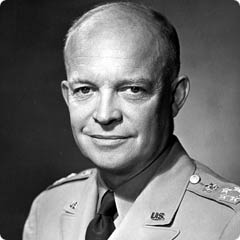
Military-Industrial Complex Speech, Dwight D. Eisenhower, 1961


Military-Industrial Complex Speech, Dwight D. Eisenhower, 1961

Public Papers of the Presidents, Dwight D. Eisenhower, 1960, p. 1035- 1040

My fellow Americans:

Three days from now, after half a century in the service of our country, I shall lay down the responsibilities of office as, in traditional and solemn ceremony, the authority of the Presidency is vested in my successor.

This evening I come to you with a message of leave-taking and farewell, and to share a few final thoughts with you, my countrymen.

Like every other citizen, I wish the new President, and all who will labor with him, Godspeed. I pray that the coming years will be blessed with peace and prosperity for all.

Our people expect their President and the Congress to find essential agreement on issues of great moment, the wise resolution of which will better shape the future of the Nation.

My own relations with the Congress, which began on a remote and tenuous basis when, long ago, a member of the Senate appointed me to West Point, have since ranged to the intimate during the war and immediate post-war period, and, finally, to the mutually interdependent during these past eight years.

In this final relationship, the Congress and the Administration have, on most vital issues, cooperated well, to serve the national good rather than mere partisanship, and so have assured that the business of the Nation should go forward. So, my official relationship with the Congress ends in a feeling, on my part, of gratitude that we have been able to do so much together.

II.

We now stand ten years past the midpoint of a century that has witnessed four major wars among great nations. Three of these involved our own country. Despite these holocausts America is today the strongest, the most influential and most productive nation in the world. Understandably proud of this pre-eminence, we yet realize that America's leadership and prestige depend, not merely upon our unmatched material progress, riches and military strength, but on how we use our power in the interests of world peace and human betterment.

III.

Throughout America's adventure in free government, our basic purposes have been to keep the peace; to foster progress in human achievement, and to enhance liberty, dignity and integrity among people and among nations. To strive for less would be unworthy of a free and religious people. Any failure traceable to arrogance, or our lack of comprehension or readiness to sacrifice would inflict upon us grievous hurt both at home and abroad.

Progress toward these noble goals is persistently threatened by the conflict now engulfing the world. It commands our whole attention, absorbs our very beings. We face a hostile ideology -- global in scope, atheistic in character, ruthless in purpose, and insidious in method. Unhappily the danger is poses promises to be of indefinite duration. To meet it successfully, there is called for, not so much the emotional and transitory sacrifices of crisis, but rather those which enable us to carry forward steadily, surely, and without complaint the burdens of a prolonged and complex struggle -- with liberty the stake. Only thus shall we remain, despite every provocation, on our charted course toward permanent peace and human betterment.

Crises there will continue to be. In meeting them, whether foreign or domestic, great or small, there is a recurring temptation to feel that some spectacular and costly action could become the miraculous solution to all current difficulties. A huge increase in newer elements of our defense; development of unrealistic programs to cure every ill in agriculture; a dramatic expansion in basic and applied research -- these and many other possibilities, each possibly promising in itself, may be suggested as the only way to the road we wish to travel.

But each proposal must be weighed in the light of a broader consideration: the need to maintain balance in and among national programs -- balance between the private and the public economy, balance between cost and hoped for advantage -- balance between the clearly necessary and the comfortably desirable; balance between our essential requirements as a nation and the duties imposed by the nation upon the individual; balance between actions of the moment and the national welfare of the future. Good judgment seeks balance and progress; lack of it eventually finds imbalance and frustration.

The record of many decades stands as proof that our people and their government have, in the main, understood these truths and have responded to them well, in the face of stress and threat. But threats, new in kind or degree, constantly arise. I mention two only.

IV.

A vital element in keeping the peace is our military establishment. Our arms must be mighty, ready for instant action, so that no potential aggressor may be tempted to risk his own destruction.

Our military organization today bears little relation to that known by any of my predecessors in peacetime, or indeed by the fighting men of World War II or Korea.

Until the latest of our world conflicts, the United States had no armaments industry. American makers of plowshares could, with time and as required, make swords as well. But now we can no longer risk emergency improvisation of national defense; we have been compelled to create a permanent armaments industry of vast proportions. Added to this, three and a half million men and women are directly engaged in the defense establishment. We annually spend on military security more than the net income of all United States corporations.

This conjunction of an immense military establishment and a large arms industry is new in the American experience. The total influence -- economic, political, even spiritual -- is felt in every city, every State house, every office of the Federal government. We recognize the imperative need for this development. Yet we must not fail to comprehend its grave implications. Our toil, resources and livelihood are all involved; so is the very structure of our society.

In the councils of government, we must guard against the acquisition of unwarranted influence, whether sought or unsought, by the militaryindustrial complex. The potential for the disastrous rise of misplaced power exists and will persist.

We must never let the weight of this combination endanger our liberties or democratic processes. We should take nothing for granted. Only an alert and knowledgeable citizenry can compel the proper meshing of the huge industrial and military machinery of defense with our peaceful methods and goals, so that security and liberty may prosper together.

Akin to, and largely responsible for the sweeping changes in our industrial-military posture, has been the technological revolution during recent decades.

In this revolution, research has become central; it also becomes more formalized, complex, and costly. A steadily increasing share is conducted for, by, or at the direction of, the Federal government.

Today, the solitary inventor, tinkering in his shop, has been overshadowed by task forces of scientists in laboratories and testing fields. In the same fashion, the free university, historically the fountainhead of free ideas and scientific discovery, has experienced a revolution in the conduct of research. Partly because of the huge costs involved, a government contract becomes virtually a substitute for intellectual curiosity. For every old blackboard there are now hundreds of new electronic computers.

The prospect of domination of the nation's scholars by Federal employment, project allocations, and the power of money is ever present
and is gravely to be regarded.

Yet, in holding scientific research and discovery in respect, as we should, we must also be alert to the equal and opposite danger that public policy could itself become the captive of a scientifictechnological elite.

It is the task of statesmanship to mold, to balance, and to integrate these and other forces, new and old, within the principles of our democratic system -- ever aiming toward the supreme goals of our free society.

V.

Another factor in maintaining balance involves the element of time. As we peer into society's future, we -- you and I, and our government -- must avoid the impulse to live only for today, plundering, for our own ease and convenience, the precious resources of tomorrow. We cannot mortgage the material assets of our grandchildren without risking the loss also of their political and spiritual heritage. We want democracy to survive for all generations to come, not to become the insolvent phantom of tomorrow.

VI.

Down the long lane of the history yet to be written America knows that this world of ours, ever growing smaller, must avoid becoming a community of dreadful fear and hate, and be instead, a proud confederation of mutual trust and respect.

Such a confederation must be one of equals. The weakest must come to the conference table with the same confidence as do we, protected as we are by our moral, economic, and military strength. That table, though scarred by many past frustrations, cannot be abandoned for the certain agony of the battlefield.

Disarmament, with mutual honor and confidence, is a continuing imperative. Together we must learn how to compose differences, not with arms, but with intellect and decent purpose. Because this need is so sharp and apparent I confess that I lay down my official responsibilities in this field with a definite sense of disappointment. As one who has witnessed the horror and the lingering sadness of war -- as one who knows that another war could utterly destroy this civilization which has been so slowly and painfully built over thousands of years -- I wish I could say tonight that a lasting peace is in sight.

Happily, I can say that war has been avoided. Steady progress toward our ultimate goal has been made. But, so much remains to be done. As a private citizen, I shall never cease to do what little I can to help the world advance along that road.

VII.

So -- in this my last good night to you as your President -- I thank you for the many opportunities you have given me for public service in war and peace. I trust that in that service you find some things worthy; as for the rest of it, I know you will find ways to improve performance in the future.

You and I -- my fellow citizens -- need to be strong in our faith that all nations, under God, will reach the goal of peace with justice. May we be ever unswerving in devotion to principle, confident but humble with power, diligent in pursuit of the Nation's great goals.

To all the peoples of the world, I once more give expression to America's prayerful and continuing aspiration:

We pray that peoples of all faiths, all races, all nations, may have their great human needs satisfied; that those now denied opportunity shall come to enjoy it to the full; that all who yearn for freedom may experience its spiritual blessings; that those who have freedom will understand, also, its heavy responsibilities; that all who are insensitive to the needs of others will learn charity; that the scourges of poverty, disease and ignorance will be made to disappear from the earth, and that, in the goodness of time, all peoples will come to live together in a peace guaranteed by the binding force of mutual respect and love.

Saturday, September 29, 2012

What is sequestration?


What is sequestration?
20


Comments (21)
By POLITICO STAFF |
7/19/12 2:19 PM EDT


It’s a wonky term long used in congressional appropriations staff rooms but now it’s one of the hottest political issues in Washington: Sequestration.

But what, exactly is a sequester?

Simply put, it’s the formal term for mandatory cuts to federal programs – the process of cordoning off money that may have been authorized by Congress but is now prohibited from being spent. Literally, the money is being “sequestered” – taken away from the federal agencies affected.

(Also on POLITICO: What's 'sequestration'? More are Googling term)

The process has been used over the years in other budgets, but now the federal government may be one of the biggest sequestrations of all time: $1.2 trillion in mandatory cuts – half from the military, half from domestic programs. The sequester was invented as part of the debt limit law last year and was meant to act as a punishment of sorts if the deficit supercommittee didn’t come up with a complete package to cut the deficit.

Since the supercommittee failed, the sequester will now go into effect starting next year – slashing more than $500 billion from the military alone – which is why the defense industry, Pentagon advocates and military contractors around the country are lobbying so hard to stop it.

Read more about: Pentagon, Defense, Sequester, Sequestration

Top Five Worst Obamacare Taxes Coming in 2013


Top Five Worst Obamacare Taxes Coming in 2013
Of the twenty new or higher taxes in Obamacare, below are the five worst that will be foisted upon Americans for the first time on January 1, 2013.


Of the twenty new or higher taxes in Obamacare, below are the five worst that will be foisted upon Americans for the first time on January 1, 2013:

The Obamacare Medical Device Tax – a $20 billion tax increase: Medical device manufacturers employ 409,000 people in 12,000 plants across the country. Obamacare imposes a new 2.3 percent excise tax on gross sales – even if the company does not earn a profit in a given year. In addition to killing small business jobs and impacting research and development budgets, this will increase the cost of your health care – making everything from pacemakers to prosthetics more expensive.

The Obamacare “Special Needs Kids Tax” – a $13 billion tax increase: The 30-35 million Americans who use a Flexible Spending Account (FSA) at work to pay for their family’s basic medical needs will face a new government cap of $2,500 (currently the accounts are unlimited under federal law, though employers are allowed to set a cap).

There is one group of FSA owners for whom this new cap will be particularly cruel and onerous: parents of special needs children. There are several million families with special needs children in the United States, and many of them use FSAs to pay for special needs education. Tuition rates at one leading school that teaches special needs children in Washington, D.C. (National Child Research Center) can easily exceed $14,000 per year. Under tax rules, FSA dollars can be used to pay for this type of special needs education. This Obamacare tax provision will limit the options available to these families.

The Obamacare Surtax on Investment Income – a $123 billion tax increase: This is a new, 3.8 percentage point surtax on investment income earned in households making at least $250,000 ($200,000 single). This would result in the following top tax rates on investment income:


Capital Gains

Dividends

Other*


2012

15%

15%

35%


2013+ (current law)

23.8%

43.4%

43.4%


The table above also incorporates the scheduled hike in the capital gains rate from 15 to 20 percent, and the scheduled hike in dividends rate from 15 to 39.6 percent.

The Obamacare “Haircut” for Medical Itemized Deductions – a $15.2 billion tax increase: Currently, those Americans facing high medical expenses are allowed a deduction to the extent that those expenses exceed 7.5 percent of adjusted gross income (AGI). This tax increase imposes a threshold of 10 percent of AGI. By limiting this deduction, Obamacare widens the net of taxable income for the sickest Americans. This tax provision will most harm near retirees and those with modest incomes but high medical bills.

The Obamacare Medicare Payroll Tax Hike -- an $86.8 billion tax increase: The Medicare payroll tax is currently 2.9 percent on all wages and self-employment profits. Under this tax hike, wages and profits exceeding $200,000 ($250,000 in the case of married couples) will face a 3.8 percent rate instead. This is a direct marginal income tax hike on small business owners, who are liable for self-employment tax in most cases. The table below compares current law vs. the Obamacare Medicare Payroll Tax Hike:


First $200,000
($250,000 Married)
Employer/Employee

All Remaining Wages
Employer/Employee


Current Law

1.45%/1.45%
2.9% self-employed

1.45%/1.45%
2.9% self-employed


Obamacare Tax Hike

1.45%/1.45%
2.9% self-employed

1.45%/2.35%
3.8% self-employed

Click here to view PDF form.
Posted by John Kartch on Frida

Read more: http://atr.org/five-worst-obamacare-taxes-coming-a7217#ixzz27s05YTQG

Friday, September 28, 2012

Economic Patriotism


HOME
> NEWS


Posted: 8:11 a.m. Friday, Sept. 28, 2012

Economic Patriotism

President Obama gives a speech in Ohio on the economy

Previous Posts
What We're Up Against
September 28, 2012
What's Really Behind the Anti-School Choice Movement
September 28, 2012
This TSA Gambit Just Won't Work For Me
September 28, 2012

By Neal Boortz

Two little peaks into the mind of Barack Obama and how he views wealth. Are you ready? These are comments that most Americans probably wouldn’t think twice about, especially as class warfare rhetoric becomes more the norm with every day that passes.

The first is at a recent campaign stop. Obama told a crowd of ObamaBots, “The country doesn’t succeed when only the rich get richer. We succeed when the middle class gets bigger.” Wrong. We succeed when more people in the middle class become rich! It’s called income mobility … and until Obama came along the statics showed that the reason the middle class was growing smaller was because the middle class was moving on up! Our Dear Ruler doesn’t comprehend this because he is predisposed to despise the rich, and can’t believe that those people who are, to him, the focus of all that is evil were once middle class --- or poor. He believes that rich people became rich by taking away money from someone else. This is why his goal has never been to grow the size of our economic pie but merely to redistribute the current pie. And at the rate we are going, the pie (especially for those in the middle class) is shrinking. Median household income isdown by $4,520 since Obama took office. This isn’t because evil rich people are stealing their portion of the pie … it’s because there is not enough confidence and capital for people to create businesses and hire workers, produce products and services and earn wealth.

Now I said I had two recent peaks into the mind of Dear Ruler. That was one of them. Another one occurs in a new Obama campaign ad. Here’s a rough transcript of part of that ad …


“Fourth, a balanced plan to reduce our deficit by four trillion dollars over the next decade on top of the trillion in spending we've already cut, I'd ask the wealthy to pay a little more. And as we end the war in Afghanistan let's apply half the savings to pay down our debt and use the rest for some nation building right here at home.

It's time for a new economic patriotism. Rooted in the belief that growing our economy begins with a strong, thriving middle class …”

We’ll get to this “economic patriotism” in a minute, but first …

Are people still buying this idea that if taxes increase on wealthy Americans, that we could even come close to reducing our deficit? I would love for one of these camera crews to interview Obama supporters and ask them the following question: If you could impose a 100% tax on all the earnings of every rich person in America earning at least $250,000 a year, how much money would you get? The answer is $1.4 trillion. I doubt that any of these ObamaBots would recognize that this is about the same as the deficit Obama has run every year since he’s been in office. So we’re talking over $4 trillion in deficits under Barack Obama. So taking all of the earnings of these evil rich people would not even make a dent in the increases in spending that Obama is responsible for, much less any reduction.

So then the ObamaBot says, “Well what about those evil corporations?” Glad you asked. Walter Williams has done the math on this question as well. Taking all of the evil profits of the Fortune 500 companies would be about $400 billion. That’s nothing to sneeze at. But if you compare it to how much our federal government spends, its peanuts. Seizing all of the profits from Fortune 500 companies would be enough to run our government for a whopping 40 days. We can’t even start to talk about reducing the deficit when it can’t even fund our government for a little over a month.

So the ObamaBot starts to get really irritated. Maybe they are astute enough to recognize that your first question had to do with how much these rich people are earning. So they ask about the wealth of these rich people – their evil yachts and private planes and mansions and jewels. The imperial federal government could confiscate all of that for a one-time gain of about $1.3 trillion. Again, in context of how much our government spends, that won’t do a lot to mitigate our current expenses, much less reduce the deficit.

The fact is this … you could take all of the earnings of every evil rich people earning over $250,000 a year, all of the profits of the greedy corporations and all of the wealth acquired by America’s filthy billionaires, and that would only be enough money to fund our current federal government for eight months. That’s it! We can’t even fund an entire year of spending, much less reduce our deficit by any significant margin.

Obama wants these rich people to pay a little bit more, and yet the share of the income tax burden paid by the top 1% of taxpayers has almost doubled since the 1970s. Considering that to be the case, the problem doesn’t seem to be taxes, it seems to be spending.

Oh and about this “economic patriotism” nonsense. Why is it that Barack Obama believes it is patriotic to plunder the pockets of productive Americans? Is that what he truly values as patriotic?