A compilation of links to inspiration, news, information, articles, editorials, commentary, entertainment, events, occurrences, resources, photographs, videos, quotes, contoversy, and conditions of interest to Pete Moss.

Search This Blog


Google


NEWS AND ANNOUNCEMENTS

*** All progress is experimental ~ John Jay Chapman ***

Top News

Real Clear Politics

Voice of Ameica - News

____________________________

Drudge Top Stories

Popular Science - New Technology, Science News, The Future Now

Entrepreneur.com - Small Business News and Articles - Latest Articles

Markets


WORLD CLOCK

Tropics Watch

hurricane satellite map

Latest Hurricane Info: [Link Me to NOAA]

[See The Latest Computer Models]
[DHL WORLD CLOCK]

[RADAR]


Latest Links & Articles Some older links may have expired

Miami, FL

Live From The International Space Station

Sunday, December 27, 2015

Apple may finally be out of ideas


Apple may finally be out of ideas

LATEST IN TECHNOLOGY

Apple sales set to slump in 2016 with no new products, analysts warn
DECEMBER 27, 20159:22AM


Repetition ... After launching the Apple Watch this year, Apple’s next big thing is more of the same. Picture: David Paul Morris/Bloomberg
Rod ChesterNews Corp Australia Network


AFTER a year of big Apple releases, analysts are predicting a flat 2016 where the world’s biggest tech company refines product lines rather than produces the next big thing.

Apple’s share price has taken a battering in the past six months, with more than $220 billion slashed from the company’s value as analysts look towards an era of smartphone saturation.

Morgan Stanley analyst Katy Huberty recently predicted that 2016 would be first time that iPhone sales would shrink, dropping by up to three per cent.

Given the iPhone 6S and 6S Plus sold 13 million in their opening weekend, a jump from the 10 million sales for the iPhone 6 and 6 Plus the previous year, a decline of that scale would be a massive turnaround. However the Morgan Stanley grim forecast was matched by other analysts, including Pacific Crest and KGI Securities.

Jan Dawson, chief analyst at Jack Daw Research, was more positive about the iPhone’s future predicting that Apple would continue to grow sales but was pessimistic about the iPad, with the tablet market for all companies struggling as people fail to see compelling reasons to upgrade from their first tablet.

The problem for the year ahead for Apple was that in 2015 it was on the crest of a wave.

After years of rumours it launched its first wearable product, the Apple Watch, leapfrogging Samsung, Sony and others to become the dominant player.

IDC estimates that Apple will ship 21.3 million smartwatches this year. An analysis of the Apple figures suggests the Apple watch added US$1.7 billion to the coffers in just six months.


Dominant player ... Apple came from behind to leapfrog to the head of the smartwatch market. Picture: AP/Eric RisbergSource:AP

Apple also this year released a revamped Apple TV, a 12-inch iPad Pro aimed at those wanting greater productivity from a tablet, and Apple Music, which after a few months has 8 million subscribers which will grow, music business analyst Mark Mulligan predicts, to 20 million by the end of next year.

And there was the iPhone 6S, which kept a near-identical form factor to its predecessor but added a couple of features in the form of Live Photos (embedded three-seconds of video in every still image) and 3D Touch which adds an extra element to screen navigation by responding to the force of a heavier touch.

But new products don’t come along that often, particularly for the Cupertino-company which doesn’t follow the scattergun approach of its rivals including Samsung which releases a swag of smartphones, tablets and wearables each year. The Apple Watch, released in April, was the first truly new Apple product since the launch of the iPad in 2010.

One prediction you can make about Apple is that someone, somewhere will claim that Apple is running out of ideas.


Battered ... Apple’s share price has been hit hard this year. Picture: AFP/Kimihiro HoshinoSource:AFP

Tech publication ZDNet ran the lack of ideas headline in 2012 after the release of the iPhone 4S, Forbes ran the same headline in 2013 after the iPhone 5S and last year Quentin Fottrell in Market Watch ran the claim after the release of the iPhone 6.

Argus Insights CEO and Founder John Feland predicts Apple will direct its attentions to the homes we live in rather than just the products we use.

“Apple’s classic innovation mode for the past decade has been to enter markets others have already made a lot of mistakes, learn from those mistakes and release a new experience that disrupts everyones thinking and finally delivers on the promise of that market,” he said.

“This method failed for the Apple Watch (though over 10 million units this year is hardly a failure), in that nothing about the Apple Watch really delivered an experience above and beyond what Android Wear was already enabling consumers.

“That being said, a market that is ripe for Apple’s intervention is the smart home.

“If Apple does anything radical next year, it will be to deliver the Smart Home experience everyone else has been promising but failed to deliver.”

Ten predictions of what Apple will deliver in 2016

You should not expect Apple to release new product lines next year, but you should still expect a

lot from Apple.

1. Apple Watch: The widely circulated rumour is that there will be an event in March to update the Watch although it might come later. Likely improvements are extra health sensors, better battery life and improved features for when it is not paired to a phone. 9To5Mac, which has a great record of Apple predictions, says the new Apple Watch will have a FaceTime camera so you can make video calls on your wrist.

2. The iPhone 7 (4.7-inch display) and 7 Plus (5.5-inch) will come out in September and is set to be the biggest selling iPhones ever. It will have a major revamp in features which could include dropping the home button and even dropping the earphone jack to ensure a slimmer form factor — although that’s a change that would be likely to anger as many people as it impressed.


Touch up ... The iPhone 6S and iPhone 6S Plus were a hit with customers but the iPhone 7 is expected to be even bigger.Source:Supplied

3. Apple TV came out in the last part of 2015 but momentum will mean the app store will grow significantly in the next few months, boosting its dual roles both as a media hub and a games console. There could be some news too on the Apple TV streaming service.

4. A new iPad is definitely on the cards. Rather than release an iPad Air 3 this year, or whatever they will call it, Apple instead released the 12-inch iPad Pro. The Air 2 will be getting long in the tooth by the end of next year and Apple may bring the tablet release date ahead from the traditional October period. Whenever it comes, the extra development time could mean more features apart from the traditional “faster chip, thinner form” improvements that have been the way with recent iPad upgrades.

5. While the iPhone 6 “phablet” was a hit for Apple, there are still plenty of people who bemoan the lack of a recent 4-inch iPhone. There are plenty of rumours that an iPhone 6C, or it will perhaps be called the 7C, is coming as early as April. If it does, it is unlikely to match the bigger iPhones in specs although it’s just as unlikely to be a truly “cheap” iPhone. Smaller and cheaper, not small and cheap.

6. There will be updates to the Apple Mac range, perhaps by adding new MacBook Air computers or a follow-up to the ultraportable MacBook which started the frustratingly slow transformation to the USB-C all-in-one port.


Mobile wallet ... Australians with an American Express card are the only ones so far you can use Apple Pay.Source:Supplied

7. New software is coming to a device near you. Last year the mobile iOS operating system went “flat” with a new modern look, this year it got new features including better power efficiency. Next year will bring who knows what — what we do know is that it is coming and we can expect to hear more at the WWDC conference in June.

8. You can expect the emphasis on smart phone photography to continue. Apple launched the Shot on iPhone 6 campaign last year to highlight how ordinary people can take terrific photos with their phone. The recent US 60 Minutes report on Apple showed that a team of 800 people are working on improving the iPhone camera.

9. Apple Pay has arrived to Australia but just in limited form, being available to those Australians who have an American Express card not issued by their bank. By this time next year, you can expect to pay for your Christmas shopping with a flick of the iPhone or a flash of your Apple Watch regardless of who you bank with.

10. The Apple Car is coming in 2016 _ it just won’t arrive in 2016. If Apple is working on a car as the rumours suggest, it will be some time before those rumours turn into reality.
featured video


Steve Jobs: The Lost Interview


MORE VIDEOS


For 17 years thought to be lost, this candid, in-depth interview with the late visionary filmed in 1995, Steve Jobs discusses at length his early days, career battles, and vision for the future, just two years before he would go on to retake control of Apple.


News Limited Copyright © . All times on this site are AEDT (GMT +11).

Techno-skeptics’ objection growing louder

Techno-skeptics’ objection growing louder


Digital dissenter Astra Taylor in Washington Square Park in Manhattan. (Yana Paskova/For The Washington Post)
By Joel Achenbach December 26 at 5:40 PM

Astra Taylor’s iPhone has a cracked screen. She has bandaged it with clear packing tape and plans to use the phone until it disintegrates. She objects to the planned obsolescence of today’s gadgetry, and to the way the big tech companies pressure customers to upgrade.

Taylor, 36, is a documentary filmmaker, musician and political activist. She’s also an emerging star in the world of technology criticism. She’s not paranoid, but she keeps duct tape over the camera lens on her laptop computer — because, as everyone knows, these gadgets can be taken over by nefarious agents of all kinds.

Taylor is a 21st-century digital dissenter. She’s one of the many technophiles unhappy about the way the tech revolution has played out. Political progressives once embraced the utopian promise of the Internet as a democratizing force, but they’ve been dismayed by the rise of the “surveillance state,” and the near-monopolization of digital platforms by huge corporations.

Last month, Taylor and more than 1,000 activists, scholars and techies gathered at the New School in New York City for a conference to talk about reinventing the Internet. They dream of a co-op model: people dealing directly with one another without having to go through a data-sucking corporate hub.

“The powerful definitely do not want us to reboot things, and they will go to great lengths to stop us, and they will use brute force or they will use bureaucracy,” Taylor warned the conferees at the close of the two-day session.
Jaron Lanier, the dean of the digital dissenters, is also a musician, composer and pioneer of virtual-reality headsets. What he is most famous for is his criticism of the computer culture he helped create. (Nick Otto/For The Washington Post)

We need a movement, she said, “that says no to the existing order.”


The dissenters have no easy task. We’re in a new Machine Age. Machine intelligence and digital social networks are now embedded in the basic infrastructure of the developed world.

Much of this is objectively good and pleasurable and empowering. We tend to like our devices, our social media, our computer games. We like our connectivity. We like being able to know nearly anything and everything, or shop impulsively, by typing a few words into a search engine.

But there’s this shadow narrative being written at the same time. It’s a passionate, if still remarkably disorganized, resistance to the digital establishment.

Techno-skeptics, or whatever you want to call them — “humanists” may be the best term — sense that human needs are getting lost in the tech frenzy, that the priorities have been turned upside down. They sense that there’s too much focus on making sure that new innovations will be good for themachines.

“I’m on Team Human!” author Douglas Rushkoff will say at the conclusion of a talk.

You could fill a college syllabus with books espousing some kind of technological resistance. Start the class with “You Are Not a Gadget” (Jaron Lanier), move on to “The Internet Is Not the Answer” (Andrew Keen), and then, to scare the students silly, “Our Final Invention: Artificial Intelligence and the End of the Human Era” (James Barrat).


Somewhere in the mix should be Astra Taylor’s “The People’s Platform: Taking Back Power and Culture in the Digital Age,” a clear-eyed reappraisal of the Internet and new media.

Of the myriad critiques of the computer culture, one of the most common is that companies are getting rich off our personal data. Our thoughts, friendships and basic urges are processed by computer algorithms and sold to advertisers. The machines may soon know more about us than we know about ourselves.

That information is valuable. A frequent gibe is that on Facebook, we’re not the customers, we’re the merchandise. Or to put it another way: If the service is free, you’re the product.

Some digital dissenters aren’t focused on the economic issues, but simply on the nature of human-machine interactions. This is an issue we all understand intuitively: We’re constantly distracted. We walk around with our eyes cast down upon our devices. We’re rarely fully present anywhere.

Other critics are alarmed by the erosion of privacy. The Edward Snowden revelations incited widespread fear of government surveillance. That debate has been complicated by the terrorist attacks in Paris and San Bernardino, because national security officials say terrorists have exploited new types of encrypted social media.


Some dissenters think technology is driving economic inequality. There are grave concerns that robots are taking the jobs of humans. And the robot issue leads inevitably to the most apocalyptic fear: that machine intelligence could run away from its human inventors, leaving us enslaved — or worse — by the machines we created.
Moving rapidly

Technological skepticism isn’t new. Plato told the story of a king who protested the invention of writing, saying it would weaken his people’s memory and “implant forgetfulness in their souls.”

But something different is going on now, and it simply has to do with speed. The first commercial Internet browser hit the market in 1994. Google arrived in 1998. Twitter appeared in 2006, and the iPhone in 2007. Facebook founder Mark Zuckerberg is all of 31 years old.

Our technology today is so new that we haven’t had time to understand how to use it wisely. We haven’t quite learned how to stop ourselves from texting and driving; many of us are tempted to tap out one more letter even if we’re going 75 on the highway.

Some countries are taking aggressive action to regulate new technologies. The South Korean government has decided that gaming is so addictive that it should be treated similarly to a drug or alcohol problem. Meanwhile, the European Union law “Right to Be Forgotten” forces companies such as Google and Yahoo to remove embarrassing material from search engine results if requested to do so.

Washington’s political establishment, however, has largely deferred to Silicon Valley. The tech world skews libertarian and doesn’t want more government oversight and regulations.

One of the tech world’s top advocates in Washington is Robert Atkinson, president of the Information Technology & Innovation Foundation, which receives about two-thirds of its funding from tech companies.

Atkinson is a lanky, voluble man who sounds exasperated by the rise in what he considers to be neo-Luddite thinking. (“Luddite” is a term dating to the early 19th century, named for a murky character named Ned Ludd, who inspired textile workers to smash mechanical looms.)


He’s worried that books by people such as Astra Taylor will create a thought contagion that will infect Washington policymaking. In his view, there are two types of Luddites: the old-fashioned hand-wringers who are spooked by anything new and innovative, and the “soft” Luddites — he would put Taylor in that category — who say they embrace technology but want to go slower, with more European-style regulations.

“It’s the emergence of soft Luddites that I worry about, because it has become the elite conventional wisdom in a lot of spaces,” Atkinson said.

But he may be worried prematurely. A Senate bill to regulate self-driving cars went precisely nowhere. It’s not as though people are marching on Washington to demand that lawmakers address the self-driving-car threat.
Fact in fiction

The technological resistance is not limited to nonfiction polemics. Fiction writers are picking up the thread, often borrowing from George Orwell and his dystopian masterpiece “1984.”

For example, Gary Shteyngart’s “Super Sad True Love Story” is a tale of people struggling to find love and humanity in a world of Big Brother-like surveillance, societal breakdown and increasingly coarse social norms. The novel features gadgets that allow people to rate one another numerically on their sexual attractiveness. Not implausible: A start-up company recently announced its plan to market an app that would allow users to rate everyone on a 1-to-5 scale, without their consent. (After furious protest from around the Internet, the backers modified their plan to include only positive reviews.)

Dave Eggers’s novel “The Circle” tells of a rising star at a Google-like company. She excels by answering thousands of e-mails a day, working at a frenetic pace. She lives with a camera around her neck that streams everything she sees onto the Internet. This does not go well for her.

And there’s a new voice among the dissenters: Pope Francis. The pontiff’s recent encyclical “On Care for Our Common Home” contemplates the mixed blessings of technology. After acknowledging the marvels of modern technology (“Who can deny the beauty of an aircraft or a skyscraper?”), Francis sketched the dangers, writing that technological development hasn’t been matched by development in human values and conscience.


“The economy accepts every advance in technology with a view to profit, without concern for its potentially negative impact on human beings,” he wrote.

The pontiff is saying, with his special authority, what many others are saying these days: Machines are not an end unto themselves. Remember the humans.
Becoming a dissenter

The dean of the digital dissenters is Jaron Lanier. He’s a musician, composer, performer and pioneer of virtual-reality headsets that allow the user to experience computer-generated 3D environments. But what he’s most famous for is his criticism of the computer culture he helped create.

He believes that Silicon Valley treats humans like electrical relays in a vast machine. Although he still works in technology, he largely has turned against his tribe.

“I’m the first guy to sober up after a heavy-duty party” is how he describes himself.

He can typically be found at home in California’s Berkeley Hills, swiveling in a chair in front of a computer screen and a musical synthesizer. Directly behind him is a vintage Wurlitzer golden harp. Lutes and violins hang from the ceiling. This is his home office and man cave.

Lanier, 55, is a man of considerable girth and extraordinary hair. He has dreadlocks to his waist. He hasn’t cut his hair for at least 30 years and says he wouldn’t know how to go about it. When a visitor suggests that he could see a barber, he replies, in his usual high-pitched, singsong voice, “I don’t know that term. Is that a new start-up?”

Lanier’s humanistic take on technology may trace back to his tragic childhood: He was 9 when his mother was killed in a car accident in El Paso. He later learned that the accident may have been caused by an engineering flaw in the car.

“It definitely influenced my thinking about the proper relationship of people and machines,” he said.

By age 14, he was taking college classes at New Mexico State University. He never graduated from college, which didn’t matter when he wound up in Silicon Valley, designing computer games. He eventually started a company that sold virtual-reality headsets, but the company folded. In 2000, he made his first major move as a digital dissenter when he published an essay, “One Half a Manifesto,” that began with a bold declaration:

“For the last twenty years, I have found myself on the inside of a revolution, but on the outside of its resplendent dogma. Now that the revolution has not only hit the mainstream, but bludgeoned it into submission by taking over the economy, it’s probably time for me to cry out my dissent more loudly than I have before.”

Lanier later wrote two books lamenting the way everyone essentially works for Facebook, Google, etc., by feeding material into those central processors and turning private lives into something corporations can mon­etize. He’d like to see people compensated for their data in the form of micropayments.

Other tech critics have rolled their eyes at that notion, however. Taylor, for example, fears that micropayments would create an incentive for people to post click-bait material. Stupid stunts — “Hold my beer, and watch this” — would be potentially marketable.

Lanier’s broadest argument is that technological change involves choices. Bad decisions will lock us into bad systems. We collectively decided, for example, to trade our privacy for free Internet service.

“It’s a choice. It’s not inevitable,” he says.

Lanier told his 8-year-old daughter recently: “In our society there are two paths to success: One is to be good at computers and the other is to be a sociopath.”

She’s a smart girl and knows what “sociopath” means, he said. And he understands the nature of this world that he has helped invent. That’s why this summer he sent his daughter to a software programming camp.
No coherent movement

Much of today’s tech environment emerged from the counterculture — the hackers and hippies of the 1960s and ’70s who viewed the personal computer as a tool of liberation. But the political left now has a more complicated, jaundiced relationship with the digital world.

The same technologies that empower individuals and enable protesters to organize also make it possible for governments to spy on their citizens. What used to be a phone now looks to many people like a tracking device.

Then there’s the question of who’s making money. Progressives are appalled by the mind-boggling profits of the big tech companies. The left also takes note of the gender and racial disparities in the tech companies, and the rise of a techno-elite.

Most painful for progressives has been the rise of the “sharing economy,” which they initially embraced. They feel as though the idea was stolen from them and perverted into something that hurts workers.

They say that companies such as Uber, Airbnb, TaskRabbit and Amazon Mechanical Turk are creating a “gig economy” — one that, although it offers customers convenience and reasonable prices, is built on freelancers and contractors who lack the income or job protections of salaried employees. (Amazon founder Jeffrey P. Bezos, an investor in Uber and Airbnb, owns The Washington Post.)

“What was billed as ‘sharing’ was actually ‘extraction,’ ” said Nathan Schneider, a journalist and co-organizer of the recent New School conference on cooperative platforms. “It’s revealed to be a way of shirking labor laws and extracting resources back to investors and building monopolies.”

He was speaking at a reception at the end of the two-day conference. The event was a huge success, with attentive audiences packing the panel discussions. These people are committed to reinventing the Internet.

“The story of the Internet has been one of disappointment after disappointment,” Schneider said.

As Schneider spoke, Astra Taylor stood a few feet away, holding court with friends and allies. Taylor is tall, with striking features that give her a commanding presence. She was born to be a tech critic. She wasn’t home-schooled, she was “unschooled.” Her parents in Athens, Ga., put her in charge of her education. At age 13, she created her own newspaper with an environmentalist bent. She burned with a sense of right and wrong. “I was a serious child,” she says, persuasively.

She says she’d like to see more government-supported media platforms — think public radio — and more robust regulations to keep digital powerhouses from becoming monopolies. Taylor is skeptical of the trope that information wants to be free; actually, she says, information often wants someone to pay for it.

The Internet, she said, is a bit like a friend who needs to be straightened out. She imagines giving the Internet a talking-to: “You know, Internet, we’ve known you for a long time and we think you’re not living up to your potential. You keep making the same mistakes.”

The final event at the New School conference featured a stemwinder of a talk by someone Taylor considers a mentor: Douglas (“I’m on Team Human!”) Rushkoff.

Rushkoff, whose new book is titled “Throwing Rocks at the Google Bus,” provided a primer on the rise of capitalism, central banks and industrial culture. He suggested that civilization started making wrong turns in the Middle Ages. Centralized currency — not good. In the early days, every community could have its own coinage. We need to “rebirth the values of the peer-to-peer bazaar culture.”

Growing louder and more animated as his lecture went on, he talked about the need to “optimize the economy for humans.”

“Where do humans fit into this new economy?” he said. “Really not as creators of value, but as the content. We are the content. We are the data. We are the media. As you use a smartphone, your smartphone gets smarter, but you get dumber.”

Taylor, Rushkoff, Lanier and other tech skeptics do not yet form an organized, coherent movement. They’re more like a confederation of gadflies. Even Pope Francis’s thoughts on technology were largely lost amid his headline-grabbing views about climate change.

Andrew Keen, author of “The Internet is Not the Answer,” sounds a glum note when talking about what the technological resistance might accomplish.

“No one’s ever heard of Astra Taylor,” he said.

He didn’t mean that as an insult. He was making a point about the whole crew of dissenters. No one, he said, has ever heard of Andrew Keen, either.

The world is not about to go back to the Stone Age, at least not willingly. One billion people may use Facebook on any given day. Jaron Lanier may not like the way the big companies scrape value from our lives, but people are participating in that system willingly — if perhaps not entirely aware of what is happening to their data.

Taylor’s smartphone with the cracked screen clearly has been in heavy use. She knows these gadgets are addictive by design — “like Las Vegas slot machines in our pockets.” But she also has trouble living without one.

“I need to learn to turn it off,” she said.


Joel Achenbach writes on science and politics for the Post's national desk and on the "Achenblog."


washingtonpost.com
© 1996-2016 The Washington Post


Wednesday, December 23, 2015

Steve Harvey - You've Got to Jump

Well said! #Truth #SteveHarvey #Message

Posted by Twanbeatmaker on Wednesday, July 2, 2014

Monday, December 21, 2015

5 Horrible Things Congress Just Snuck Into Law

December 21, 2015Huffpost Politics
Edition: U.S.


Mansur Gidfar Become a fan

Communications Director, Represent.Us
Email

5 Horrible Things Congress Just Snuck Into Law
Posted: 12/19/2015 9:47 am EST Updated: 12/19/2015 11:59 pm EST


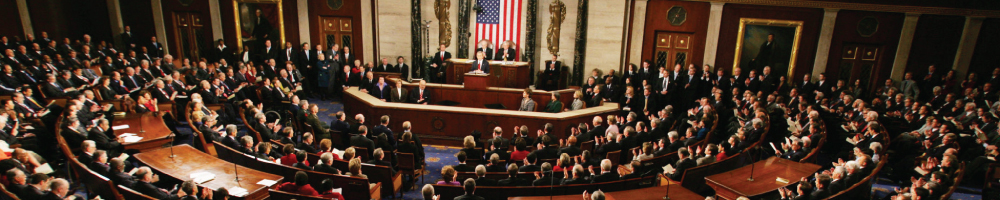
Congress has officially approved the latest omnibus budget deal, which now heads to President Obama's desk. The bill is essentially guaranteed to be signed into law, because anything less means the government would shut down. Again.

In what's become something of a sick annual tradition, members of Congress attached a multitude of riders to this must-pass piece of legislation in an attempt to sneak through deeply unpopular things they could never justify introducing or voting for on their own.

The text of the 2,000 page bill was quietly made available to the public in the middle of the night on Tuesday -- just a few days before it was passed by both houses of Congress. So, what was Congress trying to hide? Here are five of the most egregious things we found.

THE PART THAT ALLOWS FOR MORE SECRET (AND POSSIBLY FOREIGN) POLITICAL MONEY


A provision buried on page 472 added the Internal Revenue Service (IRS) from taking any action to reign in the political activity of 501(c)4 organizations. These organizations, which enjoy significant tax exemptions as nonprofits, weren't originally supposed to engage in political activity at all. In recent years, however, they've become a favorite of anyone who wants to buy political influence without attracting attention.

Everyone from Karl Rove's Crossroads GPS to the Harry Reid-aligned Patriot Majority USA has taken advantage of the lax rules governing 501(c)4s. Since there's no legal requirement that 501(c)4 organizations disclose their donors, anyone can use them as a vehicle to pour unlimited money into our political system. And we mean anyone. As former Republican Federal Election Commissioner Trevor Potter has pointed out, even foreign nationals and governments could use 501(c)4s to quietly influence U.S. policy.

Let that sink in folks: Rather than allow the IRS to prevent the abuse of tax-exempt nonprofit status for purely political purposes by both parties, Congress has specifically banned the agency from taking any kind of action -- even at the risk of allowing secret foreign money to poison our elections.

THE PART THAT HELPS CORPORATIONS HIDE POLITICAL ACTIVITY FROM THEIR OWN SHAREHOLDERS


On a similar note, another provision tucked away on page 1,982 prohibits the Securities and Exchange Commission (SEC) from requiring corporations to disclose their political spending.

This is especially outrageous because disclosure is, at least on paper, one of the least controversial and most basic steps toward reform the government can take. We're not talking about cutting off the flow of money here -- just letting the public see who's spending it, and what they're spending it on. As noted by the LA Times' Michael Hiltzik, even the Supreme Court made a point of emphasizing the need for disclosure in its widely reviled Citizens United ruling:

"With the advent of the Internet," Justice Anthony M. Kennedy wrote for the majority, "prompt disclosure of expenditures can provide shareholders and citizens with the information needed to hold corporations and elected officials accountable for their positions and supporters." Disclosure would enable shareholders to "determine whether their corporation's political speech advances the corporation's interest in making profits, and citizens can see whether elected officials are 'in the pocket' of so-called moneyed interests."

All that said, Obama's SEC seemed completely unwilling to implement such a rule anyway. Despite the fact that a petition calling for a new disclosure rule drew 1.2 million public comments -- the most in SEC history -- SEC chairwoman, Obama appointee, and former Wall St. lawyer Mary Jo White has consistently refused to take any kind of action on the matter.

THE PART HARRY REID GIFTWRAPPED FOR A PRIVATE EQUITY CEO


In one of the more straightforward cases of influence peddling we've ever seen, Harry Reid reportedly solicited contributions for his Super PAC -- which, by law, he's supposed to have nothing to do with -- during a May 2013 meeting with private equity CEO David Bonderman.

Bonderman quickly picked up on Reid's not-so-subtle hints. Bonderman, his wife, and firms under his control contributed well over $1 million to Reid's Senate Majority PAC in 2014. In what we're sure is a completely unrelated coincidence, Reid pushed to insert two pieces of language that would directly benefit Bonderman's businesses into the 2015 omnibus. What else is there to say?

THE PART COPY-PASTED FROM CISA -- A HIGHLY CONTROVERSIAL GOVERNMENT SURVEILLANCE BILL


Civil libertarians and privacy advocates received a nasty shock when it was discovered that the full text of Cybersecurity Information Sharing Act (CISA) was added 1,729 pages into the budget deal. Pushed as a "cybersecurity" measure, CISA actively encourages companies to quietly share data they've accumulated on consumers with numerous government agencies.

While the bill has been lambasted by privacy advocates and major tech companies like Apple, Google, Twitter, and Wikipedia, it does have the blessing of numerous industries that spend big to buy political influence -- The Telecommunications Industry Association, the Financial Services Roundtable, and Retail Industry Leaders Association have all applauded its passage.

THE PART THAT EXTENDS MOST OF THE TERRIBLE THINGS ADDED TO LAST YEAR'S OMNIBUS


Nearly all of the riders attached to the 2014 "cromnibus" budget agreement were re-upped in the 2015 version. As we reported last year, the 2014 omnibus agreement included everything from nullification of voter-backed marijuana legalization in Washington, DC, to $479 million for war planes the Pentagon didn't ask for, to a rollback of restrictions on risky derivatives trading that was quite literally written by lobbyists for CitiGroup.

It's hard to find many good things to say about Congress after legislation like this, but hey -- at least they're consistent. And as long as monied interests are allowed to effectively control government policy, you can definitely expect that consistency to continue....unless we do something about it. More on that here.

By Mansur Gidfar and Josh Silver.

Follow Josh Silver on Twitter: www.twitter.com/representdotus


Copyright ©2015 TheHuffingtonPost.com, Inc. "The Huffington Post" is a registered trademark of TheHuffingtonPost.com, Inc. All rights reserved. 2015©
Part of HPMG News

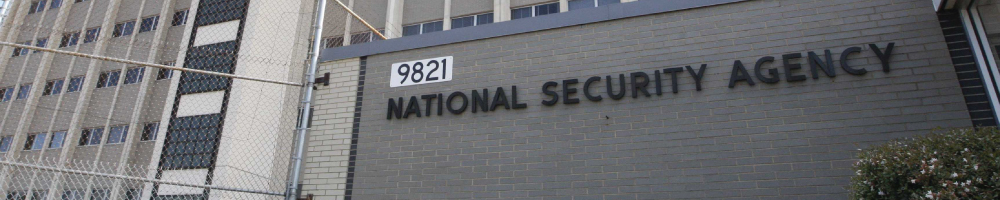
How Your Information Could Soon End up in the Hands of the NSA — and What You Can Do About It

How Your Information Could Soon End up in the Hands of the NSA — and What You Can Do About It

By Neema Singh Guliani, ACLU Legislative Counsel
DECEMBER 18, 2015 | 3:45 PM


Congress just made it easier for the NSA and FBI to get your private information.

Tucked into Congress’ 2,000 page spending bill passed today was a controversial cyber-surveillance rider. This provision, which was stronglyopposed by the ACLU, is yet another iteration of the Cybersecurity Information Sharing Act, which we haverepeatedly criticized as a surveillance bill that would have done nothing to stop cyber breaches, such as the Anthem or OPM hack. In an apparent flip-flop, the Obama administration appears to support inclusion of the rider — despite his opposition to similar proposals in the past.

Here is what the bill means for your privacy:

Companies can now share your private information with the government, preempting all other privacy laws.

The bill allows companies to share “cyber threat indicators” with DHS, the FBI, and other federal agencies. “Cyber threat indicators” are broadly defined and could include private information, such as your IP address (indicating location), email attachments, other personal identifying information, even your private communications. By default, there is no requirement that companies strip all personally identifying information before sharing this information with the government. Though there are several laws on the books that prevent companies from sharing certain types of private information, these laws are explicitly preempted by the provisions.

Companies will face no liability for sharing your personal information with DHS — even if there are negative consequences.

Companies face no liability — even when bad things happen — for information that is shared with DHS or potentially other agencies designated by the president (which could include the FBI). So, consumers have little opportunity for redress in cases where their private information is shared without consent or even notice.

Given that the liability provisions amount to a virtual blank check for companies that decide to share private consumer information with the government, it is no surprise that the some business groups, such as the U.S. Chamber of Commerce, strongly supported the cyber-surveillance provisions.

Any information shared also goes to the NSA and FBI.

Any information that is provided to agencies will be automatically sent to law enforcement and intelligence agencies, such as the NSA and FBI. By default, all personal identifying information does not have to be stripped before these agencies get this information.

Private information shared can be used to prosecute you for crimes that have nothing to do with cybersecurity.

The bill allows the FBI and other agencies to use information they receive to investigate and to prosecute crimes that have nothing do with cybersecurity. Under the bill, this information can be used for crimes relating to protection of trade secrets, fraud and identify theft, or the Espionage Act, which has been used to target whistleblowers.

So, what can you do to protect yourself?

Companies are free to decide whether to participate in these new “cyber sharing” programs. They can choose to put their consumers’ privacy and liberty first — and keep private information truly private.

That is exactly what consumers should demand. And, if companies aren’t willing to make this commitment, we should take our information elsewhere.


© 2015 ACLU


American Civil Liberties Union

BECAUSE FREEDOM CAN'T PROTECT ITSELF

Monday, November 30, 2015

See the invisible wireless signals around you


NOVEMBER 30, 2015


The human eye is remarkable, but it only lets us see a very small sliver of electromagnetic waves. It's nearly impossible to imagine what our world would look like if we could see beyond the visible spectrum, but a new app called Architecture of Radio does give us a taste.

The app offers an augmented-reality experience: spin your iPhone or iPad around you, and your device will act like a window into a previously invisible world. Spherical wavefronts emanate from wireless routers and distant cell towers. You might even spot a satellite passing overhead.

TAKE A PEEK INTO ANOTHER WORLD


Those sources and more are all featured in the app — they're compiled from several public databases. The waves that come from these sources are just estimates based on distance, not actual measurements taken by your device. That means that the visualization is more of an artistic experience than a precise tool for analyzing the electromagnetic radiation around you. But it's very cool nonetheless.

The app is currently being featured as part of an exhibition by Dutch designer Richard Vijgen at the Center for Art and Media in Karlsruhe, Germany. Vijgen writes on his website that the app reverses daily experiences by "hiding the visible while revealing the invisible technological landscape we interact with through our devices." In this way, peering through the frame of your tablet to peer into this world is a bit like something fromThe Matrix.

The iOS app was released earlier this month for $2.99 — Android users will have to wait until the new year to try it out.

Watch: DAQRI's augmented reality headset wants to change how we work - Small Empires S03E07


Wednesday, November 18, 2015

Isis claims 'Schweppes can bomb' blew up Russian Metrojet flight 9268 in Egypt's Sinai - Dabiq


ORIGINAL ARTICLE:

http://www.ibtimes.co.uk/isis-claim-schweppes-can-bomb-blew-russian-metrojet-flight-9268-egypts-sinai-dabiq-1529374

America is Not the Greatest Country in the World

AMERICA THE GREATEST COUNTRY IN THE WORLD

The Most Honest Three Minutes In Television History :)) Video taken by TV series: "The news room" Video: https://youtu.be/esSp-ox61Z0Follow Snapchat: Aziz_ea Instagram: @aziz_ea

Posted by Aziz Elali on Thursday, November 6, 2014

Monday, June 15, 2015

101 Inspiring Quotes From the Most Successful People in History


101 Inspiring Quotes From the Most Successful People in History
Whenever you're struggling to get things done, turn to this list of quotes for the inspiration and motivation you need to be the best you can be.

BY SUJAN PATEL


IMAGE: Getty Images


Inspiration can come from anywhere, but one of my favorite sources is inspirational quotes. There are several that have helped me stay on track throughout my business adventures, and I hope the following sayings from some of the most successful people in history will have the same effect on you:

1. "Success is most often achieved by those who don't know that failure is inevitable." -- Coco Chanel

2. "Things work out best for those who make the best of how things work out."
- John Wooden

3. "Courage is grace under pressure." -- Ernest Hemingway

4. "If you are not willing to risk the usual, you will have to settle for the ordinary."
- Jim Rohn

5. "Learn from yesterday, live for today, hope for tomorrow. The important thing is not to stop questioning." -- Albert Einstein

6. "Take up one idea. Make that one idea your life -- think of it, dream of it, live on that idea. Let the brain, muscles, nerves, every part of your body be full of that idea, and just leave every other idea alone. This is the way to success." -- Swami Vivekananda

7. "Sometimes you can't see yourself clearly until you see yourself through the eyes of others." -- Ellen DeGeneres

8. "All our dreams can come true if we have the courage to pursue them."
- Walt Disney

9. "It does not matter how slowly you go, so long as you do not stop."
- Confucius

10. "Success is walking from failure to failure with no loss of enthusiasm."
- Winston Churchill

11. "Someone is sitting in the shade today because someone planted a tree a long time ago." -- Warren Buffett

12. "Whenever you see a successful person, you only see the public glories, never the private sacrifices to reach them." -- Vaibhav Shah

13. "Don't cry because it's over, smile because it happened." -- Dr. Seuss

14. "Success? I don't know what that word means. I'm happy. But success, that goes back to what in somebody's eyes success means. For me, success is inner peace. That's a good day for me." -- Denzel Washington

15. "You only live once, but if you do it right, once is enough." -- Mae West

16. "Opportunities don't happen. You create them." -- Chris Grosser

17. "Once you choose hope, anything's possible." -- Christopher Reeve

18. "Try not to become a person of success, but rather try to become a person of value." -- Albert Einstein

19. "There is no easy walk to freedom anywhere, and many of us will have to pass through the valley of the shadow of death again and again before we reach the mountaintop of our desires." -- Nelson Mandela

20. "It is not the strongest of the species that survive, nor the most intelligent, but the one most responsive to change." -- Charles Darwin

21. "The best and most beautiful things in the world cannot be seen or even touched -- they must be felt with the heart." -- Helen Keller

22. "Great minds discuss ideas; average minds discuss events; small minds discuss people." -- Eleanor Roosevelt

23. "Live as if you were to die tomorrow. Learn as if you were to live forever." --Mahatma Gandhi

24. "The best revenge is massive success." -- Frank Sinatra

25. "The difference between winning and losing is most often not quitting."
- Walt Disney
[close X]


Advertisement
Click Here to Learn More


26. "I have not failed. I've just found 10,000 ways that won't work." -- Thomas Edison

27. "When you cease to dream you cease to live." -- Malcolm Forbes

28. "A successful man is one who can lay a firm foundation with the bricks others have thrown at him." -- David Brinkley

29. "May you live every day of your life." -- Jonathan Swift

30. "No one can make you feel inferior without your consent." -- Eleanor Roosevelt

31. "Failure is another steppingstone to greatness." -- Oprah Winfrey

32. "The whole secret of a successful life is to find out what is one's destiny to do, and then do it." -- Henry Ford

33. "If you're not stubborn, you'll give up on experiments too soon. And if you're not flexible, you'll pound your head against the wall and you won't see a different solution to a problem you're trying to solve." -- Jeff Bezos

34. "If you're going through hell, keep going." -- Winston Churchill

35. "In order to be irreplaceable one must always be different." -- Coco Chanel

36. "What seems to us as bitter trials are often blessings in disguise." -- Oscar Wilde

37. "You miss 100 percent of the shots you don't take." -- Wayne Gretzky

38. "The distance between insanity and genius is measured only by success."
- Bruce Feirstein

39. "The way I see it, if you want the rainbow, you gotta put up with the rain."
- Dolly Parton

40. "To me, business isn't about wearing suits or pleasing stockholders. It's about being true to yourself, your ideas and focusing on the essentials."--Richard Branson

41. "The longer I live, the more beautiful life becomes." -- Frank Lloyd Wright

42. "Happiness is a butterfly, which when pursued, is always beyond your grasp, but which, if you will sit down quietly, may alight upon you." -- Nathaniel Hawthorne

43. "You must expect great things of yourself before you can do them."
- Michael Jordan

44. "If you can't explain it simply, you don't understand it well enough."
- Albert Einstein

45. "You can't please everyone, and you can't make everyone like you." -- Katie Couric

46. "There are two types of people who will tell you that you cannot make a difference in this world: those who are afraid to try and those who are afraid you will succeed."
-Ray Goforth

47. "I believe every human has a finite number of heartbeats. I don't intend to waste any of mine."-Neil Armstrong

48. "Start where you are. Use what you have. Do what you can." -- Arthur Ashe

49. "Don't limit yourself. Many people limit themselves to what they think they can do. You can go as far as your mind lets you. What you believe, remember, you can achieve."-Mary Kay Ash

50. "People ask, 'What's the best role you've ever played?' The next one."
- Kevin Kline

51. "The two most important days in your life are the day you are born and the day you find out why." -- Mark Twain

52. "I find that the harder I work, the more luck I seem to have." -- Thomas Jefferson

53. "It often requires more courage to dare to do right than to fear to do wrong."
- Abraham Lincoln

54. "Success is the sum of small efforts, repeated day-in and day-out."
- Robert Collier

55. "As you grow older, you will discover that you have two hands, one for helping yourself, the other for helping others." -- Audrey Hepburn

56. "If you want to achieve excellence, you can get there today. As of this second, quit doing less-than-excellent work." -- Thomas J. Watson

57. "If your actions inspire others to dream more, learn more, do more, and become more, you are a leader." -- John Quincy Adams

58. "All progress takes place outside the comfort zone." -- Michael John Bobak

59. "The more you praise and celebrate your life, the more there is in life to celebrate." -- Oprah Winfrey

60. "You may only succeed if you desire succeeding; you may only fail if you do not mind failing." -- Philippos

61. "A dream doesn't become reality through magic; it takes sweat, determination, and hard work."-Colin Powell

62. "Only put off until tomorrow what you are willing to die having left undone."
-Pablo Picasso

63. "The biggest risk is not taking any risk... In a world that's changing really quickly, the only strategy that is guaranteed to fail is not taking risks." -- Mark Zuckerberg

64. "We become what we think about most of the time, and that's the strangest secret." -- Earl Nightingale

65. "Do one thing every day that scares you." -- Eleanor Roosevelt

66. "The only place where success comes before work is in the dictionary."
- Vidal Sassoon

67. "Don't be afraid to give up the good to go for the great." -- John D. Rockefeller

68. "Your work is going to fill a large part of your life, and the only way to be truly satisfied is to do what you believe is great work. And the only way to do great work is to love what you do. If you haven't found it yet, keep looking. Don't settle. As with all matters of the heart, you'll know when you find it."--Steve Jobs

69. "Don't worry about failure; you only have to be right once." -- Drew Houston

70. "Though no one can go back and make a brand-new start, anyone can start from now and make a brand-new ending." -- Carl Bard

71. "Nothing great was ever achieved without enthusiasm." -- Ralph Waldo Emerson

72. "Twenty years from now you will be more disappointed by the things that you didn't do than by the ones you did do. So throw off the bowlines. Sail away from the safe harbor. Catch the trade winds in your sails. Explore. Dream. Discover."
- Mark Twain

73. "Keep your face to the sunshine and you can never see the shadow."
- Helen Keller

74. "The first step toward success is taken when you refuse to be a captive of the environment in which you first find yourself." -- Mark Caine

75. "One of the greatest diseases is to be nobody to anybody." -- Mother Teresa

76. "Identity is a prison you can never escape, but the way to redeem your past is not to run from it, but to try to understand it, and use it as a foundation to grow." -- Jay-Z

77. "The successful warrior is the average man, with laser-like focus." -- Bruce Lee

78. "Rarely have I seen a situation where doing less than the other guy is a good strategy." -- Jimmy Spithill

79. "If you always do what interests you, at least one person is pleased."
- Katharine Hepburn

80. "Keep on going, and the chances are that you will stumble on something, perhaps when you are least expecting it. I never heard of anyone ever stumbling on something sitting down." -- Charles F. Kettering

81. "I avoid looking forward or backward, and try to keep looking upward."
- Charlotte Bronte

82. "You can't connect the dots looking forward; you can only connect them looking backward. So you have to trust that the dots will somehow connect in your future. You have to trust in something -- your gut, destiny, life, karma, whatever. This approach has never let me down, and it has made all the difference in my life."
- Steve Jobs

83. "Life is short, and it is here to be lived." -- Kate Winslet

84. "Everything you can imagine is real." -- Pablo Picasso

85. "Change will not come if we wait for some other person or some other time. We are the ones we've been waiting for. We are the change that we seek."
- Barack Obama

86. "If you want to make a permanent change, stop focusing on the size of your problems and start focusing on the size of you!" -- T. Harv Eker

87. "Successful people do what unsuccessful people are not willing to do. Don't wish it were easier; wish you were better." -- Jim Rohn

88. "It is never too late to be what you might have been." -- George Eliot

89. "If you love what you do and are willing to do what it takes, it's within your reach. And it'll be worth every minute you spend alone at night, thinking and thinking about what it is you want to design or build." -- Steve Wozniak

90. "In my experience, there is only one motivation, and that is desire. No reasons or principle contain it or stand against it." -- Jane Smiley

91. "In the midst of movement and chaos, keep stillness inside of you."
- Deepak Chopra

92. "Success does not consist in never making mistakes but in never making the same one a second time." -- George Bernard Shaw

93. "I don't want to get to the end of my life and find that I lived just the length of it. I want to have lived the width of it as well." -- Diane Ackerman

94. "As we look ahead into the next century, leaders will be those who empower others." -- Bill Gates

95. "Our greatest fear should not be of failure... but of succeeding at things in life that don't really matter." -- Francis Chan

96. "Be yourself. Everyone else is already taken." -- Oscar Wilde

97. "If you don't design your own life plan, chances are you'll fall into someone else's plan. And guess what they have planned for you? Not much." -- Jim Rohn

98. "But you have to do what you dream of doing even while you're afraid."
- Arianna Huffington

99. "To be successful, you must accept all challenges that come your way. You can't just accept the ones you like." -- Mike Gafka

100. "Be patient with yourself. Self-growth is tender; it's holy ground. There's no greater investment." -- Stephen Covey

101. "Many of life's failures are people who did not realize how close they were to success when they gave up." -- Thomas A. Edison

As Zig Ziglar said, motivation doesn't last. But neither does showering. That's why both are recommended daily. Whenever you're struggling to get things done, turn to these quotes for the inspiration and motivation you need to be the best you can be.

Have another quote that you feel should be added to this list? Share it by leaving a comment below!
The opinions expressed here by Inc.com columnists are their own, not those of Inc.com.